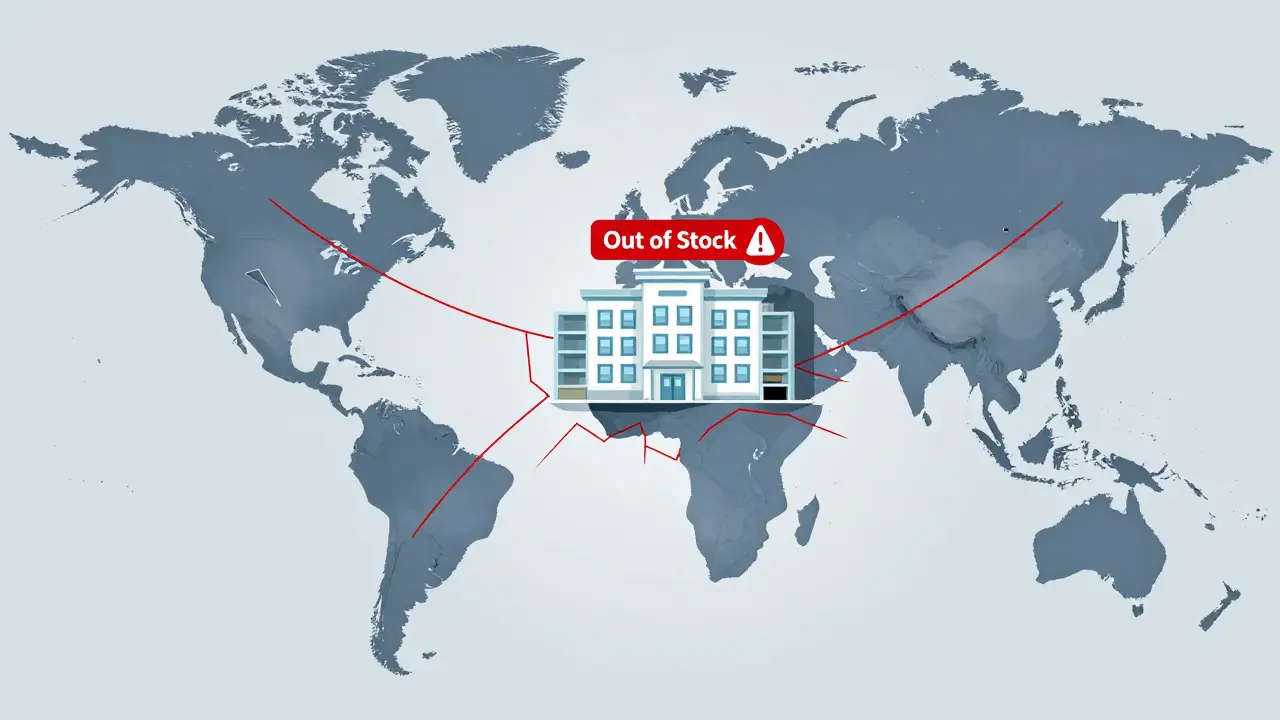
Imagine walking into a hospital pharmacy expecting to pick up a standard antibiotic or a routine chemotherapy dose, only to be told it’s unavailable. For healthcare providers and patients across the United States, this is no longer a hypothetical scenario-it is a daily reality. As of mid-2026, the supply chain problems affecting generic drugs have reached a critical breaking point. With nearly 300 active shortages documented in recent months, the fragility of our medication distribution network has moved from a background concern to a front-line emergency.
This crisis isn’t just about inconvenience; it’s about patient safety. When essential medicines disappear from shelves, clinicians are forced to make difficult therapeutic substitutions that can delay treatments, increase costs, and compromise care quality. Understanding why these distribution risks persist requires looking beyond simple logistics to the deep structural flaws in how we manufacture and source life-saving medications.
The Anatomy of a Broken Supply Chain
To understand why generic drugs are so vulnerable, we first need to look at where they come from. The modern pharmaceutical supply chain is heavily globalized, with less than 30% of Active Pharmaceutical Ingredients (APIs) produced domestically in the U.S. Instead, the majority of these critical components are manufactured overseas, primarily in China and India. This geographic concentration creates a single point of failure for millions of prescriptions filled every day.
Generic drugs account for approximately 90% of all prescriptions in the United States, yet they represent only about 13% of total drug spending. This low-cost structure is a blessing for consumers but a curse for manufacturers. Because profit margins on generics are incredibly thin-often under $5 per unit for sterile injectables-companies have little financial buffer to absorb shocks. When a factory shuts down due to a quality issue, a natural disaster, or a geopolitical conflict, there is rarely a backup plan because building one is too expensive.
The situation was exacerbated by the COVID-19 pandemic, but experts note that the system was fundamentally broken long before 2020. Decades of offshoring manufacturing to cut costs have left the U.S. healthcare system exposed. According to analysis from the House Health Subcommittee, misaligned economic incentives and weak oversight mechanisms have allowed these vulnerabilities to fester. The result is a supply chain that is efficient in good times but catastrophic in bad ones.
Why Sterile Injectables Are the Most Vulnerable
Not all generic drugs face the same level of risk. If you look at the data from the U.S. Pharmacopeia (USP), sterile injectable medicines are by far the most commonly affected dosage form during shortages. These include IV fluids, antibiotics, and chemotherapy agents like cisplatin and epinephrine.
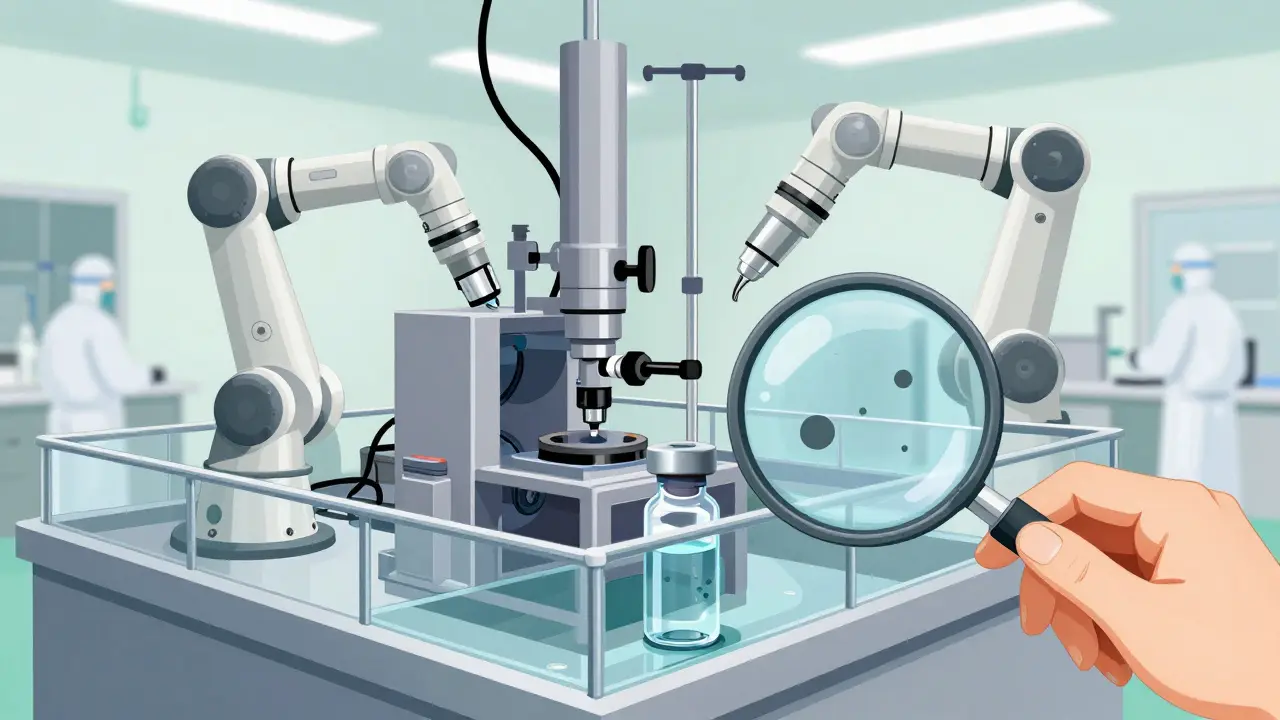
The reason lies in manufacturing complexity. Producing sterile injectables requires specialized equipment, cleanroom facilities, and stringent environmental controls to prevent contamination. Unlike oral tablets, which can be made in high volumes with relatively simple machinery, aseptic manufacturing is delicate and expensive. This complexity means fewer companies can produce these drugs, leading to market consolidation. For many older generic products, manufacturing has consolidated to just one or three companies worldwide.
| Dosage Form | Manufacturing Complexity | Market Concentration | Shortage Frequency |
|---|---|---|---|
| Sterile Injectables | High (Aseptic processing required) | Very High (1-3 manufacturers) | Extremely High |
| Oral Solids (Tablets/Capsules) | Low to Moderate | Moderate | Moderate |
| Topical Creams/Ointments | Low | Low to Moderate | Low |
This lack of redundancy is dangerous. In 2023, a tornado damaged a Pfizer plant, halting production of 15 medications. Similarly, FDA quality issues shut down cisplatin production in India, causing a nationwide shortage of this critical chemotherapy drug. When you rely on a single supplier for a complex product, any disruption becomes a national health crisis.
Economic Pressures vs. Patient Access
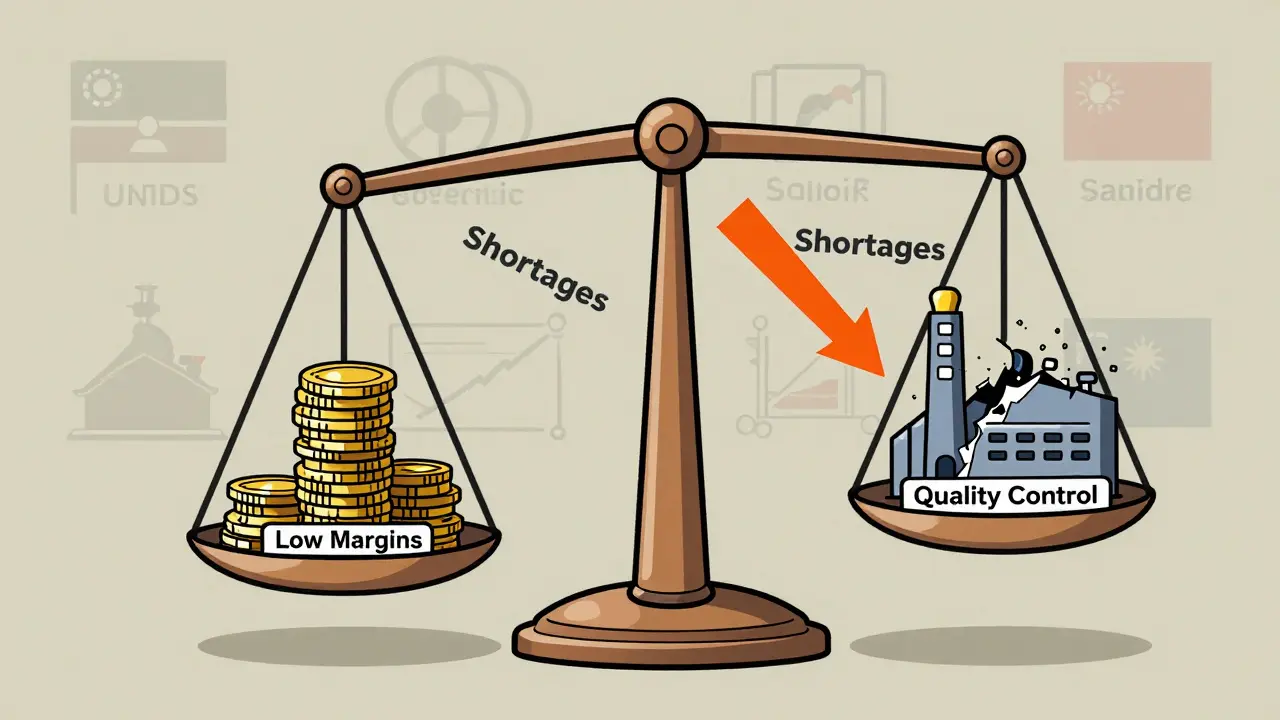
The core driver of these shortages is economics. Dr. Malta of USP has noted a clear correlation between drug price and shortage risk. Older generic products, which have been on the market for decades, face intense competition that drives prices down to rock bottom. At these price points, manufacturers often operate with razor-thin margins that may not even cover the cost of maintaining high-quality production standards.
This creates a perverse incentive structure. Why invest in new equipment or rigorous quality control if the profit margin is negligible? Many manufacturers choose to exit the market entirely rather than deal with the regulatory burden and cost pressures. The Association of Accessible Medicines highlights that while generics save the healthcare system billions, the current pricing model does not support the resilience needed to ensure consistent supply.
Furthermore, brand-name drug manufacturers operate differently. They build globally diversified networks with robust inventory buffers and flexible manufacturing capacity. Their higher profit margins allow them to absorb tariff impacts or supply shocks. Generic manufacturers, however, are locked into a race to the bottom, relying on cost-competitive production in countries like China and India. This reliance creates concentrated sourcing vulnerabilities that do not exist to the same degree in the brand-name sector.
The Impact on Healthcare Providers and Patients
The human cost of these supply chain failures is staggering. Hospitals and health systems are on the front lines, dealing with the chaos of missing medications. Dr. Eberle, cited by the University of Wisconsin School of Pharmacy, describes inpatient drug shortages as "one of his biggest professional hurdles." He notes that shortages disproportionately impact generics and hit an all-time high of 323 in Q1 2024.
For pharmacists, managing these shortages consumes a significant portion of their workweek. Surveys indicate that hospital pharmacists spend 20-30% of their time sourcing alternatives, compounding medications, or implementing conservation strategies. This is time taken away from direct patient care and clinical services. The stress trickles down to patients, who face delayed cancer treatments, rationed antibiotics, and canceled surgeries.
The American College of Physicians documented in July 2025 how the breadth of affected drugs illustrates that shortages affect all areas of medicine, especially internal medicine and subspecialist care. When a primary antibiotic is unavailable, doctors must switch to broader-spectrum alternatives, which can lead to increased side effects and contribute to antibiotic resistance. The ripple effects extend far beyond the pharmacy shelf.
Potential Solutions and Policy Challenges
Solving this crisis requires more than just blaming foreign manufacturers. Experts agree that meaningful change will require coordinated action among policymakers, manufacturers, and healthcare providers. Several potential solutions have been proposed, each with its own set of challenges.
- Onshoring Manufacturing: Bringing production back to the U.S. is often touted as a solution. However, CSIS analysis suggests that onshoring the entire supply chain is not feasible in the near term. Rebuilding domestic capacity would require 5-7 years and $20-30 billion in investment, along with significant workforce development efforts.
- Strategic National Stockpile Expansion: Expanding the federal stockpile to include critical generic drugs could provide a buffer during emergencies. However, managing expiration dates and rotation costs presents logistical hurdles.
- Mandatory Reserves: Legislation such as S.2062 proposes requiring manufacturers to maintain six-month reserves for critical generic drugs. While this would improve availability, it imposes storage costs that could further squeeze already thin margins.
- Public-Private Partnerships: Initiatives to facilitate production of high-risk generics through government-industry collaboration could help stabilize supply. Transparent labeling for APIs sourced overseas could also enhance visibility into the supply chain.
However, implementation faces political and bureaucratic headwinds. Recent reductions in force across the U.S. Department of Health and Human Services (HHS) have reduced the capacity of federal agencies to enforce regulations and inspect foreign facilities. This creates a paradox: heightened enforcement needs coincide with diminished regulatory resources.
Looking Ahead: Geopolitical Risks and Future Shocks
As we move through 2026, the risk profile for drug shortages is shifting. Historically, shortages were triggered by manufacturing quality problems at the finished dosage form stage. But the future threat is increasingly geopolitical. The Brookings Institution warns that conflicts involving major API producers like China could create widespread disruptions that affect a much wider set of drugs than those historically at greatest risk.
Tariffs add another layer of uncertainty. Analysts warn that proposed pharmaceutical tariffs ranging from 50% to 200% could destabilize an already fragile supply chain. While some policymakers advocate tariffs to incentivize domestic production, industry experts caution that sudden trade barriers could disrupt existing flows, leading to higher costs and delayed treatment availability.
The outlook remains uncertain. While federal efforts to boost domestic production and increase transparency are underway, the systemic issues underlying the shortage crisis are deeply entrenched. Until the economic incentives for generic drug manufacturing are realigned to prioritize reliability over lowest cost, patients and providers will continue to navigate a precarious landscape.
Why are generic drugs more prone to shortages than brand-name drugs?
Generic drugs face thinner profit margins due to intense competition, which disincentivizes manufacturers from investing in redundant supply chains or inventory buffers. Brand-name drugs have higher margins that allow for more resilient, diversified manufacturing networks. Additionally, generic markets often consolidate to just one or two manufacturers, creating single points of failure.
What are Active Pharmaceutical Ingredients (APIs)?
APIs are the biologically active components in a drug that produce the intended therapeutic effect. They are the raw materials used to make both brand-name and generic medications. Less than 30% of APIs used in U.S. drugs are produced domestically, with most coming from China and India, creating significant supply chain vulnerabilities.
Which types of generic drugs are most likely to run out?
Sterile injectables, including IV fluids, antibiotics, and chemotherapy agents, are the most frequently shorted. This is due to their complex manufacturing requirements, which involve aseptic processing and specialized equipment. Fewer companies can produce these drugs, leading to high market concentration and greater vulnerability to disruptions.
How do drug shortages affect patient care?
Shortages force clinicians to use alternative medications that may be less effective, have more side effects, or be more expensive. This can lead to delayed treatments, canceled surgeries, and compromised outcomes, particularly in critical areas like oncology and infectious disease management. It also increases the workload for pharmacists and nurses who must manage sourcing and compounding.
Can tariffs solve the generic drug shortage problem?
Tariffs are unlikely to solve the problem in the short term and may worsen it. While they aim to encourage domestic production, rebuilding U.S. manufacturing capacity takes years and billions of dollars. In the meantime, tariffs could disrupt existing supply chains, leading to higher costs and immediate shortages of essential medications.