
Statin Exercise Safety Checker
Enter your current exercise routine details below to determine if you are in a safe zone for muscle health while on statins.
Risk Assessment
Results will appear here.
You just started taking a statin, your cholesterol numbers are finally looking good, and you’re ready to hit the gym. But then it happens: after a moderate jog or a session of weightlifting, your legs feel heavy, sore, and achy in a way that lingers for days. Is it normal workout fatigue, or is your medication sabotaging your fitness goals? You aren't alone. Roughly 38 million adults in the US take these drugs, and a significant chunk of them worry about muscle damage.
The fear is real, but often exaggerated by misinformation. The truth is nuanced. Research shows that while statins can make muscles more sensitive to intense strain, they don’t automatically ruin your ability to stay active. In fact, quitting exercise because of mild discomfort often hurts your heart more than the medication helps it. This guide breaks down exactly what’s happening in your muscles, which exercises are safe, and how to tweak your routine so you get the best of both worlds: lower cholesterol and a stronger body.
Why Statins Might Make Your Muscles Sore
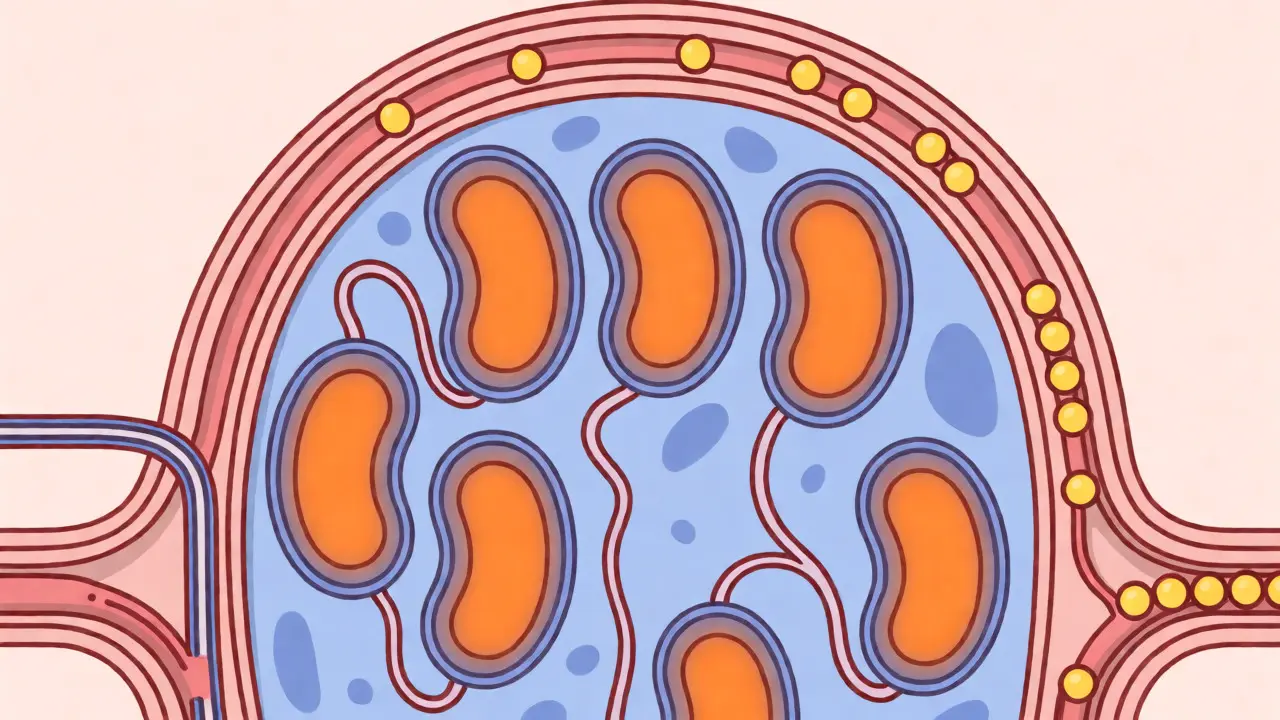
To fix the problem, you have to understand the mechanism. Statins work by blocking an enzyme called HMG-CoA reductase. This stops your liver from making too much cholesterol. Great for your arteries, right? But this same pathway produces another critical molecule: Coenzyme Q10 (CoQ10). CoQ10 is essential for mitochondrial function-the tiny power plants inside your cells that generate energy. When statins lower CoQ10 levels, your muscle cells might struggle to produce energy efficiently during high-demand activities like sprinting or heavy lifting.
This doesn’t mean your muscles are tearing apart every time you move. It means their recovery process might be slower. A 2023 study published in the Journal of the American College of Cardiology looked at people aged 55-73 who took statins. They found that while handgrip strength didn’t drop significantly after exercise, the time it took for muscles to relax after contraction increased by up to 66% in those experiencing symptoms. That stiffness and delayed relaxation are often what users describe as "heaviness" or "achiness." It’s not necessarily injury; it’s metabolic inefficiency.
Moderate vs. Vigorous: Finding Your Safe Zone
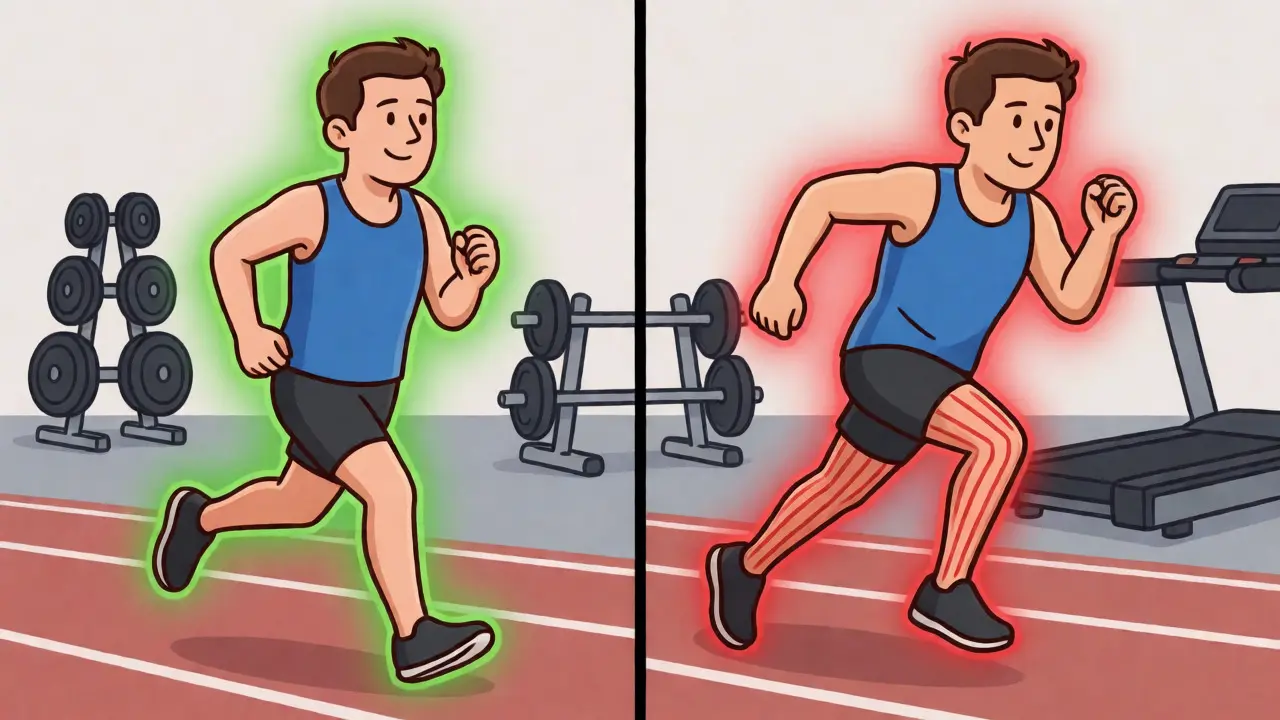
Here is the biggest takeaway from recent data: intensity matters more than duration. If you are a statin user, jumping straight into High-Intensity Interval Training (HIIT) or marathon training is where trouble usually starts. A landmark study comparing runners before and after the Boston Marathon showed that statin users had significantly higher levels of creatine kinase (CK), a marker of muscle breakdown, compared to non-users. However, this was after vigorous, prolonged exertion.
Conversely, the same research suggests that moderate-intensity exercise is largely safe. Cycling for 45 minutes at about 60% of your maximum oxygen uptake (VO2max)-which feels like a brisk pace where you can still talk but not sing-did not cause significant muscle injury markers to spike in symptomatic statin users. The key is staying below the threshold where your mitochondria are overwhelmed by demand without adequate CoQ10 support.
| Intensity Level | Perceived Effort (Borg Scale 1-10) | Risk of Muscle Symptoms | Recommended Activities |
|---|---|---|---|
| Low | 1-3 (Very Light) | Negligible | Walking, gentle stretching, light yoga |
| Moderate | 4-6 (Somewhat Hard) | Low/Safe | Brisk walking, steady cycling, swimming laps |
| Vigorous | 7-9 (Hard) | Moderate/High | Sprinting, HIIT, heavy weightlifting |
| Extreme | 10 (Maximal) | High | Marathon running, CrossFit competitions |
Prevention Strategy 1: Ease Into It
If you’ve been sedentary or if you recently started statins, do not assume your previous fitness level applies immediately. Your muscles need time to adapt to the slight change in metabolic efficiency. Animal studies have shown that prior run training actually protects against statin-induced force loss. Translation? Consistency beats intensity. Start with low-impact aerobic activity. Aim for 150 minutes a week of moderate movement, broken into manageable chunks. If you feel pain, back off. If you feel fine, increase duration by no more than 10% per week. This gradual progression allows your body to potentially upregulate other energy pathways to compensate for lower CoQ10.
Prevention Strategy 2: Timing and Hydration
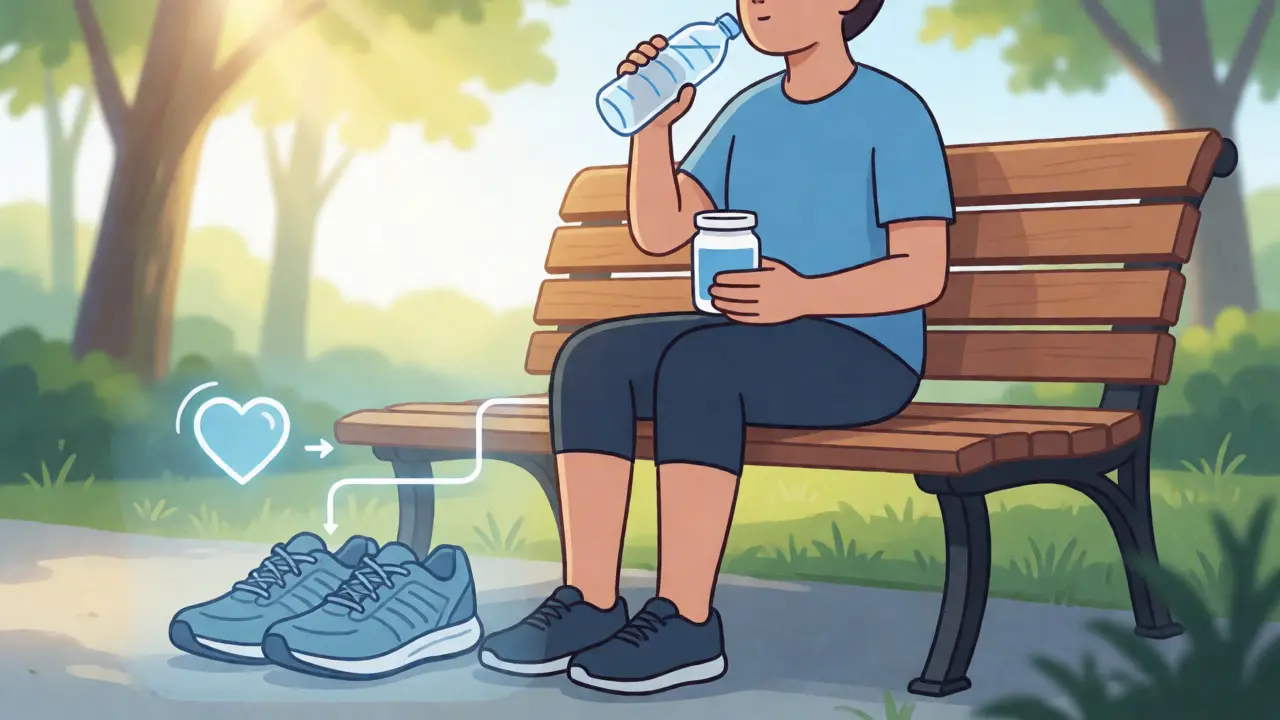
While evidence is still evolving, some experts suggest timing your exercise away from peak drug concentration. Most statins reach peak blood levels within 2-4 hours of ingestion. If you take your pill at night, morning workouts might theoretically offer a buffer. More importantly, hydration plays a huge role. Dehydrated muscles are more prone to cramping and injury. Since statins can alter electrolyte balance slightly, ensuring you drink enough water before, during, and after exercise is a simple, zero-cost prevention tip.
Prevention Strategy 3: Check Your Vitamin D and CoQ10
Vitamin D deficiency is common, especially in places like Auckland or the UK, and it correlates strongly with statin-associated myopathy. Low vitamin D weakens muscles independently, compounding the statin effect. Get your serum 25-hydroxyvitamin D checked. If it’s below 30 ng/mL, supplementation may reduce muscle pain significantly.
Then there’s CoQ10. Because statins deplete it, many patients find relief by supplementing. While large-scale trials show mixed results on whether it prevents all side effects, many individuals report subjective improvement in energy and reduced soreness. Discuss adding 100-200 mg of ubiquinol (the active form of CoQ10) with your doctor. It’s generally well-tolerated and interacts minimally with most medications.
When to Worry: Red Flags vs. Normal Soreness
Not all pain is created equal. You need to distinguish between DOMS (Delayed Onset Muscle Soreness) and something serious. Normal post-workout soreness peaks 24-48 hours after exercise and fades within 72 hours. It feels tender when touched but improves with light movement.
Statin-related muscle issues, however, can present differently. Watch for these red flags:
- Pain lasting longer than 72 hours despite rest.
- Weakness rather than just pain (e.g., difficulty climbing stairs or standing up from a chair).
- Dark urine (tea-colored), which indicates rhabdomyolysis-a rare but serious condition where muscle fiber breaks down rapidly.
- Fever or flu-like symptoms accompanying muscle pain.
If you experience dark urine or severe weakness, stop exercising and contact your healthcare provider immediately. Blood tests checking CK levels can confirm if muscle damage is occurring.
The Long-Term Perspective: Don’t Quit Too Early
It’s tempting to stop the statin or stop exercising when things get uncomfortable. But consider the stakes. Statins reduce cardiovascular events by 25-35%. Regular exercise reduces them by another 20-30%. Together, they create a synergistic shield for your heart. Studies indicate that 72% of statin users who maintained moderate exercise reported improved muscle tolerance over six months. Your body adapts. The initial discomfort often fades as your conditioning improves and your tissues adjust.
Before you quit, try switching statin types. Some people tolerate hydrophilic statins (like rosuvastatin or pravastatin) better than lipophilic ones (like atorvastatin or simvastatin) because they interact less with muscle tissue. A simple switch, guided by your doctor, might solve the problem entirely.
Can I lift weights if I take statins?
Yes, but proceed with caution. Heavy resistance training can stress muscles significantly. Start with lighter weights and higher repetitions to build endurance before moving to heavier loads. Monitor for excessive soreness that lasts beyond three days.
Does taking CoQ10 definitely prevent statin muscle pain?
It works for some people but not all. Clinical trials show mixed objective results, but many patients report subjective relief. It is considered safe to try, but should not replace prescribed medication adjustments if pain is severe.
Is running dangerous for statin users?
Running itself isn't dangerous, but high-volume or high-intensity running increases the risk of elevated muscle injury markers. Many statin users run comfortably if they keep mileage moderate and avoid sudden spikes in distance or speed.
How long does it take for muscles to adjust to statins?
Adaptation varies. Some users notice improvement within weeks, while others may take several months of consistent, moderate exercise. If symptoms persist beyond three months, consult your doctor about dosage or type changes.
Should I stop exercising if my muscles hurt?
Don't stop completely. Switch to low-impact activities like swimming or walking until pain subsides. Complete inactivity can lead to deconditioning, making future exercise harder and potentially worsening overall health risks.




10 Comments