
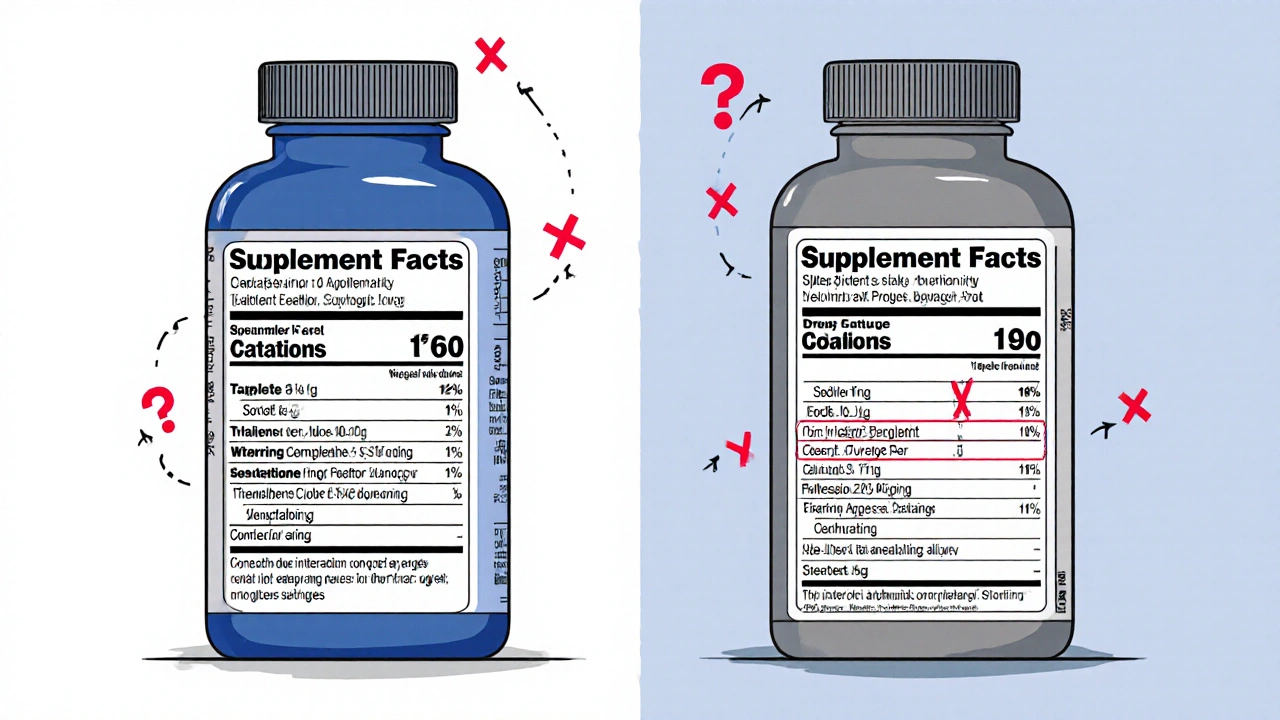
When you grab a bottle of ibuprofen or allergy pills off the shelf, you expect the label to tell you exactly what’s in it, how much to take, what it’s for, and what could go wrong. That’s the Drug Facts label - clear, standardized, and required by the FDA. But if you pick up a bottle of vitamin D, multivitamin, or herbal supplement next to it, you’re looking at something completely different. And most people don’t realize the gap between the two.
Supplement Labels Aren’t Held to the Same Rules
OTC medications have to follow strict labeling rules under FDA regulations. Every Drug Facts label must include: active ingredients with exact milligram amounts, what the product treats, clear warnings about side effects and drug interactions, inactive ingredients, dosage instructions, storage info, expiration date, and manufacturer details. It’s all laid out in a fixed format so you don’t have to guess. Dietary supplements? They’re treated like food. Under the 1994 Dietary Supplement Health and Education Act (DSHEA), they don’t need to prove safety or effectiveness before hitting store shelves. Instead of Drug Facts, they use Supplement Facts panels - and those panels leave out a lot. For example, you won’t find a clear warning about dangerous interactions with prescription drugs on most supplement labels. A 2021 JAMA study found only 17% of supplement labels mention potential drug interactions, while 100% of OTC medication labels do. That’s not a typo. One out of six supplements tells you anything at all about mixing with your blood pressure medicine, antidepressants, or blood thinners.What’s Missing? The Hidden Risks
Let’s talk about vitamin A. High doses of retinol - the active form - can cause birth defects. That’s why prescription acne drugs like isotretinoin come with pregnancy tests, counseling, and multiple warning labels. But a vitamin A supplement with 10,000 IU per serving? That’s the same amount. Yet, many labels just say “Vitamin A: 10,000 IU” with a tiny disclaimer buried at the bottom. No mention of pregnancy risks. No warning to avoid if you’re trying to conceive. No distinction between retinol (dangerous) and beta-carotene (safe). Sodium content? OTC painkillers must list how much sodium is in each dose. That matters if you have high blood pressure or heart failure. But supplements? No requirement. A popular energy booster might pack 200 mg of sodium per serving - enough to spike your numbers - and you’d never know unless you dig into the fine print or check a third-party site. Even the ingredients themselves can be misleading. Many supplements use “proprietary blends,” which means they list a group of ingredients together without showing how much of each one is in there. One study found 63% of weight loss supplements hide exact amounts this way. You think you’re getting 500 mg of green tea extract - but it could be 5 mg of actual extract mixed with 495 mg of filler. No one’s required to tell you.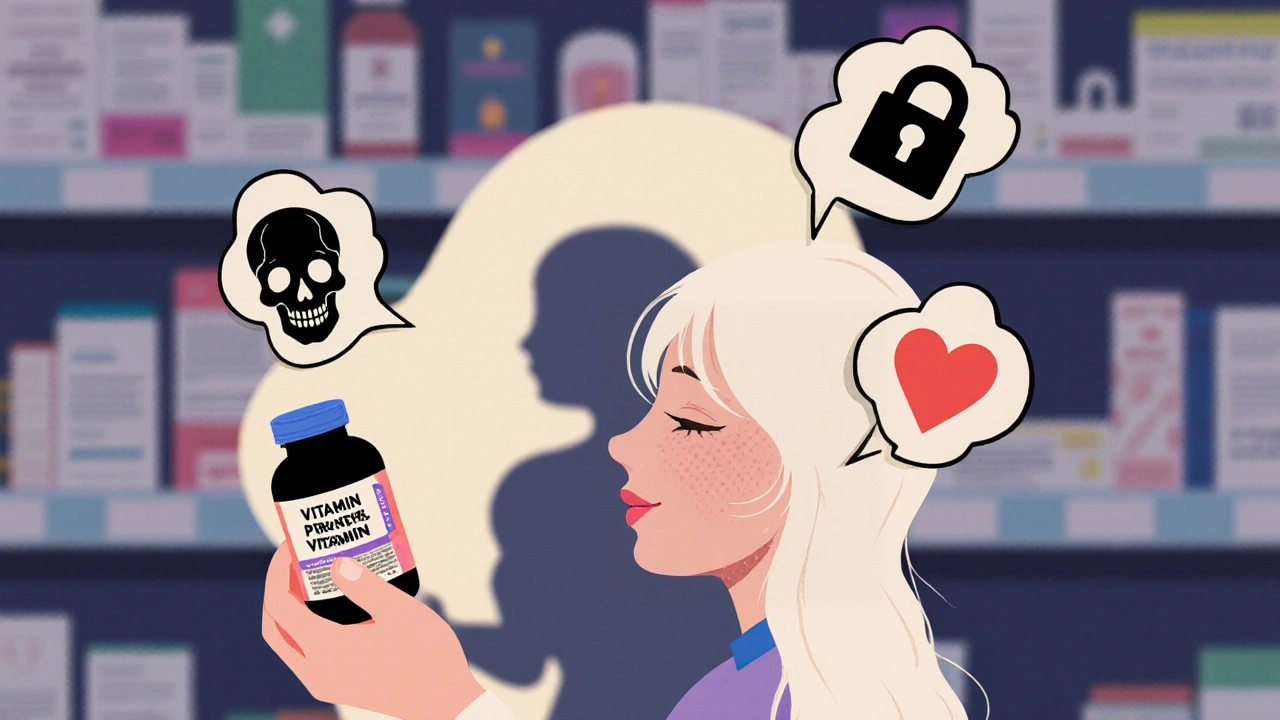
Consumers Are Confused - and It’s Dangerous
A 2022 Consumer Reports survey found 68% of people think the FDA reviews supplements for safety before they’re sold. That’s not true. The FDA doesn’t approve supplements before they go to market. They only step in after something goes wrong. Pharmacists are seeing the fallout. Walgreens reported over 14,000 questions in early 2023 alone from customers asking why their vitamin didn’t warn about interactions like their aspirin did. Reddit threads on r/Supplements are full of people sharing stories of dizziness, heart palpitations, or liver issues they didn’t see coming - because the label didn’t say anything. Even prenatal vitamins are a minefield. The American College of Obstetricians and Gynecologists found 40% of them contain vitamin A levels above the safe limit for pregnancy. Only 22% of those products have clear warnings about it. Imagine a woman taking one daily, thinking it’s “just a vitamin,” not realizing she’s exposing her unborn child to a known teratogen.Why Does This Keep Happening?
The supplement industry made $54.2 billion in 2022. That’s a lot of money. And with that money comes lobbying power. The industry spent $8.2 million in federal lobbying in 2022 to block tighter rules. Meanwhile, the FDA can only act after a supplement causes harm - and it takes an average of 427 days to respond. For OTC drugs? 45 days. The FDA has identified 776 supplements between 2008 and 2020 that contained hidden pharmaceuticals - like hidden statins, steroids, or erectile dysfunction drugs. None of those were listed on the label. No one was required to test for them before selling. Some companies do the right thing. NSF International certifies about 2,147 supplements as of late 2023, meaning they’ve been tested for contaminants and label accuracy. But certification is voluntary. You have to look for the NSF mark - and most consumers don’t know what it means.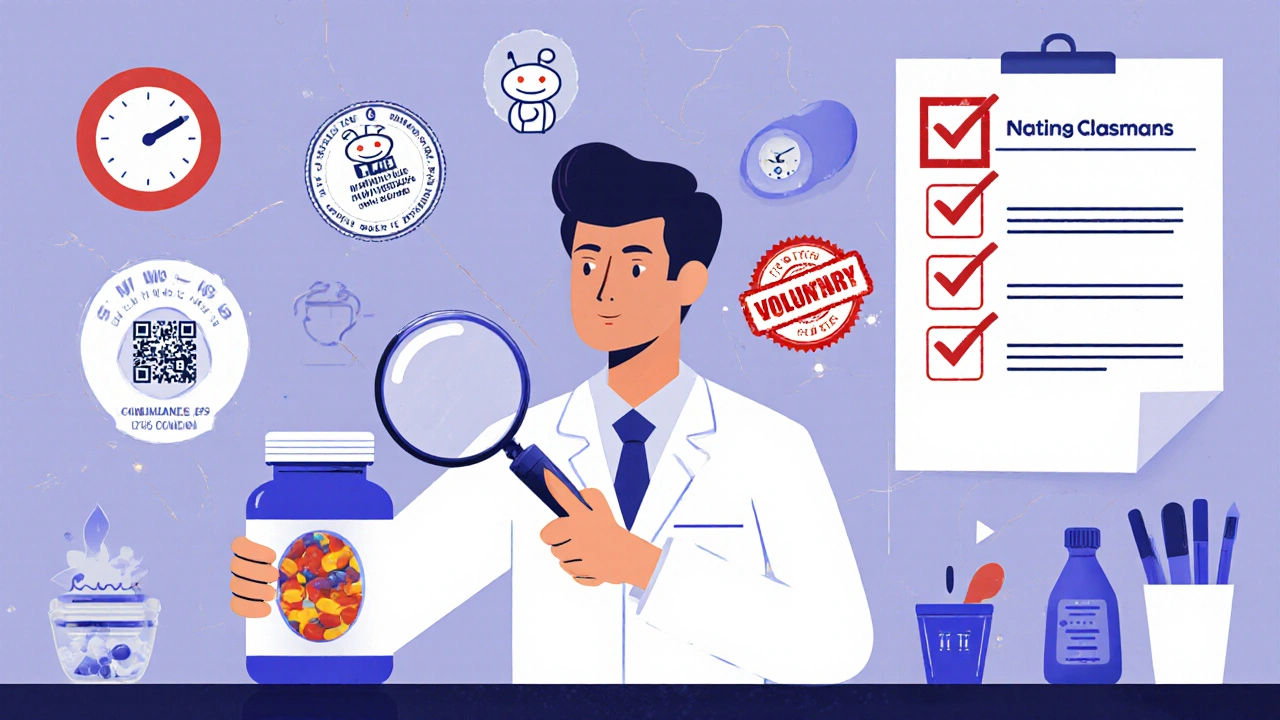
What You Can Do
Don’t assume a supplement is safe just because it’s on a pharmacy shelf. Here’s how to protect yourself:- Check the label for specifics: Look for exact amounts of each ingredient - not just “proprietary blend.” If it’s hidden, walk away.
- Search for third-party verification: Look for seals from NSF, USP, or ConsumerLab. These mean the product was independently tested.
- Use Examine.com: This free site breaks down supplements with science-backed reviews. Over 4 million people use it monthly.
- Ask your pharmacist: Bring your supplement to the pharmacy counter. Pharmacists can check for interactions with your medications.
- Don’t trust “natural”: Natural doesn’t mean safe. Some of the most dangerous supplements come from plants - like kava, comfrey, or green tea extract in high doses.
The Big Picture
The FDA is starting to pay attention. In June 2023, they proposed new rules for vitamin A supplements - requiring labels to use mcg RAE instead of IU and add clear pregnancy warnings. That’s a step forward. The NIH also launched a Supplement Label Database with over 65,000 products, though participation is still optional. But until labeling rules for supplements are updated to match those for OTC drugs, you’re left to navigate a minefield with no map. The supplement industry wants you to believe these products are as safe and regulated as aspirin. They’re not. And until you understand that difference, you’re putting your health at risk.The truth? You’re smarter than the label. Don’t rely on what’s printed. Do the extra step. Ask questions. Check sources. Your body will thank you.



14 Comments