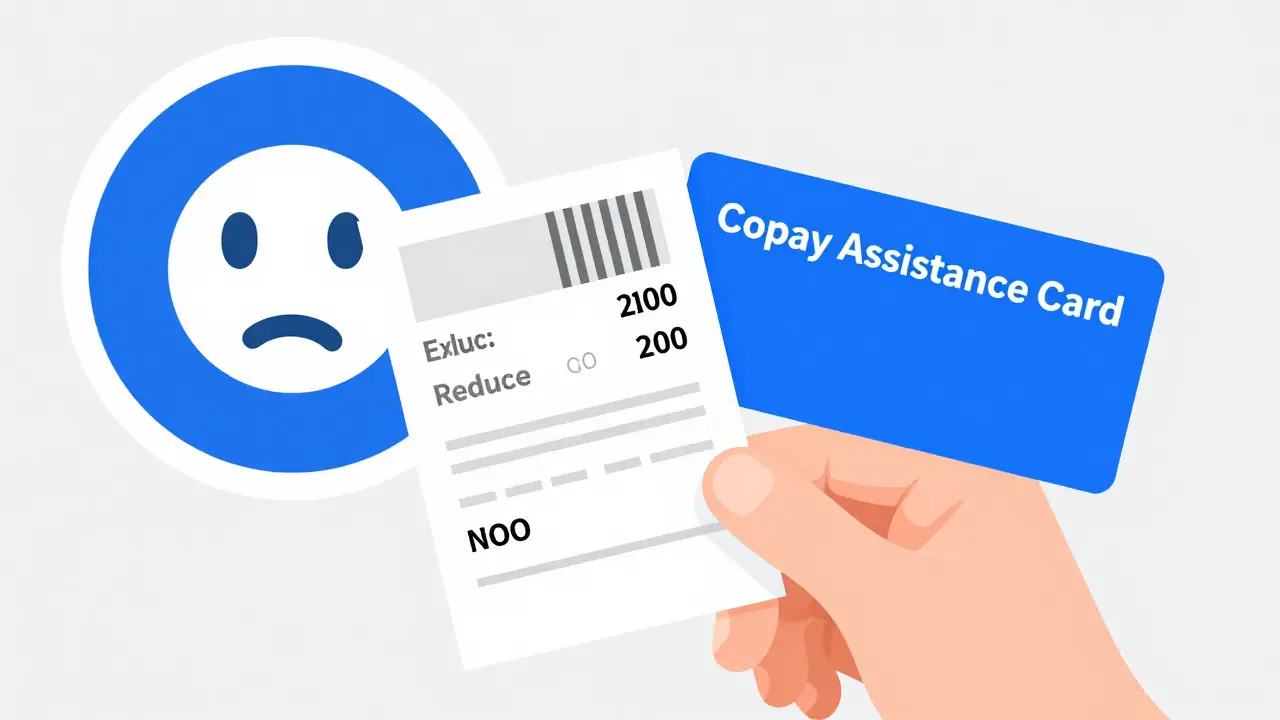
Have you ever stared at a prescription receipt and felt your stomach drop? You’re not alone. Prescription drug costs in the United States have skyrocketed, with many brand-name medications costing hundreds or even thousands of dollars per month. If you have private health insurance, there is a powerful tool that can slash those costs significantly: manufacturer copay assistance cards are financial aid programs offered by pharmaceutical companies to help commercially insured patients afford their brand-name prescriptions. Also known as copay coupons or savings cards, these tools can reduce your out-of-pocket expenses to just a few dollars-or even zero-for eligible drugs.
But here’s the catch: using them isn’t as simple as showing a card at the counter. There are strict eligibility rules, hidden traps involving how your insurance counts payments, and critical deadlines you need to watch. This guide breaks down exactly how to get one, how it works behind the scenes, and how to avoid the financial shock that catches many patients off guard.
Who Qualifies for Manufacturer Copay Cards?
Before you spend time applying, you need to know if you’re eligible. The rules are specific and non-negotiable due to federal regulations.
- You must have commercial/private insurance: These cards are designed exclusively for people covered by private employer-sponsored plans or individual market policies purchased through exchanges like Healthcare.gov.
- You cannot be on government-funded plans: If you are enrolled in Medicare Part D, the federal program that covers prescription drugs for seniors and some disabled individuals, Medicaid, TRICARE, or Veterans Affairs (VA) benefits, you generally cannot use these cards. Federal laws prohibit manufacturers from providing direct financial assistance to patients on these programs to prevent unfair competition and protect public funds.
- The medication must be brand-name: Copay cards are typically available only for specific brand-name drugs. Generic medications usually don’t qualify because they are already low-cost. Specialty medications, such as biologics used for autoimmune diseases, are common candidates for these assistance programs.
If you fall into the private insurance category and are prescribed a costly brand-name drug, you likely qualify. The next step is finding the right card.
How to Get Your Copay Card
The process is straightforward but requires a bit of initiative. Most pharmaceutical manufacturers host dedicated patient support pages on their official websites. Here is how to secure your card:
- Visit the drug manufacturer’s website: Search for “[Drug Name] patient support” or “[Drug Name] savings card.” Look for the official .com domain to avoid third-party scams.
- Create an account: You’ll need to provide basic information, including your name, date of birth, insurance details, and sometimes your prescribing doctor’s information.
- Verify eligibility: The system will check if your insurance plan is eligible. Some plans block these cards entirely, so this step confirms whether the card will work for you.
- Download or print the card: Once approved, you can often save the card digitally to your phone or print a physical copy. Many pharmacies now accept digital versions via QR codes or app integration.
Keep this card handy. You’ll need it every time you refill your prescription.
How It Works at the Pharmacy Counter
When you present your copay card at the pharmacy, a complex transaction happens in seconds. Here’s what’s going on behind the scenes:
Your insurance company processes the claim first. They determine the standard copay or coinsurance amount based on your plan’s formulary tier. Then, the copay card kicks in. The manufacturer pays the difference between what your insurance requires you to pay and the maximum copay limit set by the card (often $0 to $15 per prescription).
For example, if your monthly specialty medication normally has a $400 copay, and your card offers up to $8,000 in annual savings, you might pay only $5 at the pharmacy. The manufacturer reimburses the pharmacy for the remaining $395. This makes expensive treatments accessible without draining your bank account.
| Feature | Manufacturer Copay Card | Third-Party Discount Card (e.g., GoodRx) |
|---|---|---|
| Who Offers It | Pharmaceutical Company | Independent Savings Companies |
| Insurance Requirement | Must have private/commercial insurance | No insurance needed; can replace insurance |
| Best For | High-cost brand-name/specialty drugs | Generic drugs or uninsured patients |
| Medicare Eligible? | No (Federal Restriction) | Yes (in most cases) |
| Counts Toward Deductible? | Depends on insurer (see below) | No (payment goes directly to pharmacy) |
The Hidden Trap: Copay Accumulators vs. Maximizers
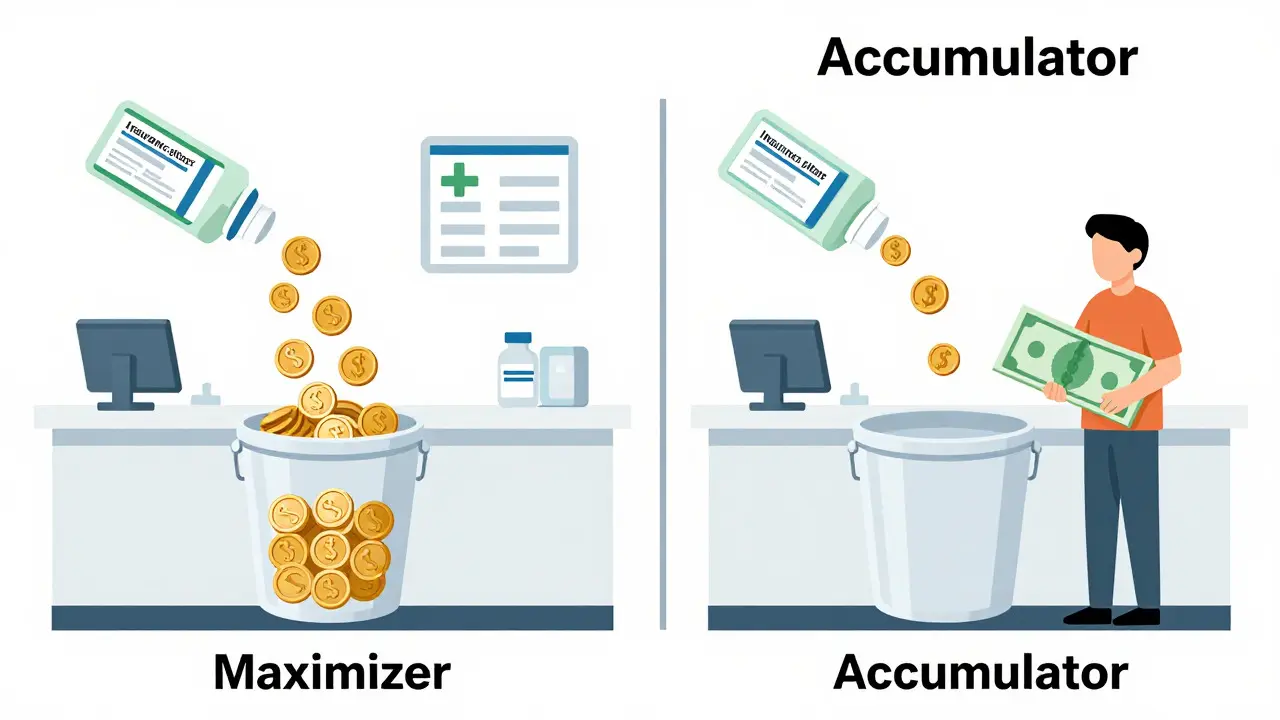
This is the most critical part of understanding copay assistance, and where many patients face unexpected bills. When you use a copay card, does that payment count toward your yearly deductible and out-of-pocket maximum? The answer depends entirely on your insurance plan’s policy.
There are two types of programs:
- Copay Maximizer (Patient-Friendly): Your insurance treats the manufacturer’s payment as if YOU paid it. If you have a $5,000 out-of-pocket maximum and the manufacturer pays $4,000 toward your drug costs, your insurance recognizes that you’ve met $4,000 of your max. You reach catastrophic coverage sooner.
- Copay Accumulator (Insurer-Friendly): Your insurance ignores the manufacturer’s payment. The $4,000 paid by the drug company does NOT count toward your $5,000 out-of-pocket maximum. You still owe the full $5,000 before your insurance covers 100% of costs. This can lead to massive surprise bills later in the year.
As of recent industry data, a significant majority of commercial health plans have switched to accumulator models to control costs. This means while your copay card saves you money upfront, it may delay when your insurance starts covering everything else. Always call your pharmacy benefits manager (PBM) and ask: “Does my plan use a copay accumulator or maximizer?”
Managing Annual Limits and Avoiding Shock Bills
Most copay cards have an annual cap, commonly ranging from $500 to $8,000. Once you hit that limit, the card stops working, and you’re responsible for the full copay until the next benefit year begins.
Imagine you have a card with a $6,000 annual limit and a monthly drug cost of $1,500. For four months, you pay almost nothing. In month five, the card runs out. Suddenly, you face a $1,500 bill. If your insurance uses an accumulator, you haven’t made progress on your deductible either. This double whammy can be financially devastating.
To protect yourself:
- Track your usage: Log into your patient portal monthly to see how much of your annual benefit remains.
- Plan ahead: If you know you’ll exhaust the card in June, contact the manufacturer’s patient assistance team in May. They may offer additional grants or transition programs.
- Know your deductible status: Check your insurance statement regularly. If you’re close to your out-of-pocket max, you might stop using the card temporarily (if allowed) to ensure your payments count toward hitting that maximum faster.
Alternatives When Copay Cards Don’t Work
If you’re on Medicare, Medicaid, or simply ineligible for a manufacturer card, don’t panic. Other options exist:
- Patient Assistance Programs (PAPs): Many manufacturers offer separate PAPs for uninsured or underinsured patients. These often require proof of income but can provide free medication.
- Non-Profit Foundations: Organizations like PAN Foundation or HealthWell Foundation offer grants for specific conditions (cancer, autoimmune disorders, etc.).
- Pharmacy Discount Cards: Services like GoodRx or SingleCare negotiate lower cash prices. While they won’t match the depth of a copay card for specialty drugs, they can significantly reduce generic costs.
- Prescription Drug Assistance Programs (PDAPs): State-specific programs may offer subsidies for residents meeting certain criteria.
Practical Tips for Success
Using copay assistance effectively requires proactive management. Treat it like a budget line item. Set calendar reminders to renew your card annually-eligibility doesn’t automatically roll over. Keep digital copies of all approval letters and correspondence with the manufacturer. If a pharmacy claims the card isn’t working, verify with the manufacturer’s customer service line immediately; technical glitches happen.
Finally, communicate openly with your prescriber. Doctors often know about local resources or alternative therapies with better insurance coverage. A slight change in medication might unlock broader financial relief.
Can I use a copay card if I have Medicare?
Generally, no. Federal law prohibits pharmaceutical manufacturers from offering copay assistance to patients enrolled in Medicare Part D, Medicaid, TRICARE, or VA benefits. However, Medicare beneficiaries can explore Patient Assistance Programs (PAPs) directly from manufacturers or non-profit foundations that provide free or low-cost drugs based on income.
Does the copay card count toward my deductible?
It depends on your insurance plan. If your plan uses a "copay maximizer," yes, the manufacturer's payment counts toward your deductible and out-of-pocket maximum. If your plan uses a "copay accumulator," no, the payment does not count. You must contact your insurance provider to find out which model they use, as accumulators are becoming increasingly common.
What happens when I reach the annual limit on my copay card?
Once you exceed the annual maximum (e.g., $8,000), the card stops providing discounts for the remainder of the benefit year. You will be responsible for paying the full copay or coinsurance amount determined by your insurance plan. Contact the manufacturer’s patient support team a month before you expect to hit the limit to discuss potential extensions or alternative assistance programs.
How do I find out if my drug has a copay card?
Visit the official website of the pharmaceutical company that manufactures your medication. Look for sections labeled "Patient Support," "Savings Program," or "Copay Card." Enter your prescription details and insurance information to check eligibility. You can also ask your pharmacist or doctor, who often have access to current assistance resources.
Are copay cards safe to use?
Yes, when obtained directly from the manufacturer. Be cautious of third-party websites selling "discount cards" for high fees. Official manufacturer copay cards are free to apply for and use. Always verify you are on the legitimate drug company’s domain before entering personal or insurance information.