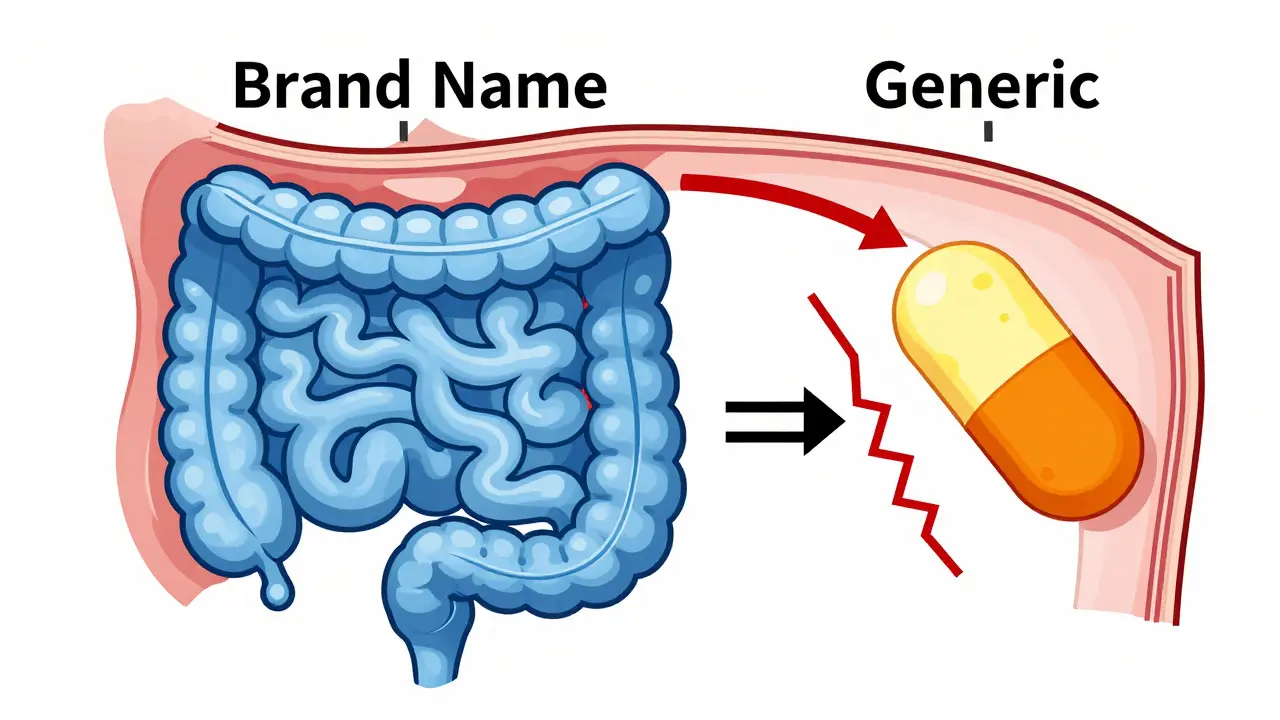
You take your morning pill, expecting the same relief as yesterday. But suddenly, you feel dizzy, anxious, or just... off. Did the drug stop working? Or did the pharmacy switch you to a different manufacturer’s generic version without telling you? It’s a frustrating scenario that millions of Americans face every year. While generic medications are legally required to be "bioequivalent" to their brand-name counterparts, the reality inside your body can be messier than the label suggests.
The short answer is yes: some people react differently to generics. This isn’t always because the drug is bad; it’s often due to subtle differences in how the pill dissolves, what other ingredients are packed inside it, or simply how sensitive your specific physiology is to small changes. Understanding why this happens-and which drugs carry the highest risk-can help you advocate for your health and avoid unnecessary side effects.
How Bioequivalence Actually Works (And Where It Loops)
To understand why reactions vary, we first need to look at the rules. The FDA requires generic drugs to meet strict standards before they hit the shelves. Specifically, a generic must deliver between 80% and 125% of the active ingredient concentration in your bloodstream compared to the brand-name original. This range is calculated using a 90% confidence interval, meaning statistically, the average performance falls within that window.
On paper, this sounds tight. In practice, it creates a loophole for individual variation. Imagine two different generic manufacturers producing the same blood pressure medication. Manufacturer A produces a pill that delivers 80% of the reference dose (the low end of the legal limit). Manufacturer B produces a pill that delivers 125% (the high end). Both are perfectly legal and approved. However, if you switch from Manufacturer A to Manufacturer B, your effective dose has increased by nearly 45%. For most drugs, your body handles this fine. For others, it’s a problem.
| Metric | FDA Standard | Real-World Implication |
|---|---|---|
| Active Ingredient | Identical chemical structure | Same primary effect on target receptors |
| Blood Concentration Range | 80% - 125% of brand name | Allows up to ~45% difference between two generic brands |
| Inactive Ingredients | Can vary significantly | Affects absorption speed, allergy risk, and digestion |
| Therapeutic Equivalence | 96% rated equivalent | 4% have potential concerns (BX rating) |
This mathematical reality means that while generics save the U.S. healthcare system approximately $373 billion annually, they introduce a variable that doesn't exist with brand-name consistency: manufacturing variance. When you stay on one brand, the variance is zero. When you swap generics, the variance can spike.
The Hidden Culprit: Inactive Ingredients
We tend to focus entirely on the "active" pharmaceutical ingredient-the part that cures the headache or lowers the cholesterol. But that active ingredient usually makes up only 1% to 20% of the pill’s total weight. The rest? That’s all excipients, or inactive ingredients.
These include fillers, binders, dyes, preservatives, and coating materials. The FDA allows manufacturers to use different excipients as long as they don’t interfere with safety or efficacy. For most people, these differences are invisible. But for a subset of patients, they are anything but.
Consider sodium metabisulfite, a common preservative. According to Dr. William B. Schultz, former FDA deputy commissioner, bisulfites like this cause asthmatic allergic reactions in about 5-10% of asthmatic patients. If you switch from a brand-name inhaler to a generic that uses a different preservative, you might not get an allergic reaction-but you might get a cough that feels like an asthma attack. Similarly, certain dyes and gluten-based binders can trigger sensitivities in patients with autoimmune conditions or digestive disorders like IBS.
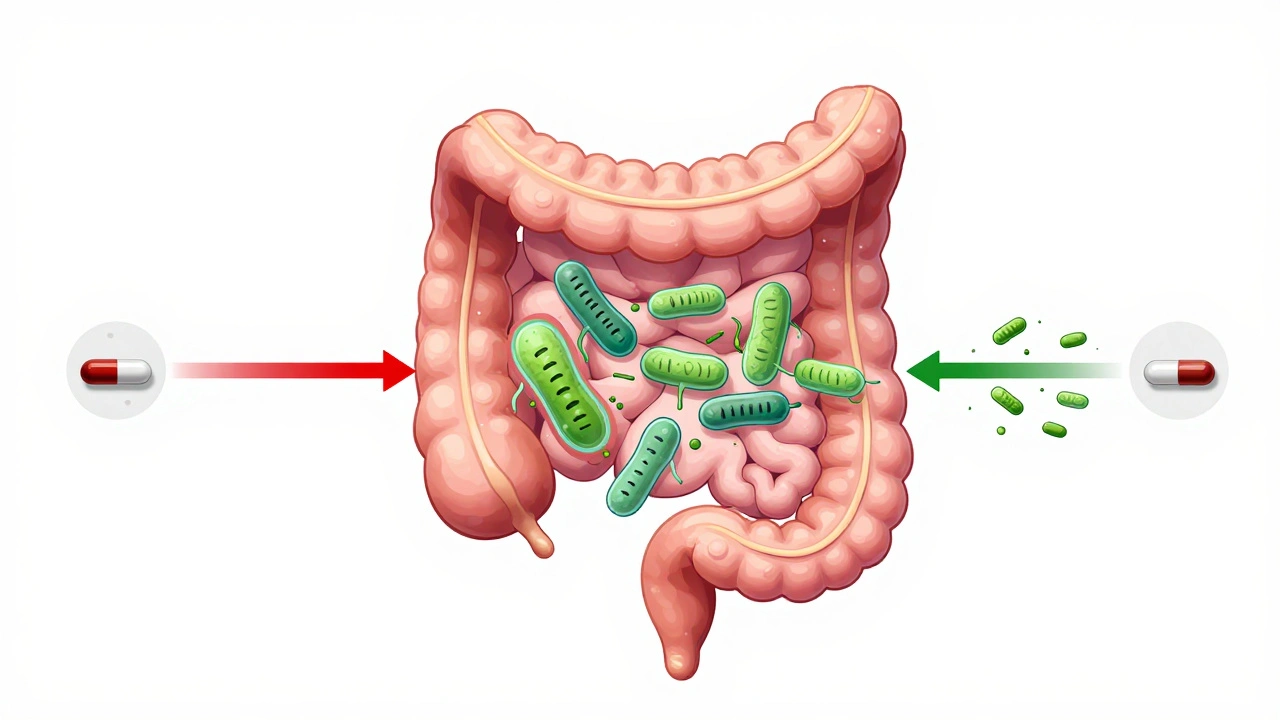
Even without allergies, excipients change how fast a pill dissolves. A faster-dissolving pill hits your bloodstream quicker, potentially causing a sharper peak in drug levels (and side effects) followed by a quicker drop-off. A slower-dissolving pill provides a gentler curve. If you’re used to the smooth ride of Brand X, switching to Generic Y with a different coating might make you feel jittery in the morning and ineffective by afternoon.
Narrow Therapeutic Index (NTI) Drugs: The High-Stakes Category
Not all medications are created equal when it comes to tolerance for error. Most drugs, like antibiotics or painkillers, have a wide "therapeutic index." This means there’s a large gap between the dose that works and the dose that hurts you. If your antibiotic level fluctuates by 20%, you’ll likely still kill the bacteria without getting sick.
But then there are Narrow Therapeutic Index (NTI) drugs. These are medications where the difference between a helpful dose and a toxic dose is tiny-often less than a 2-fold variation. For these drugs, the standard 80-125% bioequivalence rule is too loose. A 10-15% shift in blood concentration can push you out of the safe zone.
Common NTI medications include:
- Levothyroxine (Synthroid): Used for thyroid hormone replacement.
- Warfarin (Coumadin): A blood thinner.
- Phenytoin (Dilantin) and Lamotrigine: Anti-seizure medications.
- Digoxin (Lanoxin): Used for heart failure and arrhythmias.
- Cyclosporine: An immunosuppressant for transplant patients.
The stakes here are real. A 2019 study published in JAMA Internal Medicine looked at over 2,000 patients switching from brand-name levothyroxine to generic versions. Within six months, 23.7% of those who switched experienced thyroid-stimulating hormone (TSH) levels that drifted outside the therapeutic range. Compare that to just 14.2% of patients who stayed on the brand name. That’s a significant jump in instability caused solely by the formulation change.
Similarly, research in Epilepsia found that 17.3% of patients switching from brand-name lamotrigine to generics experienced breakthrough seizures, compared to 8.9% who stayed on the brand. For someone managing epilepsy, a seizure isn’t just an inconvenience; it’s a danger. This data suggests that for NTI drugs, "generic" is not always interchangeable with "identical experience."
What the Data Says About Broad-Spectrum Drugs
If NTI drugs are the high-risk zone, what about everyday medications like metformin for diabetes or lisinopril for blood pressure? Here, the picture is more reassuring, but not perfect.
A 2020 systematic review in Diabetes, Obesity and Metabolism analyzed 15 clinical trials involving over 3,400 patients. They found no statistically significant difference in HbA1c reduction (a key marker for blood sugar control) between generic and brand-name metformin. The mean difference was a negligible 0.04%. For the vast majority of people taking common chronic disease medications, generics work just as well as brands.
However, individual anecdotes persist. Patient reviews on platforms like Drugs.com show that nearly 40% of patients taking generic levothyroxine reported worse symptom control than the brand. In Reddit discussions among pharmacy professionals, over 60% of users reporting issues cited problems with generic bupropion (Wellbutrin), specifically mentioning severe headaches and increased anxiety after switching manufacturers.
Why the disconnect between the broad studies and individual complaints? It likely comes down to outliers. Clinical trials measure averages. They tell us that *most* people do fine. But if you happen to be one of the 10% whose gut absorbs drugs slightly slower, or whose liver metabolizes them faster, the average doesn’t help you. You’re living in the tail end of the distribution curve, where the 80-125% variance matters immensely.
Monitoring Protocols: How to Protect Yourself
If you’ve noticed a change in how you feel after a pharmacy switch, don’t ignore it. And don’t assume it’s "all in your head." There are concrete steps you can take to manage these transitions safely.
- Check Your Drug Class: Identify if your medication is an NTI drug. If it is, ask your doctor if staying on a specific manufacturer is medically necessary. Many doctors will write "Dispense As Written" (DAW) on the prescription for NTI drugs to prevent automatic substitution.
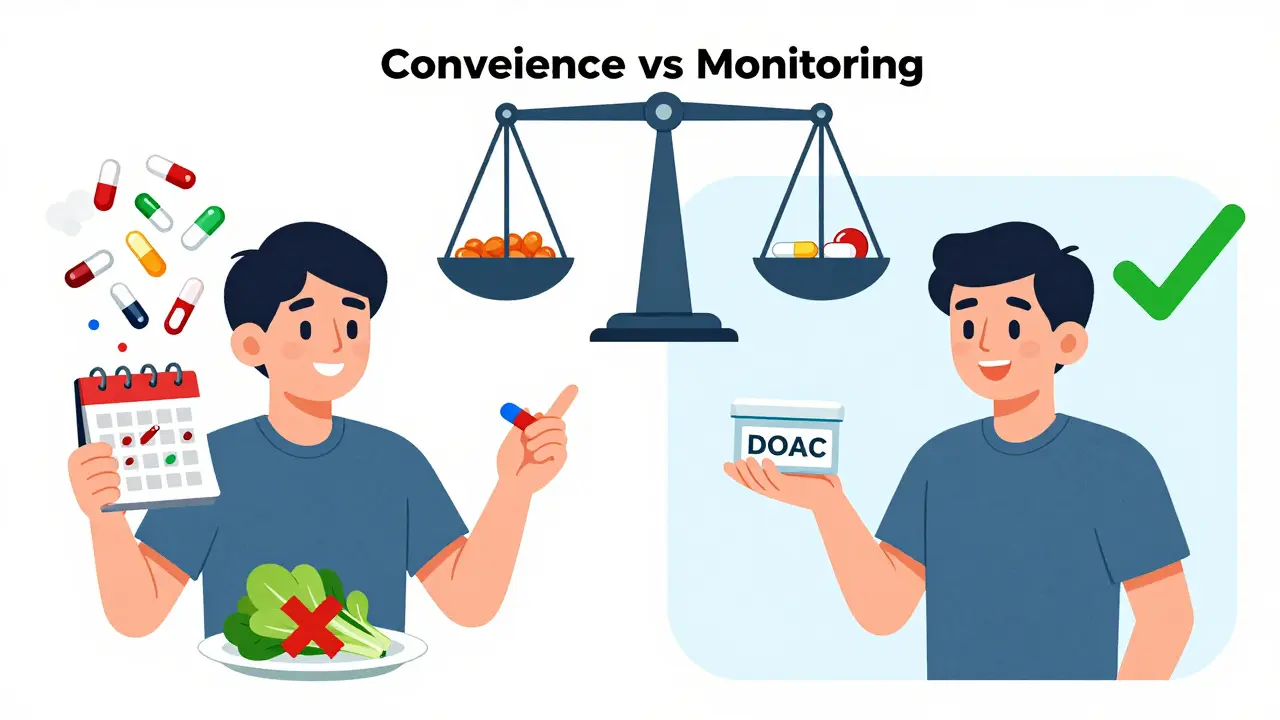
- Monitor Key Markers: If you switch formulations, retest your biomarkers sooner rather than later. The American Thyroid Association recommends checking TSH levels 6-8 weeks after any levothyroxine change. For warfarin, the American College of Chest Physicians advises monitoring INR levels within 3-5 days of a switch.
- Keep a Symptom Diary: Track your energy levels, mood, pain scores, or side effects daily for two weeks after a switch. Concrete data helps your doctor distinguish between placebo/nocebo effects and genuine pharmacokinetic issues.
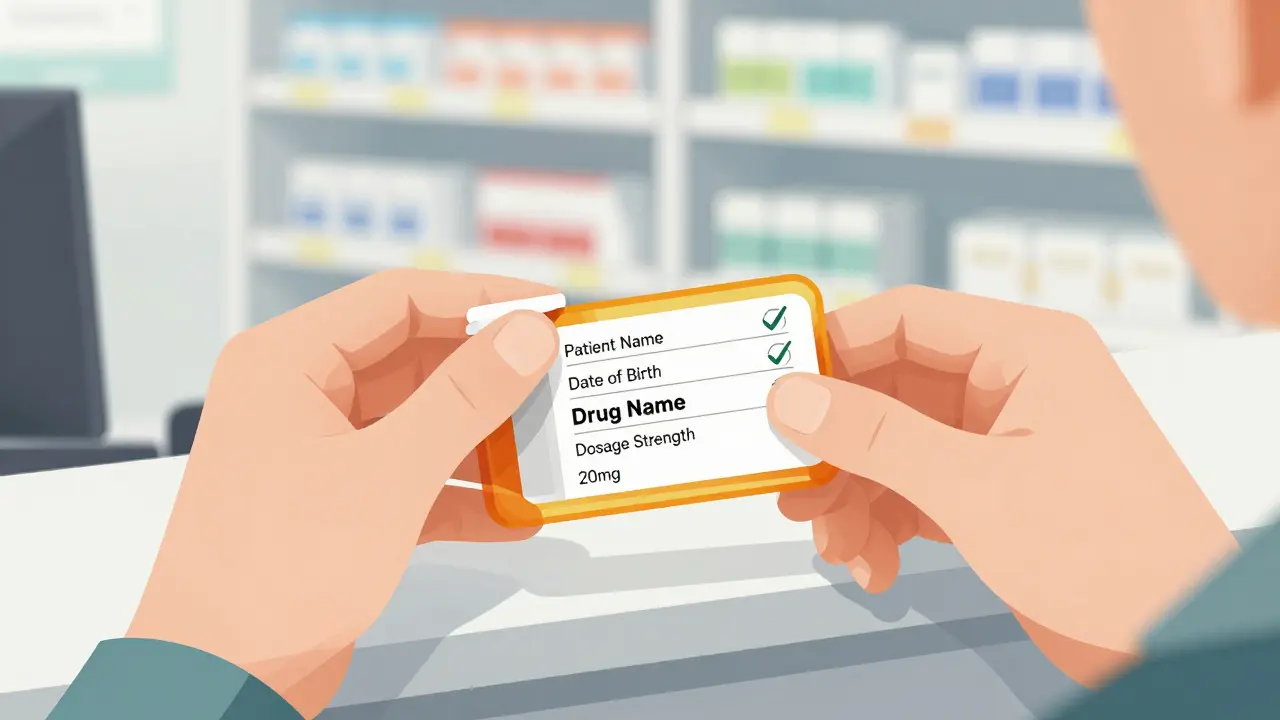
- Ask About Excipients: If you have known allergies (sulfites, gluten, dyes), ask your pharmacist to check the inactive ingredient list. The FDA maintains an Inactive Ingredient Database that pharmacists can access to verify components.
Pharmacists at major chains like CVS and Walgreens have started implementing "therapeutic interchange protocols" that flag NTI medications, requiring prescriber approval before swapping brands. This affects about 2.3% of all generic substitutions, showing that the industry is aware of the risk.
The Future of Generic Standards
Regulators are listening. The FDA released draft guidance in 2023 proposing stricter manufacturing standards for 23 high-risk medication classes. Additionally, the European Medicines Agency already enforces tighter bioequivalence ranges (90-111%) for NTI drugs, resulting in fewer generic approvals but potentially higher consistency for patients who do qualify.
There’s also innovation on the horizon. Pharmacogenomic testing-which analyzes how your genes affect drug metabolism-can now predict individual response variations to generics with over 80% accuracy for certain drug classes. This could lead to a future where your insurance plan doesn’t just approve *any* generic, but the *right* generic for your biology.
Until then, the burden remains on the patient-provider partnership. Generics are a miracle of modern medicine, saving billions and making care accessible. But they are not magic bullets that guarantee identical experiences for every human body. By understanding the mechanics of bioequivalence and knowing when to demand consistency, you can ensure your treatment plan works as hard for you as it should.
Are generic medications always exactly the same as brand-name drugs?
No. While they contain the same active ingredient, generic drugs can differ in inactive ingredients (fillers, dyes, binders) and may vary in how quickly they dissolve and absorb into your bloodstream. The FDA allows a bioequivalence range of 80-125% compared to the brand name, which means two different generic brands can differ from each other by up to 45% in absorption rates.
Which medications are most risky to switch from brand to generic?
Narrow Therapeutic Index (NTI) drugs carry the highest risk. These include levothyroxine (for thyroid), warfarin (blood thinner), phenytoin and lamotrigine (seizure meds), and digoxin (heart medication). Because the margin between a helpful dose and a toxic dose is very small, even slight variations in generic formulations can lead to serious health issues.
Can inactive ingredients in generics cause side effects?
Yes. Inactive ingredients like sulfites, gluten-based binders, or specific dyes can trigger allergic reactions or sensitivities in susceptible individuals. For example, sulfites can cause asthma attacks in 5-10% of asthmatics. Additionally, different coatings can alter how fast the drug releases, potentially causing spikes in side effects like nausea or dizziness.
What should I do if I feel worse after switching to a generic?
First, track your symptoms in a diary for two weeks. Then, contact your doctor or pharmacist. Do not stop taking the medication abruptly. Ask if you can switch back to the brand name or try a different generic manufacturer. For NTI drugs, request lab tests (like TSH or INR) to objectively measure if the drug levels are stable.
Is it expensive to stick with brand-name drugs instead of generics?
It can be. Brand-name drugs often cost significantly more, which is why generics account for 90% of prescriptions in the U.S. However, for NTI drugs, many insurance plans cover brand names if a doctor certifies medical necessity. Weighing the cost against the potential cost of adverse health events (hospitalizations, lost work) is crucial for high-risk medications.