Imagine picking up a bottle of pills that looks exactly like your usual medicine. The label has your name. The dosage seems right. You walk out, take it home, and start taking it-only to realize three days later that it’s the wrong strength, or worse, the wrong drug entirely. This isn’t a horror movie plot; it’s a reality for millions of people every year.
Medication errors are shockingly common. According to data from the American Society of Health-System Pharmacists (ASHP), these mistakes affect approximately 1.5 million people annually in the United States alone. While pharmacists work hard to prevent these slips, they are human, and systems can glitch. That is why verifying your prescription at the pharmacy counter is not just a formality-it is your final, most critical line of defense against harm.
You might feel awkward questioning a professional, or you might be in a rush and just want to leave. But taking three minutes to check your meds could save your health. Here is exactly how to do it, based on current safety protocols and expert advice.
The 7-Point Verification Checklist
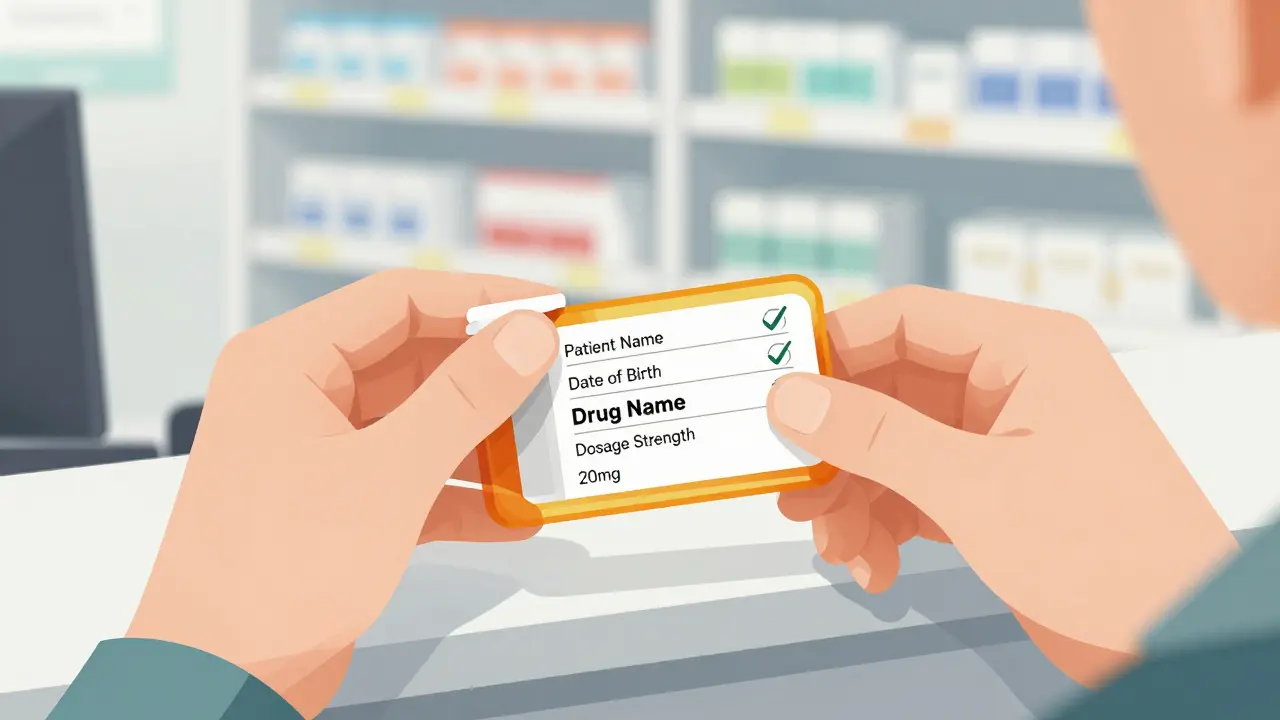
When you pick up your medication, do not just grab the bag and go. Use this specific checklist to verify every element. It takes about three minutes but catches the vast majority of dispensing errors.
- Check Your Personal Information: Look at the label immediately. Does it say your full legal name? Is your date of birth correct? Pharmacies use two identifiers (name and DOB) to ensure the drug belongs to you. If the name is misspelled significantly or the DOB is off, speak up. This prevents mix-ups between patients with similar names.
- Verify the Drug Name: Read the generic and brand name on the label. Does it match what your doctor prescribed? Be careful with look-alike drugs. For example, Celexa and Celebrex sound similar but treat completely different conditions. If you see a name you don’t recognize, ask the pharmacist to explain it before you leave.
- Confirm Dosage Strength: This is where many errors hide. A pill might be the right drug but the wrong strength (e.g., 10mg instead of 20mg). The Institute for Safe Medication Practices (ISMP) reports that dosage errors account for over 34% of all prescription mistakes. Check the number followed by 'mg' or 'mcg' carefully.
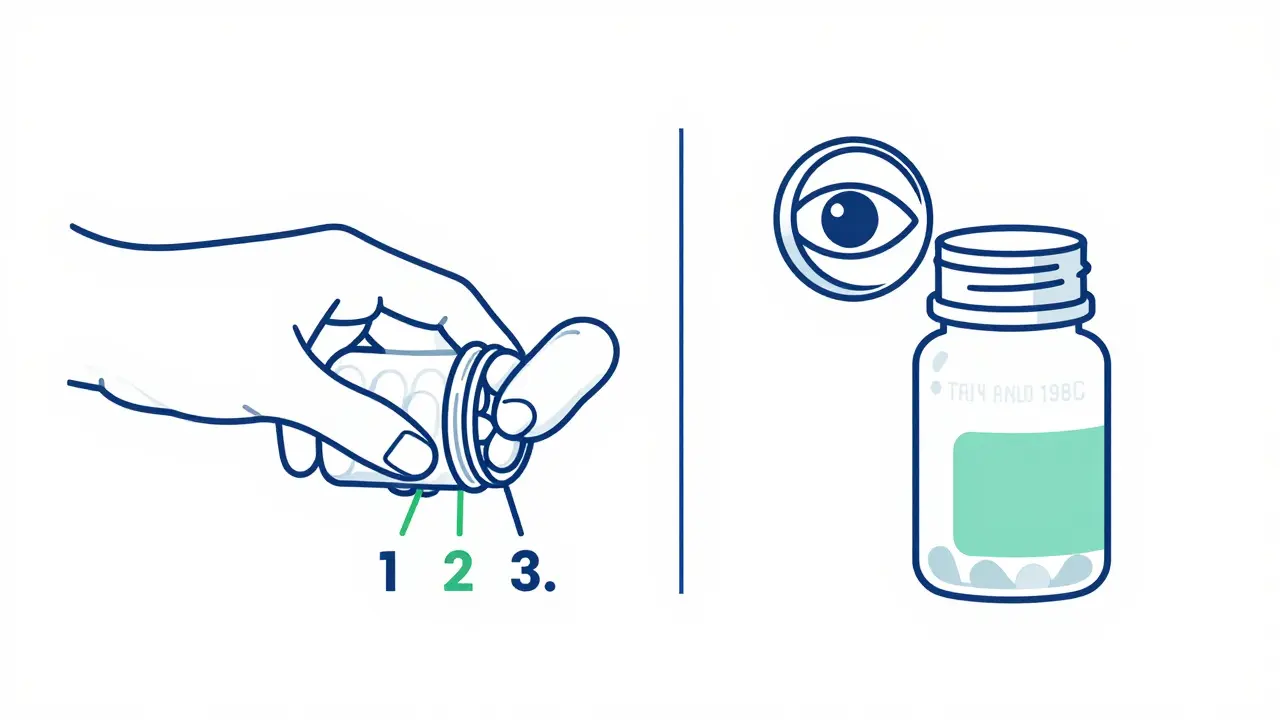
- Count the Pills: Open the bottle and count the tablets or capsules if possible. CMS data shows that nearly 10% of errors involve incorrect quantities. If you were supposed to get 30 pills and there are only 28, do not assume one fell out. Return it immediately. Missing pills can happen due to packaging defects or dispensing errors.
- Review Administration Instructions: Read the "Take" instructions on the label. Do they match what your doctor told you? Should you take it with food? Once a day or twice? Illegible or incomplete directions contribute to nearly 19% of medication errors. If the label says "QD" (once daily) but your doctor said "twice daily," flag it.
- Check Expiration Date and Packaging: Glance at the expiration date on the bottle. It should be months or years away, not next month. Also, check the seal. Is the child-proof cap intact? Is the inner foil liner unbroken? Datalogic reports that expired products occasionally reach patients due to inventory lapses.
- Controlled Substance Checks: If you are picking up a controlled substance (like ADHD meds or opioids), the pharmacist may have verified your address and ID more strictly. Ensure the quantity matches the strict limits set by your prescriber and local laws.
Why Patient Verification Matters More Than You Think
You might wonder, "Isn't the pharmacist responsible for getting this right?" Yes, absolutely. But relying solely on them leaves a gap. Research published in the National Institutes of Health (PMC Article ID: PMC3130755) found that when patients actively verify their prescriptions, medication errors drop by up to 37.2%.
Think of it like a safety net. The doctor writes the script, the pharmacy system processes it, the pharmacist reviews it, and then you-the user-give the final nod. Centers for Medicare & Medicaid Services (CMS) data from 2022 showed that 12.7% of pharmacy claims contained errors that could have been caught if the patient had simply looked closer. By verifying, you aren't doubting the pharmacist; you are partnering with them to keep yourself safe.
| Error Type | Frequency in Errors | How to Catch It |
|---|---|---|
| Dosage Strength | 34.6% | Compare mg/mcg on label to doctor's order |
| Wrong Quantity | 9.2% | Count pills immediately upon receipt |
| Unclear Instructions | 18.7% | Read label aloud; ask if unclear |
| Expired Product | 4.1% | Check expiration date on bottle |
| Wrong Medication | 8.3% | Verify drug name matches expectations |
Overcoming Common Barriers
We know it’s not always easy. Many patients report feeling rushed or intimidated. Here is how to handle the most common hurdles.
Small Print: If you are over 65, reading tiny labels can be tough. CMS surveys show 64% of older adults struggle with this. Don't guess. Ask the pharmacist for a magnifying glass-most pharmacies have them-or use your smartphone camera to zoom in on the text.
Generic vs. Brand Confusion: About 39% of first-time prescriptions cause confusion because the generic name looks different from the brand name you knew. Ask the pharmacist: "Is this the generic version of [Brand Name]?" They can confirm if it’s therapeutically equivalent.
Time Pressure: Some patients worry about holding up the line. Remember, safety is faster than fixing a mistake later. If the pharmacist seems rushed, politely say, "I need a moment to verify this for my safety." Most professionals will respect this. In fact, 78% of pharmacists consider patient verification essential to their own safety protocols (APhA 2022 Survey).
What to Ask the Pharmacist
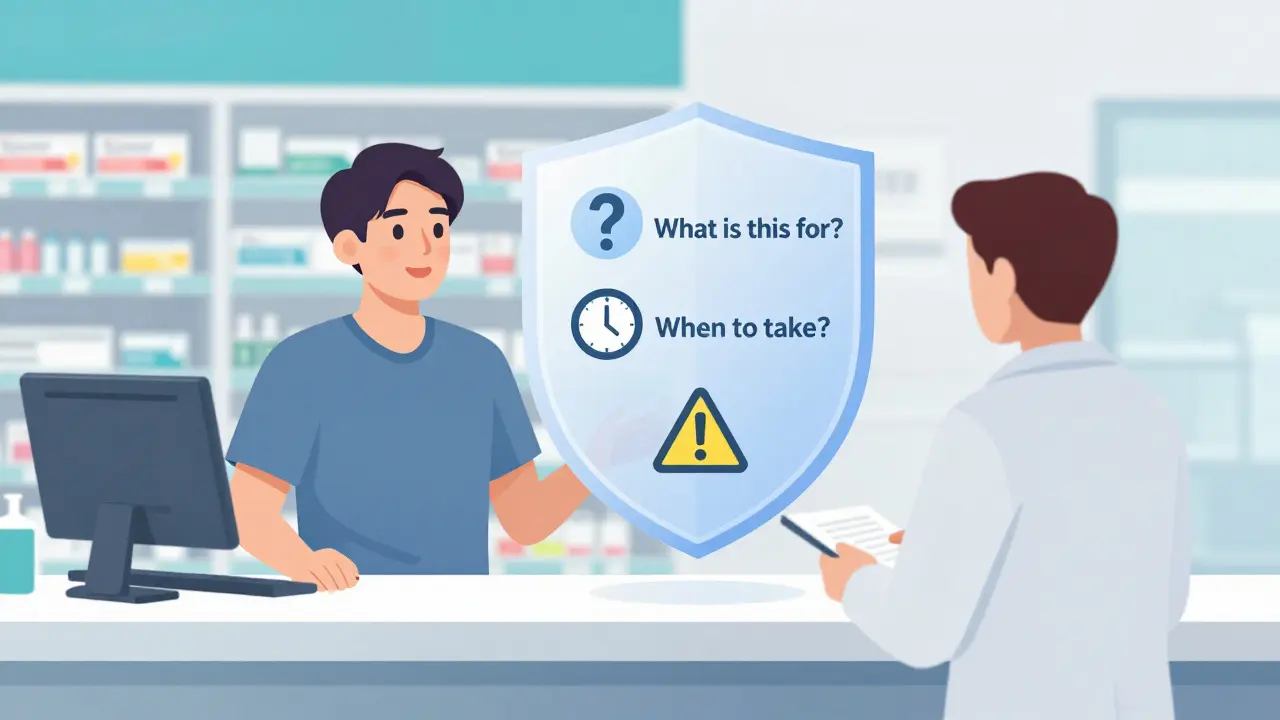
If anything looks off, or if you just want to be sure, ask these three questions recommended by the FDA:
- "What is this medication for?" This confirms the drug matches your condition.
- "How and when should I take it?" This ensures you understand the dosing schedule.
- "What side effects should I watch for?" This prepares you for potential reactions.
Dr. Jennifer Le, a clinical pharmacy professor at UCSF, notes that visually confirming the medication name and strength before leaving catches about 65% of potential errors. She advises: "Don't be shy. We want you to check. It makes us both safer."
New Technologies and Future Trends
The pharmacy landscape is changing. Under the Drug Supply Chain Security Act (DSCSA), implemented fully in late 2023, medications now include unique product identifiers with serial numbers and lot codes. Many major chains like CVS and Walgreens are installing "patient verification stations" with tablets where you can scan your barcode to see an image of the drug and its details before pickup.
While technology helps, it doesn't replace your eyes. Barcode scanners catch product identification errors, but they won't tell you if the dosage instruction on the label contradicts what your doctor said verbally. Human verification remains irreplaceable.
Summary of Key Actions
To wrap up, here is your quick action plan for your next pharmacy visit:
- Pause: Take 3 minutes before leaving the counter.
- Inspect: Check name, DOB, drug name, strength, quantity, and expiration.
- Count: Physically count the pills if possible.
- Ask: Clarify any confusing abbreviations or instructions.
- Speak Up: If something feels wrong, return it immediately. Trust your gut.
Your health is too important to leave to chance. By mastering this simple checklist, you become an active partner in your care, reducing risk and ensuring peace of mind.
Is it rude to ask the pharmacist to double-check my prescription?
Not at all. Pharmacists expect and appreciate patient involvement. In fact, 92.3% of pharmacists encourage patients to examine their medications before departure. Asking questions shows you are engaged in your health, which improves safety outcomes for everyone.
What should I do if I find an error after leaving the pharmacy?
Stop taking the medication immediately. Contact the pharmacy as soon as possible with your receipt and the bottle. They will typically arrange for a replacement to be sent to you or picked up urgently. Do not wait until your next scheduled appointment.
Can technology replace patient verification?
No. While barcode scanning and electronic records reduce errors significantly, they cannot catch all issues, such as therapeutic duplications or complex drug interactions that require clinical judgment. Patient verification serves as the final human checkpoint.
Why do dosage errors happen so often?
Dosage errors often stem from look-alike/sound-alike drug names or decimal point misplacements in electronic orders. Because dosage accounts for over 34% of errors, verifying the exact milligram (mg) amount on the label against your doctor's written instructions is crucial.
Do I need to verify online/mail-order prescriptions differently?
Yes. With mail-order, you cannot interact with a pharmacist in real-time. When the package arrives, inspect it immediately for damage. Verify the contents against the packing slip. If anything is missing or wrong, contact customer service before opening or using the medication.