
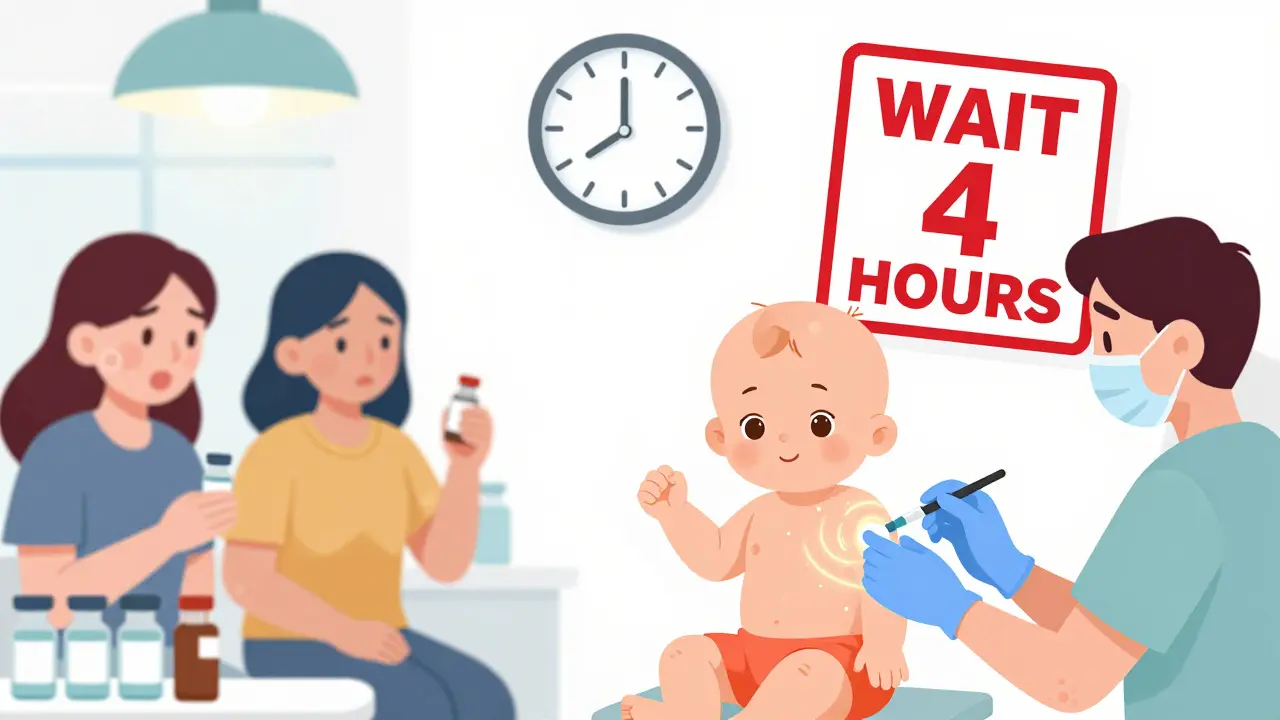
When your baby gets their shots, it’s normal to see a fever pop up a few hours later. Maybe it’s just a low-grade 100.5°F, or maybe it spikes to 103°F. Your first instinct? Reach for the Tylenol or Motrin. But here’s the thing: giving fever medicine too soon after vaccination might actually make the vaccine work less well.
Why Timing Matters More Than You Think
For years, parents and even some doctors gave fever reducers before or right after vaccines to keep kids comfortable. It seemed like the right thing to do. But research since 2009 changed everything. Studies showed that when kids got acetaminophen (Tylenol) or ibuprofen (Advil, Motrin) before or immediately after vaccination, their bodies made fewer antibodies. That’s the good stuff that protects them from diseases. The Centers for Disease Control and Prevention (CDC), Children’s Hospital of Philadelphia, and the American Academy of Pediatrics now all agree: don’t give fever reducers before vaccines. And don’t give them right after unless your child is clearly uncomfortable or has a high fever. It’s not about avoiding all medicine. It’s about waiting for the right moment.Which Vaccines Cause Fever?
Not all vaccines trigger fever the same way. Some are more likely to cause a spike than others.- Prevnar 13 (pneumococcal vaccine): About 24-35 out of 100 babies get a fever within a week.
- Pediarix (DTaP-IPV-HepB combo): Around 28-39 out of 100 babies develop a fever in the first few days.
- MenB (meningococcal B vaccine): This one is the biggest fever culprit. In the UK, health officials specifically recommend giving paracetamol (acetaminophen) after this vaccine at 8 and 16 weeks to prevent high fevers.
When Is a Fever Actually a Problem?
Not every temperature needs medicine. A low-grade fever (100°F to 102°F) is your child’s body doing exactly what it should - fighting off what the vaccine is teaching it to recognize. Seattle Children’s Hospital says: Don’t treat fevers under 102°F. Giving medicine for a mild fever might actually slow down your child’s immune response. You’re reducing the very reaction that helps the vaccine work. Only consider fever reducers when:- Temperature is above 102°F (39°C)
- Your child is fussy, crying nonstop, or can’t sleep
- They’re refusing fluids or seem unusually lethargic
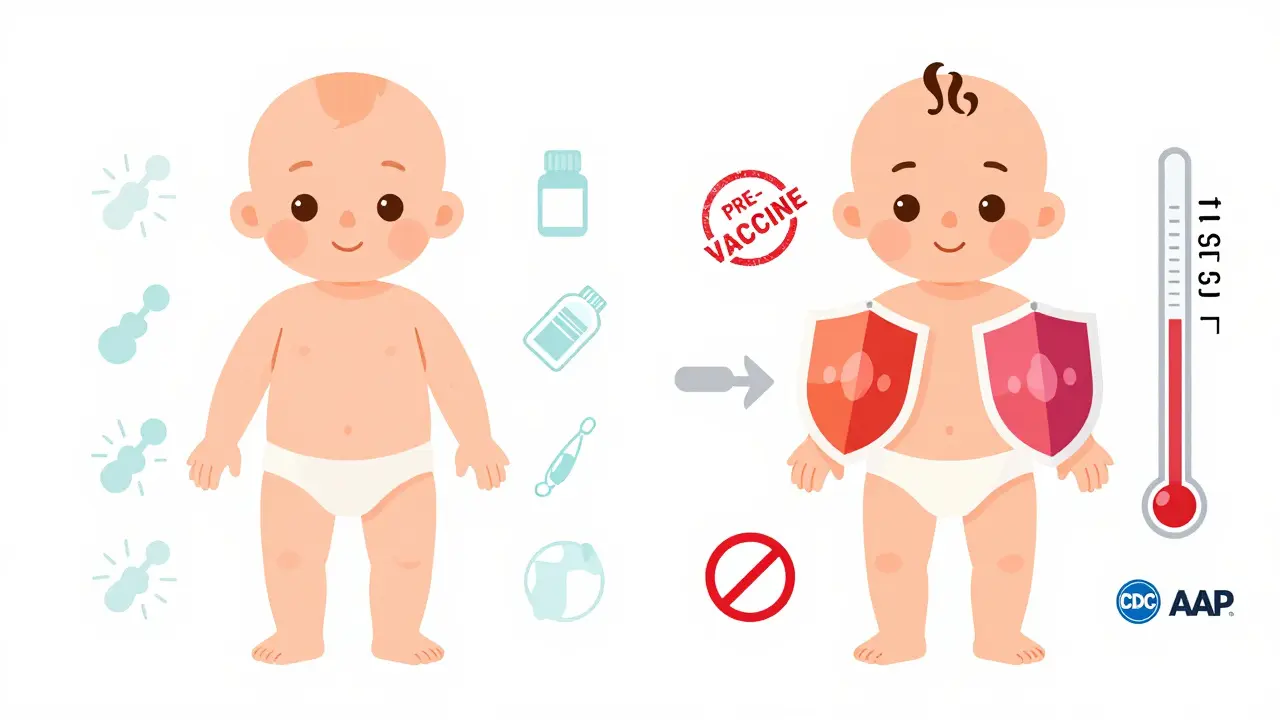
The 4-Hour Rule: When It’s Safe to Give Medicine
The sweet spot for giving fever reducers is at least 4 hours after the vaccine. Studies show that if you wait 4 hours or more, the immune response isn’t affected. That’s the window where comfort and protection can coexist. One study compared two groups: one got medicine right after the shot, the other waited until 6-8 hours later. The group that waited had normal antibody levels. The group that got medicine early? Their immune response dropped significantly. So if your child starts to feel warm at 3 p.m. after their 2 p.m. shots, hold off. Wait until 7 p.m. to decide if they need anything. Use that time to cuddle, offer fluids, and check their temperature every hour.Which Medicine? Acetaminophen or Ibuprofen?
Both work, but they’re not interchangeable.- Acetaminophen (Tylenol): Safe for babies 12 weeks and older. Dose depends on weight. For a baby 6-11 months (18-23 lbs), it’s 1.25 mL of infant drops. Give every 4-6 hours, no more than 4 doses in 24 hours.
- Ibuprofen (Advil, Motrin): Only for babies 6 months and older. For the same weight range, it’s 2.5 mL of infant drops. Give every 6-8 hours, no more than 4 doses in 24 hours.
What About the UK’s MenB Exception?
The NHS in the UK recommends giving liquid paracetamol after the MenB vaccine at 8 and 16 weeks. Why? Because this vaccine causes high fevers more often than others - sometimes over 104°F. This is the only major exception to the "no prophylactic meds" rule. And even then, it’s not given before the shot. It’s given after, to prevent dangerous spikes. In the U.S., doctors don’t routinely recommend this - but if your child had a high fever after MenB before, talk to your pediatrician. They might suggest the same approach.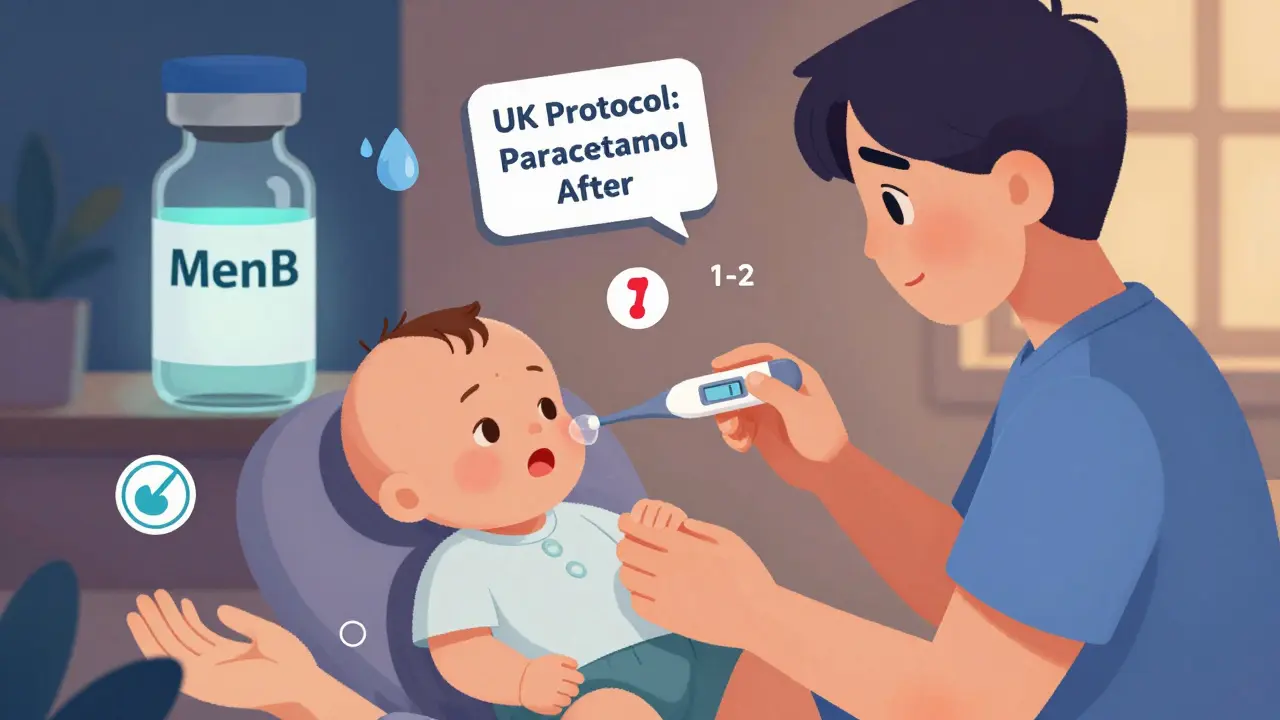
What Else Can You Do?
Medicine isn’t the only tool. Non-drug methods work just as well - and they don’t interfere with immunity.- Keep your child lightly dressed. Over-bundling traps heat.
- Offer breast milk, formula, or water often. Hydration helps regulate temperature.
- Use a lukewarm sponge bath if they’re very hot - never cold water or alcohol rubs.
- Let them rest. Cuddling and quiet time help more than you think.
- Fever over 104°F
- Fever lasting more than 48 hours
- Extreme fussiness, limpness, or unresponsiveness
- Difficulty breathing or a rash that spreads
- Refusing to drink for more than 8 hours
What About Vaccines When They’re Already Sick?
If your child has a mild cold, runny nose, or low-grade fever before their appointment - don’t cancel. The CDC says mild illness doesn’t reduce how well vaccines work. But if they’re running a high fever (102°F+) or seem very unwell, talk to your doctor. They might reschedule to be safe.Bottom Line: Wait, Watch, Then Act
The goal isn’t to eliminate every little fever. It’s to let your child’s body learn to fight disease - without unnecessary interference. So here’s your simple plan:- Don’t give fever reducers before the vaccine.
- Wait at least 4 hours after the shot.
- Check their temperature. If it’s under 102°F, skip the medicine.
- If it’s above 102°F and they’re uncomfortable, give the right dose of acetaminophen or ibuprofen.
- For MenB vaccine, follow your doctor’s advice - some recommend post-shot paracetamol.
- Never give aspirin. Never give acetaminophen to babies under 12 weeks without calling your doctor.
Should I give my baby Tylenol before their vaccines?
No. Giving acetaminophen before vaccination can reduce how well the vaccine works by lowering antibody production. Major health organizations like the CDC and American Academy of Pediatrics recommend against it. Wait until after the shot and only use it if your child develops a high fever or seems very uncomfortable.
Can I give ibuprofen after vaccines?
Yes, but only if your child is 6 months or older. Ibuprofen is safe after vaccines as long as you wait at least 4 hours and use the correct weight-based dose. Don’t give it to babies under 6 months - acetaminophen is the only approved fever reducer for younger infants.
How long does vaccine fever usually last?
Most vaccine-related fevers last 1 to 2 days. They typically start within 12 hours after the shot and go away on their own. If the fever lasts longer than 48 hours, or keeps coming back, contact your pediatrician - it could be a sign of another illness.
Is it safe to give fever medicine for a 101°F temperature?
Not usually. A fever of 101°F is a normal immune response and doesn’t require medication. Giving fever reducers at this level may interfere with the vaccine’s effectiveness. Only treat fevers above 102°F, or if your child is clearly uncomfortable, irritable, or having trouble sleeping.
Why does the NHS recommend paracetamol after the MenB vaccine?
The MenB vaccine causes high fevers more often than other childhood vaccines - sometimes above 104°F. The NHS recommends giving liquid paracetamol after the 8-week and 16-week doses to prevent dangerous spikes. This is the only major exception to the general rule against routine fever reducers after vaccines. In the U.S., this isn’t standard practice unless your child had a severe reaction before.
Can my child get vaccines if they already have a fever?
Yes, if it’s mild (under 102°F) and they’re otherwise acting normal. A low-grade fever from a cold or virus doesn’t interfere with vaccine effectiveness. But if they’re running a high fever, seem very sick, or are dehydrated, your doctor might suggest delaying the shots until they’re better.
What should I do if my baby is under 12 weeks and has a fever after a vaccine?
Call your doctor immediately. Acetaminophen isn’t approved for babies under 12 weeks without medical guidance. Any fever in a newborn - even 100.4°F - could signal a serious infection. Don’t give any medication without talking to a healthcare provider first.






10 Comments