
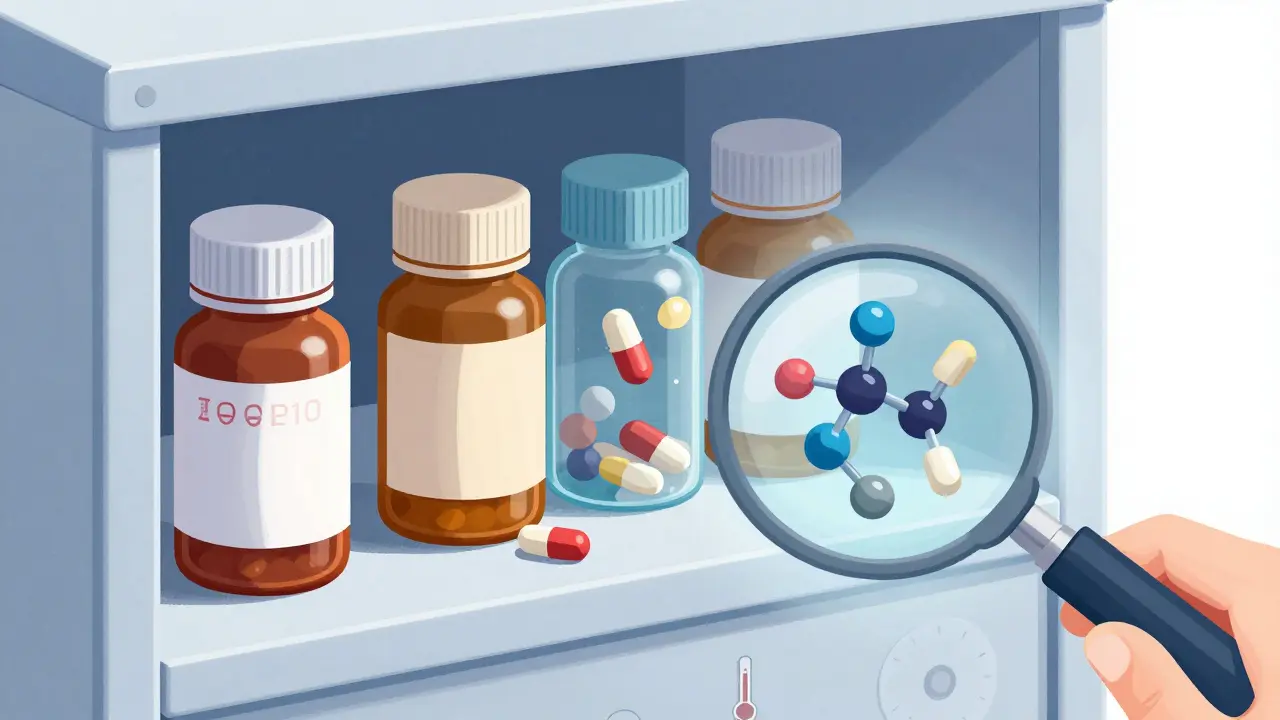
Ever opened a medicine cabinet and found a bottle of pills with a date that’s long past? You might’ve thought, "Is this still okay to take?" Or maybe you’ve tossed out a whole bottle because the expiration date came and went. But here’s the truth: expiration date doesn’t mean the drug suddenly turns dangerous on that day. It means the manufacturer guarantees it will work as intended up to that point - nothing more, nothing less.
What Exactly Is an Expiration Date?
The expiration date on your medicine isn’t a random guess. It’s the result of strict stability testing done by the manufacturer under conditions set by the U.S. Food and Drug Administration (FDA). These tests track how the drug holds up over time - whether the active ingredient stays strong, whether harmful byproducts form, and whether the pill or liquid still looks and behaves the way it should. Most drugs are tested under controlled conditions: around 25°C (77°F) and 60% humidity. That’s like a cool, dry room. The expiration date is set based on how long the drug stays above 90% of its labeled potency. That’s the standard. If a pill drops below that level, the manufacturer says it’s no longer guaranteed to work as promised. But here’s the twist: that doesn’t mean the drug becomes useless or toxic the next day. In fact, many drugs stay effective for years beyond their printed date.What the Science Says: Expired Drugs Still Work - Mostly
In the 1980s, the U.S. military launched the Shelf Life Extension Program (SLEP) to save money on stockpiled meds. They tested over 3,000 lots of 122 different drugs - everything from antibiotics to heart meds - some stored for up to 15 years past their expiration date. The results? About 88% of the medications were still potent. Some, like ciprofloxacin, kept 97% of their strength 12 years after expiration. Amoxicillin? Still 94% effective 8 years later. A 2012 study by Dr. Lee Cantrell at the California Poison Control System found that 12 prescription drugs stored properly retained 90% potency even 28 to 40 years past their expiration date. So why do we still have expiration dates? Because manufacturers aren’t required to test beyond a certain point. Setting a date 1-5 years out is practical for inventory, liability, and regulatory paperwork. It’s not a safety cutoff - it’s a legal guarantee.When Expired Medication Is Dangerous
Not all drugs are created equal. Some break down fast. And when they do, the risks aren’t theoretical - they’re life-threatening.- Nitroglycerin: Used for chest pain. Once opened, it loses half its potency in just 3-6 months. If you’re having a heart attack and your nitro is expired, it might not work at all.
- Insulin: Degrades at 1.5-2.5% per month if kept above 8°C. A weakened dose can lead to dangerously high blood sugar - or worse, a diabetic emergency.
- Liquid antibiotics: Like amoxicillin-clavulanate. Once mixed, they last only 14 days. After that, bacteria can grow in the liquid. Taking it won’t help your infection - and might make you sicker.
- Epinephrine (EpiPens): These lose 15-20% potency each year after expiration. In anaphylaxis, a weak dose could mean the difference between life and death.
- Warfarin: An anticoagulant. Expired versions can cause unpredictable blood thinning, leading to internal bleeding.
Storage Matters More Than You Think
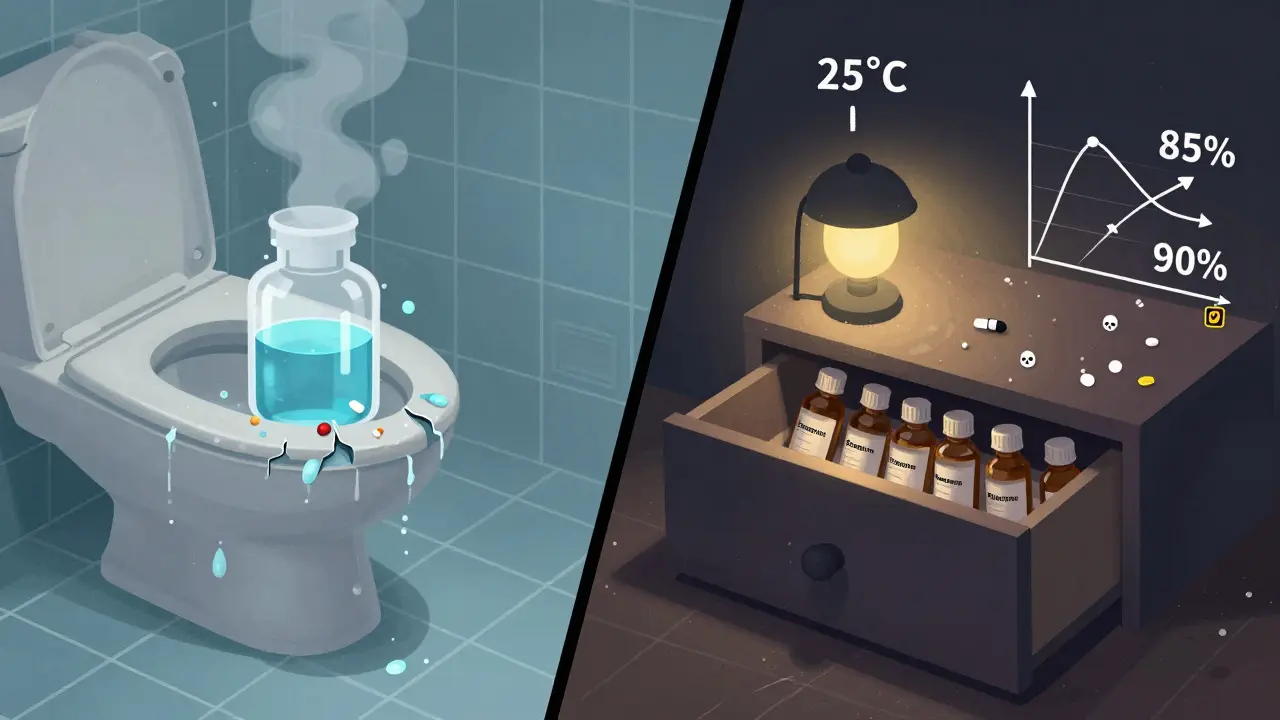
Your medicine’s lifespan depends heavily on where you keep it. The bathroom? Bad idea. Humidity from showers can hit 85%. That’s worse than the test conditions. Moisture causes pills to crumble, liquids to cloud, and powders to clump. A hot car? A sunlit windowsill? Heat speeds up degradation. Studies show drugs stored at 30°C (86°F) break down 40-60% faster than at 25°C. Keep meds in their original bottle, with the child-resistant cap sealed. Store them in a cool, dry place - like a bedroom drawer, not above the fridge. A temperature-controlled cabinet is ideal, but even a plain box under the bed is better than the bathroom. If you see discoloration, strange smells, or pills that crumble when you touch them - throw them out. That’s not about the date. That’s about visible damage.What Experts Say About Using Expired Drugs
The FDA’s official stance is simple: "Don’t use expired medicines. It’s risky." And they’re right - for most people, most of the time. But experts who work with these drugs daily see a more nuanced picture. Dr. Joel Davis, chief pharmacist at Johns Hopkins, says: "For stable chronic conditions - like high blood pressure - an expired ACE inhibitor might still be fine for a few extra weeks if it’s been stored well and looks normal. It’s not ideal, but it’s better than going without during a shortage." The American Medical Association disagrees. They say expired meds should never be used for life-saving treatments - antibiotics for sepsis, heart meds, seizure drugs. The truth? It’s a risk assessment. A 10-year-old bottle of lisinopril for your blood pressure? Probably okay. An expired EpiPen? Absolutely not. A bottle of amoxicillin that’s two years past its date? If it’s been sitting in a hot bathroom, skip it. If it’s been in a drawer since 2021? Maybe.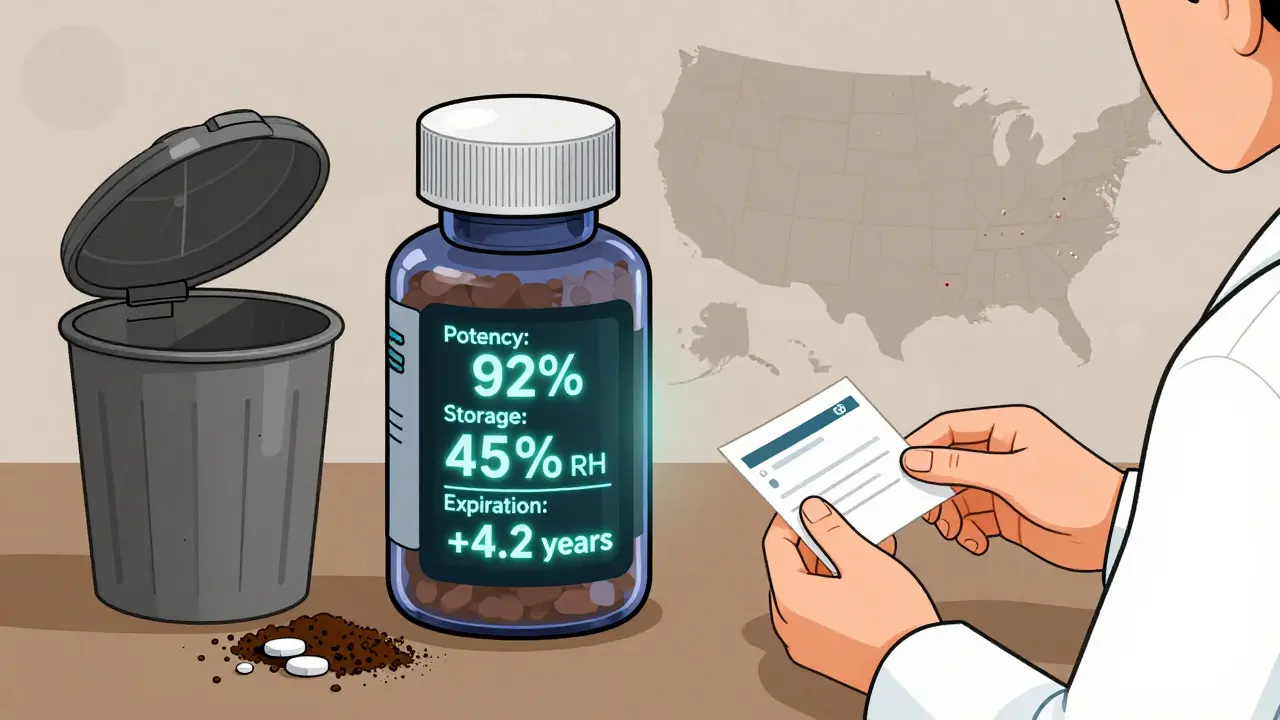
What You Should Do With Expired Medications
Don’t flush them unless they’re on the FDA’s Flush List - drugs like fentanyl patches or oxycodone tablets that pose overdose risks if someone finds them in the trash. Instead, use a drug take-back program. In 2023, over 5,800 sites across the U.S. collected nearly a million pounds of unused meds during National Prescription Drug Take-Back Days. If no take-back is available, mix pills with coffee grounds or cat litter in a sealed bag before tossing them. This makes them unappealing and unusable to kids or pets. Pharmacists do more than fill prescriptions. They also assign "beyond-use" dates - often just one year for pills, 30 days for eye drops, 14 days for liquid antibiotics. That’s because once a drug leaves the manufacturer’s sealed bottle, its stability changes. Your pharmacist knows this.What’s Changing in the Future
The system is slowly catching up to the science. The FDA is testing Bluetooth-enabled sensors on insulin vials that track temperature and humidity in real time. Early results show 22% fewer unnecessary discards. Imagine a pill bottle that tells you, "I’m still good for another 6 months," instead of relying on a date printed in 2020. Researchers at the University of Utah are building AI models that predict how long a drug will last based on its storage history. In trials, they’ve hit 89.7% accuracy. The goal? To stop wasting billions. The U.S. throws away $765 billion in meds every year because of expiration dates. Much of it is still perfectly good. But until we have smart packaging everywhere, stick to the rule: When in doubt, toss it - especially if it’s something critical.Final Takeaway: It’s Not About the Date - It’s About the Drug
Expiration dates are a safety net, not a death sentence. Most pills are fine years later. But some drugs? They degrade fast. And when they do, the consequences aren’t minor. Ask yourself:- Is this medicine for a life-threatening condition?
- Has it been stored properly?
- Does it look or smell odd?
- Is it insulin, nitroglycerin, an antibiotic, or an EpiPen?
Can expired medication make you sick?
Most expired medications won’t make you sick directly - they just lose potency. But some, like liquid antibiotics or insulin, can become unsafe if they degrade. A weakened antibiotic might not kill your infection, leading to worse illness. Expired epinephrine could fail during an allergic reaction. In rare cases, chemical breakdown could produce harmful byproducts - but this is extremely uncommon with modern drugs.
Is it safe to take expired painkillers like ibuprofen or acetaminophen?
Generally, yes - if they’ve been stored properly. Solid tablets like ibuprofen or acetaminophen are very stable. Studies show they often retain potency for years past expiration. If they’re still hard, dry, and haven’t changed color or smell, they’re likely fine. But if you’re in serious pain and the meds don’t seem to be working, replace them. Don’t rely on an old bottle.
Why do pharmacies give medications a "beyond-use" date?
Manufacturers set expiration dates based on unopened, sealed packaging. Once a pharmacy opens a bottle or repackages a drug (like putting pills into a pill organizer), its stability changes. So pharmacists assign a "beyond-use" date - usually one year for pills, 30 days for eye drops, and 14 days for liquid antibiotics - to reflect real-world conditions. This is a safety buffer, not a legal requirement.
Can I store medications in the fridge to make them last longer?
Only if the label says to. Most pills don’t need refrigeration - and moisture from the fridge can actually damage them. Insulin and some liquid antibiotics do require refrigeration, but only until opened. After that, they’re often stable at room temperature for a few weeks. Always check the instructions. Storing non-refrigerated meds in the fridge can cause condensation, which leads to degradation.
What should I do if I accidentally take an expired medication?
If it’s a common pain reliever or blood pressure pill and you took just one dose, you’re likely fine - just monitor yourself. If it’s insulin, epinephrine, an antibiotic, or a heart medication, contact your pharmacist or poison control immediately. Don’t wait for symptoms. Even if you feel okay, the drug may not have worked as intended, and that could lead to complications later.



10 Comments