
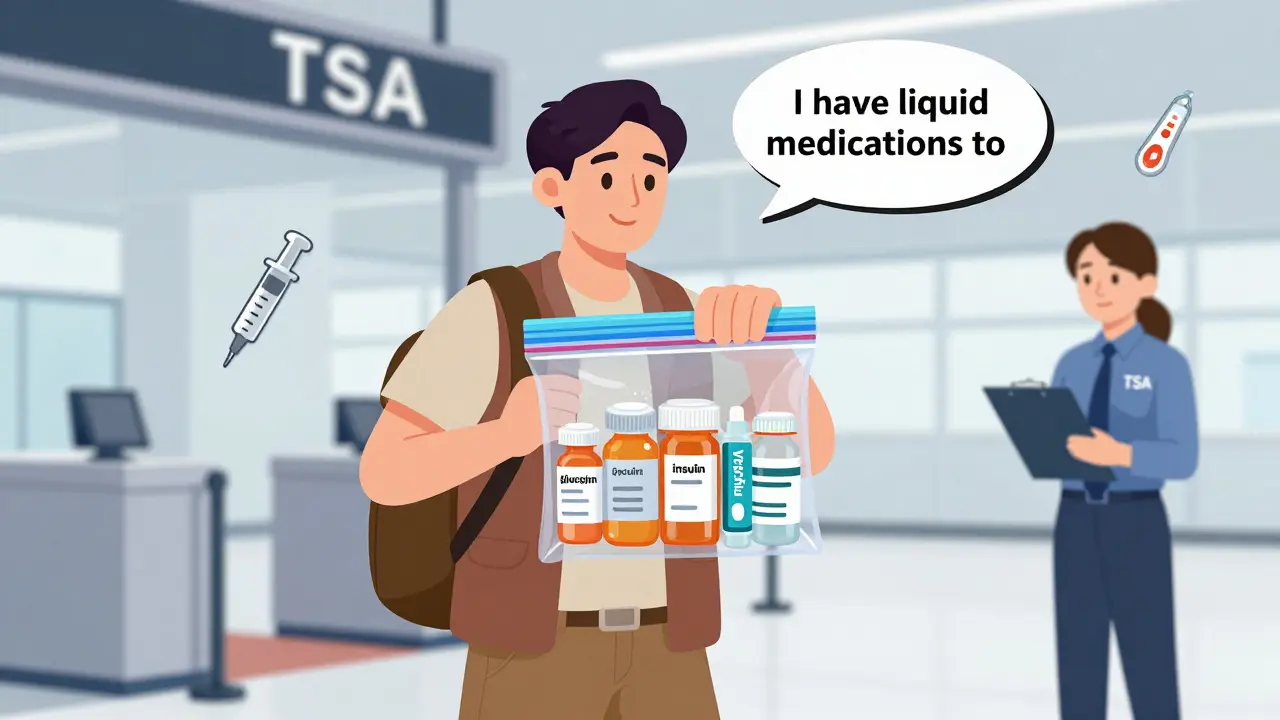
Traveling with liquid medications doesn’t have to be stressful-if you know what to do. Every year, millions of people fly with insulin, chemotherapy drugs, EpiPens, or other essential liquids. But too many get held up at security because they didn’t follow the simple rules. The good news? The TSA lets you bring liquid medications in any quantity, no matter how big the bottle. The catch? You have to declare them. And you have to do it right.
What Counts as a Medication?
Not every liquid you carry is treated the same. The TSA makes a clear distinction between personal care items and medically necessary liquids. Your shampoo, toothpaste, and lotion? Those follow the 3-1-1 rule: 3.4 ounces or less, in a single quart-sized bag, one per passenger. But your prescriptions? Different story. Liquid medications are exempt from those limits. That includes:- Insulin and other injectables
- Oral liquids like liquid antibiotics or seizure meds
- EpiPens (even though they’re auto-injectors, they’re treated as liquid meds)
- Prescription creams, gels, or ointments for eczema, psoriasis, or pain
- Glucagon emergency kits
- IV fluids or hydration solutions prescribed by a doctor
How to Declare Your Medications
The biggest mistake travelers make? Waiting until they’re asked. Don’t wait. As soon as you reach the security checkpoint, tell the TSA officer: “I have liquid medications that need to be screened separately.” Say it clearly. Say it early. This isn’t optional. If you don’t declare, they might assume it’s just another bottle of shampoo. And then you’ll get pulled aside for extra screening-delaying your flight. TSA officers are trained to handle medical items, but they see hundreds of travelers a day. If you don’t speak up, they won’t know to look for your meds. That’s why 92% of travelers who declare upfront get through in under two minutes, according to Johns Hopkins research. Those who don’t? They average over five minutes.Keep Medications in Original Containers
This is non-negotiable. The TSA requires that prescription medications be in their original labeled bottles. That means the pharmacy label with your name, the drug name, dosage, and prescriber info must be visible. Why? Because 63% of all medication delays in 2024 happened because someone transferred their pills or liquids into unlabeled containers. A pill organizer? Fine for solid pills. But a clear vial with no label? That’s a red flag. If you’re worried about carrying bulky bottles, here’s the trick: Bring the original bottles, but also carry a printed copy of your prescription or a digital copy on your phone. Many travelers keep a simple list: drug name, dose, doctor’s name, phone number, and prescription number. That’s all it takes to clear up confusion.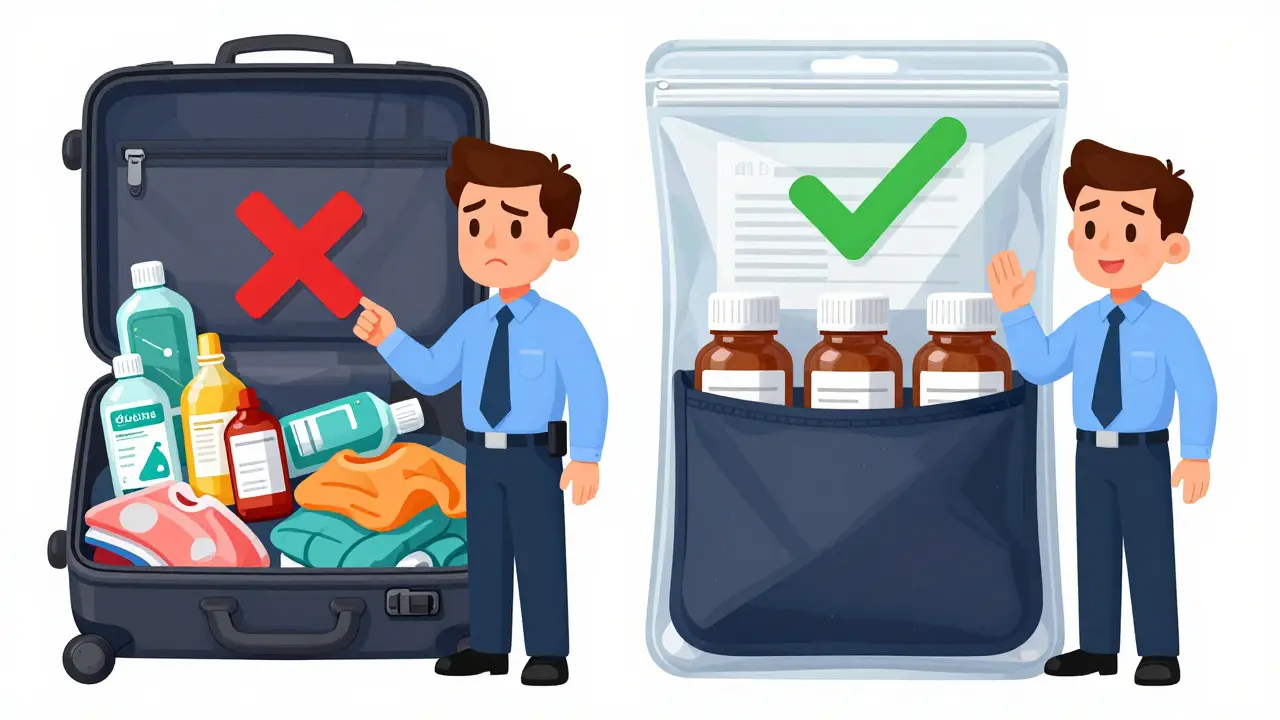
Pack Smart: One Bag, One Spot
Don’t tuck your meds into your carry-on with your clothes. Don’t mix them with your toiletries. That’s a recipe for delays. Instead, use a clear, zip-top bag-just like your 3-1-1 bag-and put all your liquid medications in it. Then, keep that bag in an outer pocket of your carry-on or in your jacket. Why? Because TSA requires you to remove it from your bag and place it in a bin for separate screening. TSA’s own data shows that travelers who do this reduce screening time from 4.7 minutes to just 1.8 minutes. That’s over half the time. And it’s because the officer doesn’t have to dig through your bag. Everything’s right there.Ice Packs and Coolers for Refrigerated Medications
If you need to keep your insulin or other meds cold, you’re allowed to bring ice packs. But they have rules too. Frozen ice packs are fine-as long as they’re still frozen when you get to security. If they’ve started to melt, they count as liquid. And if they’re completely melted? They’re subject to the 3.4-ounce limit. So pack them in a cooler that’s still cold, but not dripping wet. The Juvenile Diabetes Research Foundation recommends coolers no larger than 8x6x2 inches. That’s about the size of a small lunchbox. Anything bigger? You might get questioned. Pro tip: Bring a printed note from your doctor saying you need refrigerated medication. It’s not required, but it helps if an officer isn’t familiar with the rules.Controlled Substances and Special Cases
If you’re carrying opioids, benzodiazepines, or other controlled substances, you’re still allowed-but you’ll likely get asked more questions. That’s normal. Bring your prescription label. Bring a copy of the prescription. Bring a letter from your doctor if you can. The TSA doesn’t care if it’s a controlled substance. They care if it’s yours and if it’s prescribed. Same goes for medical cannabis. Even if it’s legal in your state, it’s still federally illegal. TSA officers aren’t trained to enforce state laws-they follow federal rules. So if you’re carrying marijuana oil or edibles, you risk confiscation. It’s not worth the risk.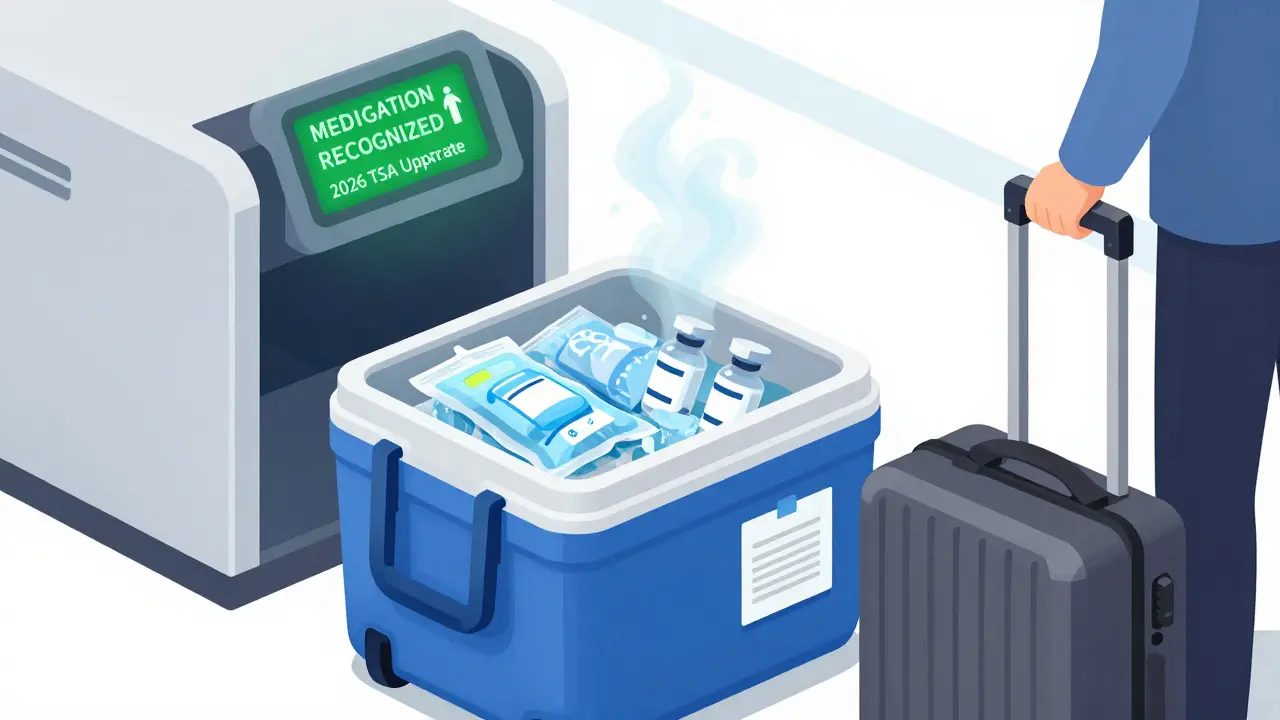
What If You Get Delayed?
Sometimes, despite doing everything right, you still get held up. Maybe the officer didn’t know the rules. Maybe they were new. Maybe they were having a bad day. Here’s what to do:- Stay calm. Arguing won’t help.
- Ask to speak to a supervisor. Most supervisors know the rules.
- Show your prescription or doctor’s note.
- Request a visual inspection instead of X-ray. You have the right to ask.
What’s Changing in 2025 and Beyond
The TSA is making things easier. In September 2025, they’ll start testing a new program called Medical Traveler Pre-Check. It’s voluntary. You sign up ahead of time, and when you fly, you get a faster lane for medical screenings. Pilot airports include Atlanta, Chicago, and Dallas. By 2026, 50 major airports will start using AI systems to recognize medications automatically. Early tests at Dallas/Fort Worth showed a 41% drop in screening errors. That means fewer mistakes, fewer delays. The goal? Reduce average screening time for medical travelers from 3.2 minutes to under 1.1 minutes. That’s faster than most people take to pull out their boarding pass.Final Checklist Before You Fly
Here’s what you need to do before you leave for the airport:- Keep all liquid medications in original pharmacy-labeled containers.
- Put all meds in one clear, zip-top bag.
- Place that bag in an easy-to-reach outer pocket of your carry-on.
- Print or save a copy of your prescription and doctor’s contact info.
- If you have ice packs, make sure they’re still frozen or partially frozen.
- As you approach the checkpoint, tell the officer: “I have liquid medications to declare.”
- Be ready to remove your med bag and place it in a bin for screening.
Can I bring liquid medications in checked luggage?
Yes, but it’s not recommended. Checked bags can be lost, delayed, or exposed to extreme temperatures. If you’re carrying insulin or other temperature-sensitive meds, keep them in your carry-on. TSA allows all liquid medications in carry-ons, no matter the size. Only pack meds in checked bags if they’re non-critical and non-perishable.
Do I need a doctor’s note for liquid medications?
No, it’s not required by TSA. But if you’re carrying controlled substances, large quantities, or unusual medications, having a note can save you time. Many travelers find it helpful to carry a letter from their doctor stating the medication is necessary for their health. It doesn’t guarantee faster screening, but it reduces confusion.
Can I bring more than one type of liquid medication?
Absolutely. There’s no limit on the number of different liquid medications you can bring. Whether you need insulin, thyroid pills in liquid form, pain medication, and antinausea syrup-all in separate bottles-you can bring them all. Just make sure each one is in its original labeled container and declare them together as one group.
What if my medication is in a syringe?
Syringes are allowed if they’re used for medical purposes. Keep them in their original packaging or in a sharps container. Declare them along with your other medications. TSA officers are trained to handle medical needles safely. Don’t try to hide them-always declare them upfront.
Can I bring over-the-counter liquid medications like cough syrup?
Yes, but they count as regular liquids. If it’s not prescribed, it’s subject to the 3-1-1 rule. So if you’re bringing 6 ounces of cough syrup without a prescription, you’ll need to put it in your 3.4-ounce container and in your quart-sized bag. If you need more than that, get a prescription from your doctor-even if it’s just for a short course. Then it becomes a medical exemption.




10 Comments