
Warfarin Vitamin K Daily Tracker
☯ Common Foods & Vitamin K Content
Click to add to your daily logDaily Intake Status
Green zone represents +/- 20% of baseline
Today's Log
-
No foods added yet.
Select items from the list.
Imagine this: you've been careful all week. You took your Warfarin is an anticoagulant medication used to prevent dangerous blood clots in conditions like atrial fibrillation and deep vein thrombosis. exactly as prescribed. But then, on Friday night, you enjoy a large salad with kale and spinach. By Monday, your International Normalized Ratio (INR) is a standardized number that measures how long it takes for your blood to clot, crucial for monitoring warfarin effectiveness. test comes back dangerously low. Suddenly, the doctor has to adjust your dose again. This scenario plays out thousands of times every year because patients don't realize that Vitamin K is a nutrient essential for blood clotting that directly counteracts the effects of warfarin. isn't something to avoid-it's something to manage.
The biggest mistake people make with warfarin is thinking they need to eliminate green vegetables from their diet. That’s not just wrong; it’s potentially harmful. The goal isn’t zero vitamin K. The goal is consistency. When your intake fluctuates wildly, your INR swings follow suit, putting you at risk for either bleeding or clotting. A food diary acts as your anchor, helping you spot patterns before they become medical emergencies.
Why Consistency Beats Avoidance
Warfarin works by blocking the body's ability to use vitamin K to create clotting factors. It doesn't stop vitamin K from entering your body; it stops your liver from using it effectively. If you suddenly eat more vitamin K than usual, your body tries to compensate, making the warfarin less effective. Your blood clots faster, and your INR drops. If you cut back on greens drastically, the opposite happens: your blood thins too much, and your INR spikes.
According to guidelines from the American College of Chest Physicians, most patients aim for an INR between 2.0 and 3.5. Staying in this "therapeutic window" is tricky. Data from the FDA shows that inconsistent vitamin K intake contributes to about 32% of emergency room visits related to warfarin complications. That’s a huge chunk of preventable hospital stays.
You don't need to hit a perfect microgram count every day. However, deviations of more than 20% from your baseline intake can cause significant INR fluctuations. For context, adult men generally need about 120 micrograms (mcg) of vitamin K daily, while women need around 90 mcg. On warfarin, your personal baseline might be higher or lower, but keeping your daily intake within a narrow range of that baseline is what keeps you safe.
Building Your Warfarin Food Diary
A food diary isn't just a list of what you ate. To be useful for warfarin management, it needs specific data points. The Anticoagulation Forum recommends a structured approach that tracks four key elements:
- Date and Time: When did you eat? Timing matters if you're also taking multivitamins or other supplements.
- Food Item: Be specific. "Salad" is useless. "Two cups of raw romaine lettuce" is helpful.
- Portion Size: This is where most people slip up. One cup of cooked broccoli contains roughly 220 mcg of vitamin K. Two cups contain 440 mcg. That difference can shift your INR significantly.
- Estimated Vitamin K Content: Use a reference guide or app to log the approximate amount.
Don't forget hidden sources. Many processed foods contain soybean oil or canola oil, which are rich in vitamin K. Even fortified nutrition drinks like Ensure contain about 25 mcg per serving. If you're adding these to your routine without tracking them, your dietitian won't know why your levels are unstable.
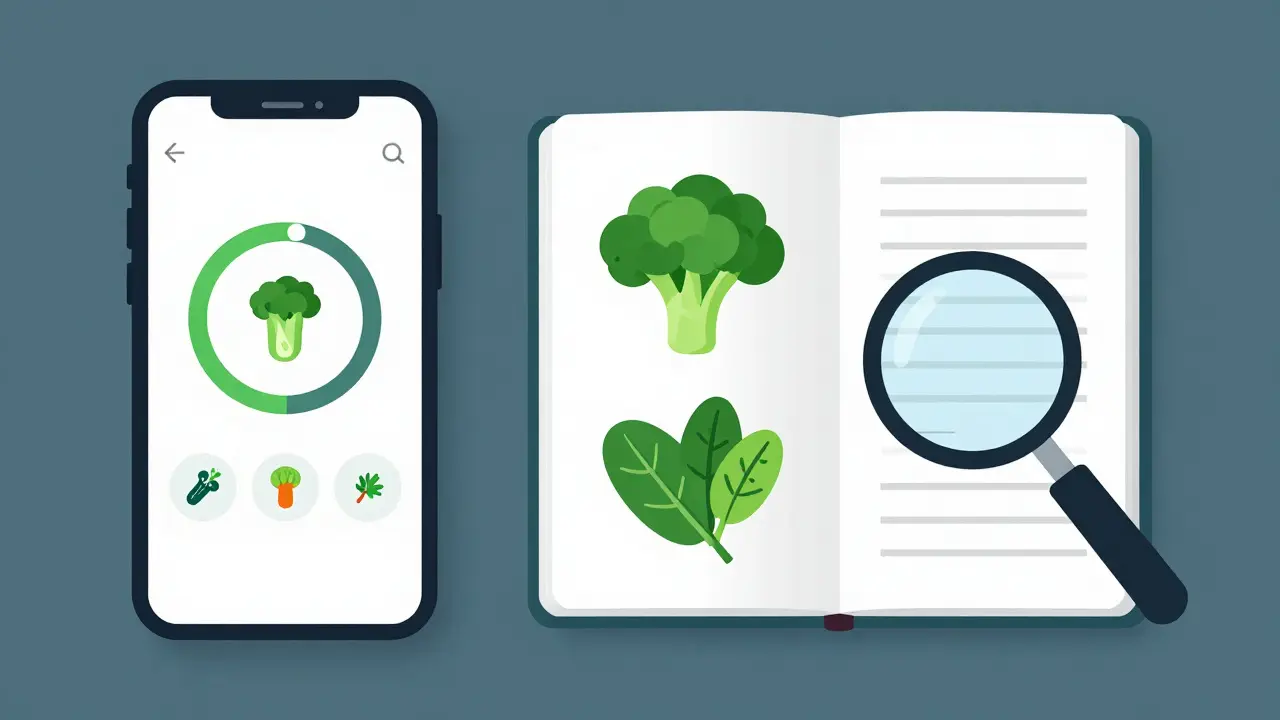
Digital Apps vs. Paper Logs
In the past, a notebook was the only option. Today, digital tools have changed the game, but they aren't perfect for everyone. Let's look at the pros and cons based on recent clinical data.
| Feature | Digital Apps (e.g., Vitamin K Counter) | Paper Diaries |
|---|---|---|
| Accuracy | High (if validated app); real-time feedback | Moderate; relies on manual lookup |
| Time in Therapeutic Range (TTR) | 72.3% (per 2022 Blood Advances study) | 61.8% |
| User Adherence (Age 75+) | Lower (57% adherence) | Higher (82% adherence) |
| Data Portability | Easy to share with doctors via screenshots | Must be manually transcribed or photographed |
| Cost | $2.99 - $4.99 one-time fee for top apps | Free (pen and paper) |
Digital apps like the Vitamin K Counter & Tracker offer immediate visual feedback, showing you how close you are to your daily target. They pull data from the USDA FoodData Central database, ensuring accuracy. However, not all apps are created equal. A 2023 study found that 68% of available vitamin K tracking apps lack clinical validation. Stick to those with published accuracy data, such as the Vitamin K-iNutrient app, which boasts 94.7% accuracy against lab analysis.
For older adults, paper diaries often win. Smartphone literacy can be a barrier, and fumbling with a phone while trying to remember portion sizes adds stress. If you prefer paper, keep it dry! Losing two weeks of data because your notebook got soggy in your pocket is a common frustration. Consider laminating your pages or using a waterproof folder.
Common Pitfalls and How to Avoid Them
Even with the best intentions, tracking can go wrong. Here are the three most common errors patients make:
- Underreporting Hidden Sources: Research shows patients underreport vitamin K intake by 22-37%. Why? Because we forget about the oil in our stir-fry or the leafy greens in our smoothies. Solution: Keep a detailed grocery receipt log alongside your food diary for the first month. Cross-reference what you bought with what you logged.
- Portion Estimation Errors: Accounting for 33% of INR fluctuations, guessing "a handful" of spinach is risky. Solution: Use measuring cups or a kitchen scale for high-vitamin K foods during your initial tracking phase. Once you understand what 100 grams looks like, you can estimate better.
- Inconsistent Multivitamin Use: Some multivitamins contain 25-100 mcg of vitamin K. Taking them sporadically throws off your balance. Solution: Take your multivitamin at the same time every day, ideally with your warfarin dose, so its effect is constant and predictable.
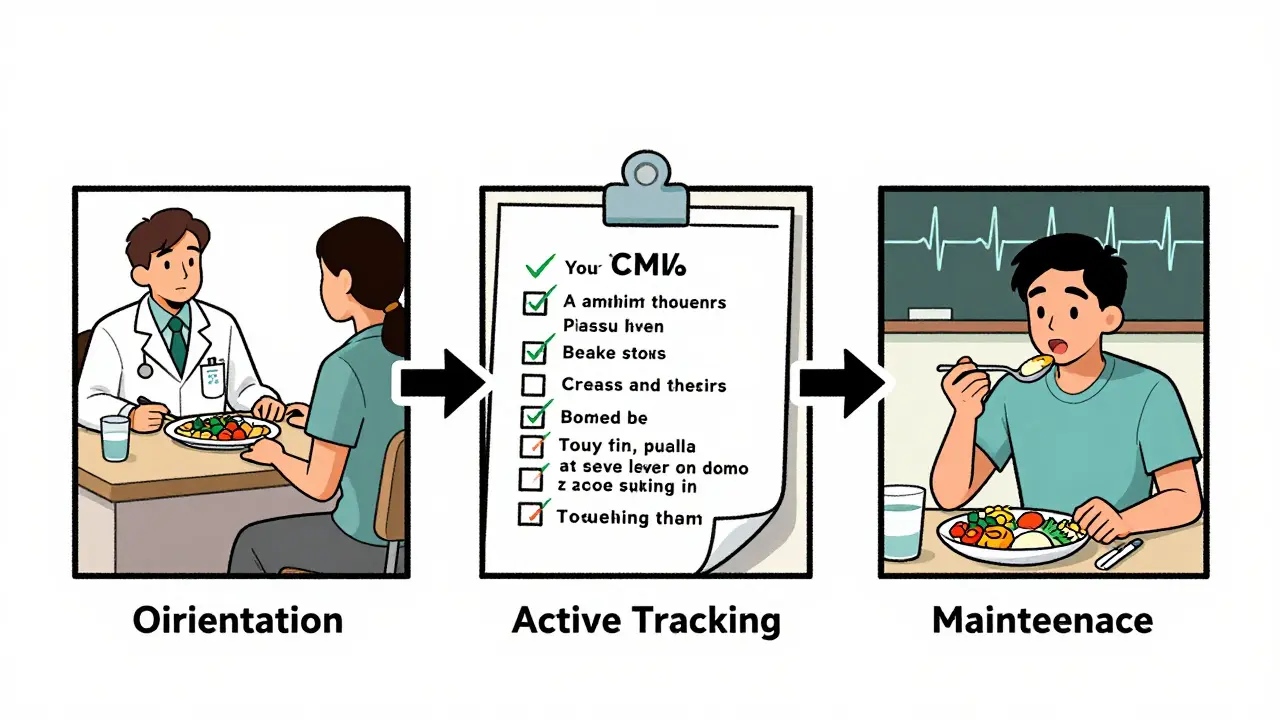
Implementing Your Plan Successfully
Starting a food diary can feel overwhelming. Don't try to track every crumb perfectly from day one. Follow a phased approach recommended by anticoagulation specialists:
Phase 1: Orientation (Weeks 1-2)
Spend 15-20 minutes with your healthcare provider or dietitian. Learn to identify high-vitamin K foods. Get your chosen tool-app or paper-and practice logging a typical day. Ask questions now rather than later.
Phase 2: Active Tracking (Weeks 3-6)
Log everything. Be meticulous. Check in weekly with your clinic. This period helps establish your baseline. You might find that your "normal" diet includes 150 mcg of vitamin K daily. That becomes your new target.
Phase 3: Maintenance (Ongoing)
Once your INR is stable, you can relax slightly. Focus on maintaining consistency. If you plan to change your diet-for example, starting a keto diet or eating more salads-tell your doctor first. They may need to adjust your warfarin dose proactively.
Pre-planning meals can help. The University of Michigan Health System found that patients who planned five days of meals with consistent vitamin K content improved their Time in Therapeutic Range (TTR) by 15%. Try cooking batch meals on Sundays so you know exactly what you're eating during the week.
Looking Ahead: Technology and Trends
The landscape of warfarin management is evolving. In January 2024, the FDA approved NutriKare, an AI-powered system that estimates vitamin K content from photos of your food with 89% accuracy. While this technology is promising, it's still emerging. For now, manual tracking remains the gold standard.
Electronic health records (EHRs) are also integrating dietary tracking. Epic Systems, used by many hospitals, added vitamin K tracking features to its MyChart platform in mid-2023. This allows your care team to see your food logs directly, facilitating quicker dose adjustments if needed.
Remember, warfarin remains a first-line therapy for millions, especially those with mechanical heart valves. Newer anticoagulants don't work for everyone. Mastering your food diary empowers you to stay on warfarin safely, reducing hospital visits and giving you peace of mind.
Do I need to avoid green vegetables while on warfarin?
No, you should not avoid green vegetables. In fact, avoiding them can be dangerous if you suddenly start eating them later, causing your INR to spike. The key is consistency. Eat the same amount of green vegetables each day. If you usually eat a side of broccoli, keep doing that. Do not suddenly switch to a salad-heavy diet without consulting your doctor.
How much vitamin K is too much on warfarin?
There is no universal "too much" number because it depends on your individual dosage and metabolism. However, sudden increases of more than 20% from your baseline intake can cause significant INR fluctuations. For example, if your baseline is 100 mcg daily, jumping to 120 mcg or more in a single day could lower your INR. Aim for steady, predictable intake rather than hitting a specific maximum limit.
Which app is best for tracking vitamin K?
The Vitamin K Counter & Tracker and Vitamin K-iNutrient are among the most reliable options. The former offers great visual feedback and a comprehensive database, while the latter has been clinically validated with 94.7% accuracy. Avoid free, generic nutrition apps unless you verify their vitamin K data against USDA standards, as many lack clinical validation and can provide inaccurate information.
Can I use a paper diary instead of an app?
Yes, paper diaries are highly effective, especially for older adults who may struggle with smartphones. Studies show 82% adherence among patients over 75 using paper logs. Just ensure you record portion sizes accurately and bring the diary to every appointment. Keep it protected from water damage to preserve your data.
What foods have hidden vitamin K?
Hidden sources include soybean oil, canola oil, and certain margarine spreads. Many processed foods and restaurant dishes use these oils. Additionally, fortified nutrition drinks like Ensure contain vitamin K. Always check labels on packaged foods and ask about cooking oils when dining out to maintain consistent intake.
How often should I check my INR if I'm tracking my diet?
Initially, you may need weekly checks until your INR stabilizes. Once stable, monthly checks are common. However, if you notice significant changes in your diet or experience symptoms like unusual bruising, contact your healthcare provider immediately for an earlier test. Regular monitoring ensures your dose matches your current vitamin K intake.
Does alcohol affect warfarin and vitamin K interaction?
Alcohol can interfere with warfarin metabolism and affect liver function, potentially altering your INR independently of vitamin K. Heavy drinking can increase bleeding risk, while binge drinking followed by abstinence can raise INR levels. Moderate consumption should be discussed with your doctor, and any changes in drinking habits must be reported promptly.
What is Time in Therapeutic Range (TTR)?
TTR is the percentage of time your INR stays within the target therapeutic range (usually 2.0-3.5). A higher TTR indicates better control and lower risk of complications. Studies show that using food diaries can improve TTR by 8.2 percentage points compared to standard care alone. Aim for a TTR above 70% for optimal safety.






14 Comments