It is a common fear that vaccines might cause severe allergies. You hear stories online, see headlines about rare side effects, and wonder if the shot is safe for you or your family. The truth is much simpler than the noise suggests. Vaccine allergic reactions are real, but they are exceptionally rare. Most people get vaccinated without any issues beyond a sore arm or mild fever. However, because these reactions can happen, understanding how safety systems work gives you peace of mind.
This article breaks down what actually happens during a vaccine allergy, how often it occurs, and how doctors monitor safety to keep you protected. We will look at the numbers, the specific triggers like egg or yeast, and what you should do if you have a history of allergies.
How Common Are Vaccine Allergies?
Let’s start with the hard data to put fears into perspective. Anaphylaxis, which is the most severe type of allergic reaction, occurs at a rate of roughly 1.3 cases per million vaccine doses. To visualize this, imagine a stadium filled with one million people getting vaccinated. Statistically, only one or two of them would experience this severe reaction. That is incredibly low.
Research from the Vaccine Safety Datalink, which analyzed over 25 million doses, confirms this rarity. Even with newer technologies, the rates remain low. For example, early data on mRNA COVID-19 vaccines showed a slightly higher rate of about 11.1 cases per million doses, but even that number represents a tiny fraction of recipients. In contrast, traditional vaccines like the measles, mumps, and rubella (MMR) vaccine have historical anaphylaxis rates around 1 in 30,000 doses. While 1 in 30,000 sounds more frequent, it is still far less common than many everyday risks we accept without thinking twice.
| Vaccine Type | Anaphylaxis Rate (per million doses) | Notes |
|---|---|---|
| All Vaccines (Average) | 1.3 | Based on large-scale surveillance data |
| mRNA COVID-19 Vaccines | 11.1 | Slightly higher but still rare; linked to PEG components |
| MMR Vaccine | 33.3 (approx. 1 in 30,000) | Historical baseline for live attenuated vaccines |
| Rubella Virus Alone | 333.3 (approx. 1 in 3,000) | Higher risk associated specifically with rubella component |
What Triggers These Reactions?
When a vaccine causes an allergy, it is rarely the virus or bacteria itself. Instead, the immune system reacts to other ingredients in the shot. Knowing these triggers helps doctors decide if you need special precautions.
- Egg Protein: This was a major concern for years. Many flu vaccines are grown in chicken eggs. However, extensive studies involving over 4,300 egg-allergic individuals showed no serious reactions. Today, guidelines state that people with egg allergies can safely receive flu shots without extra waiting periods or skin tests.
- Yeast: Some vaccines, like Hepatitis B and HPV, use yeast in their production process. True yeast allergies are extremely rare. Among hundreds of thousands of reports, only a handful were potentially linked to yeast proteins, and causality was hard to prove.
- Polyethylene Glycol (PEG): PEG is used in some mRNA vaccines as a stabilizer. It has been identified as a potential trigger for anaphylaxis in a small number of cases. If you have a known severe allergy to PEG, you should discuss this with your doctor before vaccination.
- Aluminum Adjuvants: Aluminum salts help boost the immune response. They do not typically cause immediate anaphylaxis. Instead, they might cause local reactions like persistent nodules or swelling at the injection site in a very small percentage of people (0.03% to 0.83%).
It is also important to distinguish between true IgE-mediated allergies (the fast, dangerous kind) and non-immunological reactions. Sometimes, people feel dizzy or faint after a shot due to anxiety or pain-a vasovagal response. This looks like an allergic reaction but is treated differently and is not life-threatening.
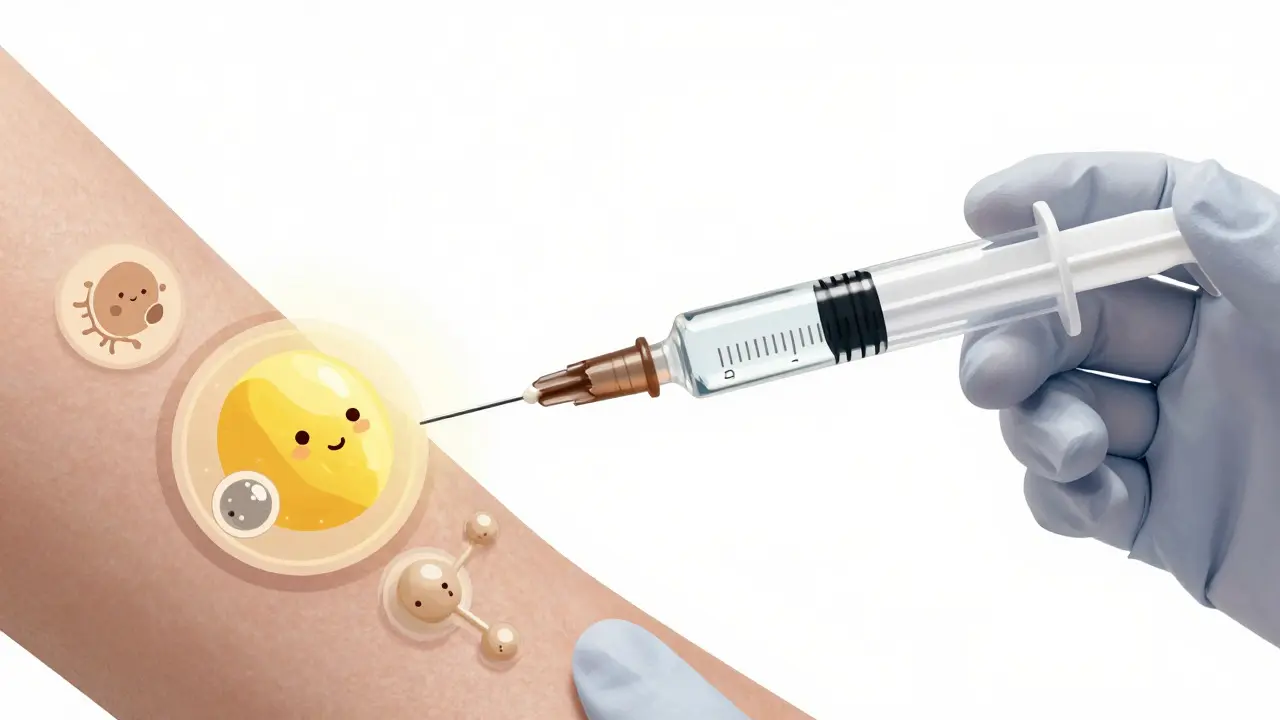
How Do We Know It’s Safe? The Monitoring Systems
You might wonder who is watching out for these rare events. The answer lies in robust, multi-layered safety networks. Since the 1976 swine flu incident, which highlighted the need for better tracking, the U.S. established the Vaccine Adverse Event Reporting System (VAERS).
VAERS acts as an early warning system. It is co-managed by the CDC and FDA and receives tens of thousands of reports annually. Crucially, anyone-a patient, a parent, or a doctor-can submit a report. This openness ensures that no signal goes unnoticed. However, a report does not mean the vaccine caused the issue; it just means someone suspects a link. Experts then analyze the data to find patterns.
To complement passive reporting, active surveillance systems like the Vaccine Safety Datalink (VSD) use electronic health records from millions of patients to detect trends faster and more accurately. More recently, the CDC launched v-safe, a smartphone-based tool that allows users to self-report symptoms after vaccination. During the initial COVID-19 campaign, v-safe collected data from 3.6 million users, providing real-time insights into safety profiles.
Internationally, systems like the European Medicines Agency’s EudraVigilance process similar volumes of data, ensuring global standards for pharmacovigilance. These systems are rated highly by independent evaluators for their ability to detect rare adverse events quickly.
What Happens If You Have an Allergy History?
If you have a history of severe allergies, you are not automatically excluded from vaccination. Instead, the protocol adjusts to keep you safe. Here is what you need to know:
- Consult an Allergist: If you have had a previous severe reaction to a vaccine or its components, see an allergist first. They can perform skin tests or graded challenges to determine if you can receive the vaccine safely.
- Extended Observation: Standard practice is to wait 15 minutes after vaccination to watch for immediate reactions. If you have a history of allergies, this window extends to 30 minutes. Why 30 minutes? Because 86% of anaphylaxis cases occur within this timeframe, with 71% happening in the first 15 minutes.
- Epinephrine Availability: Every vaccination site is required to have epinephrine and staff trained in its use. This is a critical safety net. If anaphylaxis occurs, prompt administration of epinephrine is life-saving and highly effective.
For most people with egg or peanut allergies, no special precautions are needed anymore. The science has moved past old contraindications. Only those with documented severe reactions to specific vaccine components (like PEG or polysorbate 80) require specialized management.
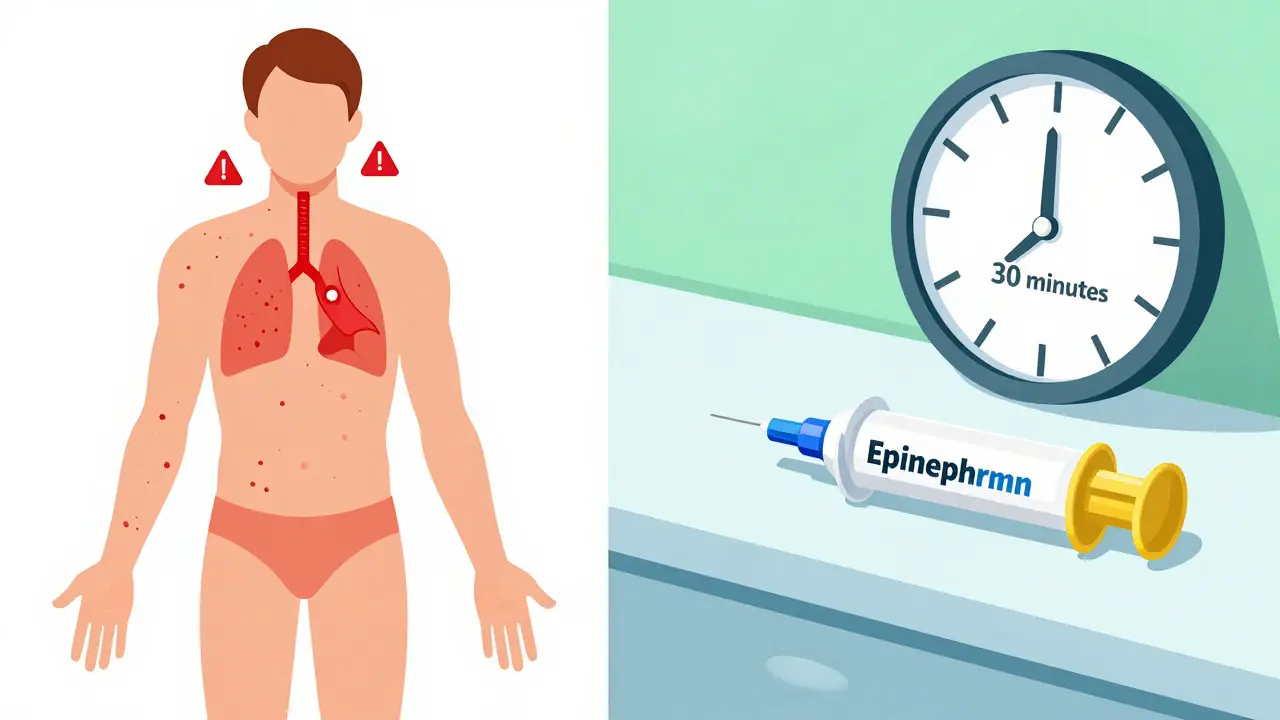
Signs and Symptoms to Watch For
Knowing what to look for can save lives. Immediate hypersensitivity reactions usually appear within minutes. Be aware of these signs:
- Hives or widespread itching
- Swelling of the face, lips, or throat (angioedema)
- Difficulty breathing or wheezing
- Dizziness or fainting
- Rapid heartbeat
If you experience any of these after leaving the clinic, seek emergency care immediately. Delayed reactions, such as rashes appearing days later, are generally less severe and often self-limiting, but they should still be reported to VAERS to contribute to safety data.
Why Public Confidence Matters
Rare events make big headlines. A single case of anaphylaxis can spark fear in communities, contributing to vaccine hesitancy. Data shows that concerns about allergic reactions account for about 12% of vaccine hesitancy cases. This is why transparent communication is vital.
Experts emphasize that the benefits of vaccination vastly outweigh the minimal risks of allergy. Diseases like measles, polio, and influenza cause far more harm and death than vaccine allergies ever could. By understanding the rigorous monitoring behind every dose, you can make informed decisions with confidence. The goal is not to hide risks, but to manage them so effectively that they become statistical footnotes rather than barriers to health.
Can I get a vaccine if I am allergic to eggs?
Yes. Current guidelines state that individuals with egg allergies can safely receive influenza and MMR vaccines. Studies show no significant difference in reaction rates between egg-allergic and non-egg-allergic people. No special observation period is required unless you have a history of severe anaphylaxis to other factors.
How long should I stay after getting a vaccine?
The standard recommendation is to wait 15 minutes after vaccination. If you have a history of severe allergic reactions to any medication or food, you should wait 30 minutes. This covers the window where 86% of anaphylaxis cases occur.
What is VAERS and why does it exist?
VAERS (Vaccine Adverse Event Reporting System) is a national early warning system managed by the CDC and FDA. It collects reports of adverse events after vaccination to detect potential safety signals. It allows anyone to report concerns, helping experts identify rare patterns that might be missed in clinical trials.
Is anaphylaxis from vaccines fatal?
Anaphylaxis is a medical emergency, but it is rarely fatal when treated promptly. Vaccination sites are equipped with epinephrine and trained staff. In large surveillance studies, deaths directly attributed to vaccine anaphylaxis are exceedingly rare compared to the protective benefits of the vaccine against disease.
Do all vaccines contain yeast?
No. Only certain vaccines, such as Hepatitis B and HPV, are produced using yeast technology. True yeast allergies are extremely rare, and reactions to these vaccines are uncommon. If you suspect a yeast allergy, consult an allergist for evaluation before receiving these specific vaccines.