
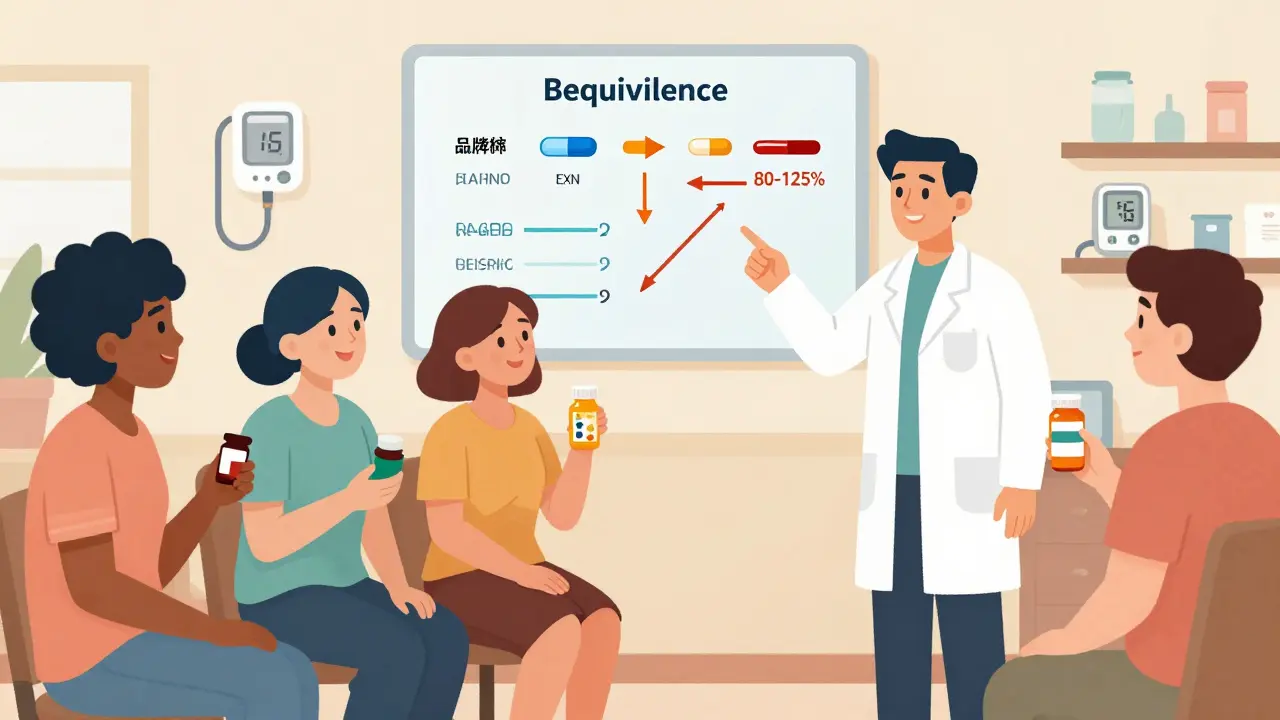
Switching from a brand-name drug to a generic can feel like rolling the dice. You’ve been taking the same pill for years, and now your pharmacist hands you a different one-same name, different color, cheaper price. You wonder: Is this really the same? Will it work? Will I feel worse? You’re not alone. Millions of people have asked these exact questions. And for many, the answer doesn’t come from a brochure or a doctor’s office. It comes from other patients who’ve been there.
Why Patient Support Groups Matter for Generic Medications
Generic drugs are not second-rate. They’re the same active ingredients, tested to meet the same strict standards as brand-name drugs. The FDA requires generics to deliver between 80% and 125% of the brand’s effect in your body-what’s called bioequivalence. That’s not a guess. It’s science. But science doesn’t always quiet the fear in your gut. That’s where patient support groups step in. These aren’t formal advocacy organizations. They’re real people-neighbors, strangers online, fellow parents, retirees-sharing what actually happened when they switched. One person says their blood pressure stayed steady. Another says their cholesterol dropped even better. Someone else admits they felt dizzy at first, but it faded after a week. These stories matter because they answer the unspoken question: Will this work for me? A 2022 FDA study found that patients who started on generics were 15-20% more likely to keep taking their medication than those on brand-name versions. Why? Because generics cost less. But here’s the twist: the real reason people stick with them isn’t just price. It’s confidence. And confidence grows when you hear from someone like you.Where These Groups Live: Online and In Person
You don’t need to go anywhere special to join. Most patient support groups for generics are online. Facebook groups like “Generic Medication Users United” have over 14,000 members. Reddit threads on r/Pharmacy and r/Depression get hundreds of comments from people swapping stories about statins, antidepressants, and blood thinners. One popular post from 2022 asked, “Switched to generic statin and felt different-am I crazy?” Out of 472 replies, 76% said their symptoms improved within two weeks. Only 12% said they felt worse-and most of those turned out to be unrelated issues. In-person groups still exist, especially in community health centers, rural clinics, and senior centers. In places where internet access is limited or trust in tech is low, these groups are vital. Pharmacists often lead them. Nurses run workshops. They bring printed guides, show side-by-side pill images, and answer questions in real time. One study found that in rural areas, patients who attended these meetings were 40% more likely to trust generics than those who only got printed materials. The best groups don’t just let people talk. They guide the conversation. They ask: “Did you notice changes within two weeks?” “Did your doctor check your labs after the switch?” “Did you talk to your pharmacist?” This structure turns random stories into useful data.How These Groups Fix Misinformation
Not all online advice is safe. A 2009 study found that 34% of online discussions about generics contained false claims-like “generics are made in dirty factories” or “they don’t dissolve the same.” Some people blamed their worsening symptoms on the generic, when it was actually their disease progressing. The groups that work best fix this. They partner with pharmacists or nurses who verify claims. One group, the Generic Drug Patient Alliance, requires every medical claim to be checked against peer-reviewed studies before it’s posted. They’ve cut misinformation down to just 8%. That’s a huge drop. They also use real data. Members reference the 2019 JAMA study that looked at 47 clinical trials and found no difference in effectiveness between brand and generic heart medications. Or they point to the FDA’s own bioequivalence rules. They don’t just say, “I felt fine.” They say, “I felt fine, and here’s what the science says.”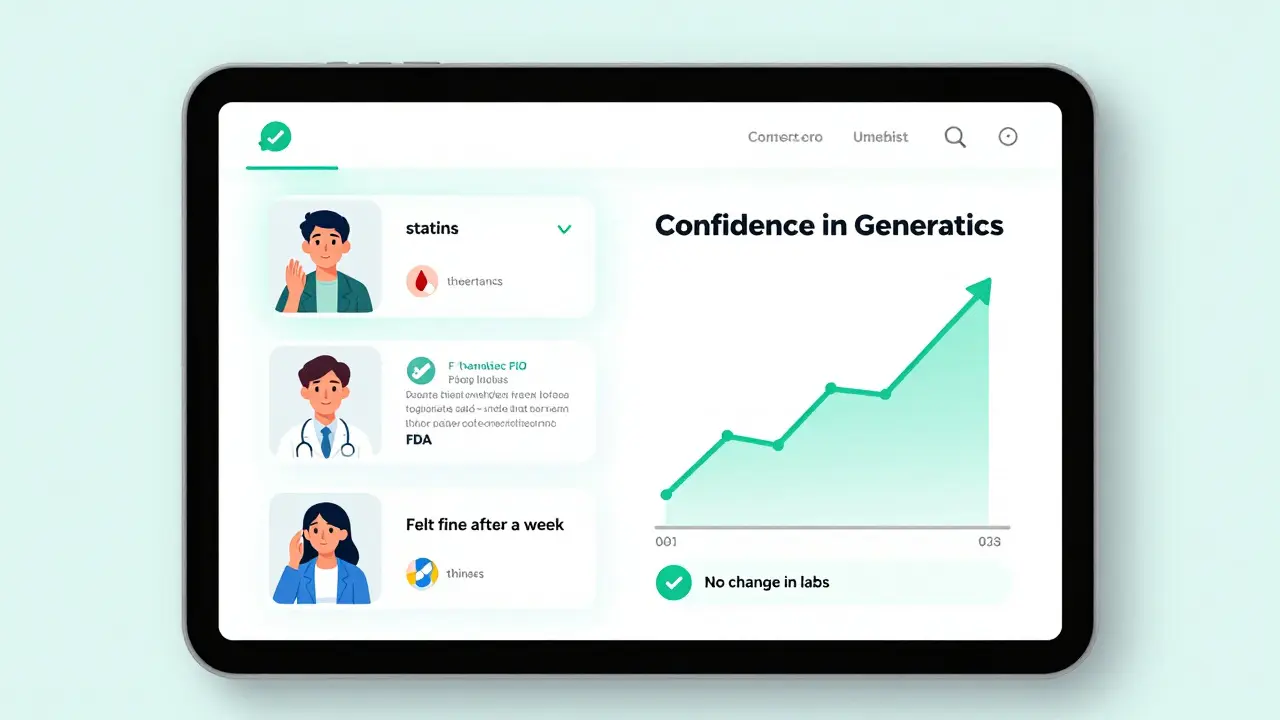
What Works Best: Buddy Systems and Real Stories
New members often arrive scared. They’ve been told their brand-name drug was “the best.” They’re afraid of change. The most effective groups use a simple trick: the buddy system. A new person gets paired with someone who switched six months ago. That person shares their story-not just the outcome, but the process. “I was nervous too. I checked my blood pressure every day for a week. It didn’t change. I even called my doctor to ask if I should switch back. He said no.” That kind of honesty builds trust faster than any pamphlet. A University of Chicago study found that for every time someone shared their experience in a group, generic medication use went up by 5.3%. It’s not magic. It’s human connection. When you hear someone say, “I thought I’d feel different, but I didn’t,” it lowers your guard. You start to believe it might happen for you too.When Support Groups Don’t Work
Not every group is helpful. Some online forums are chaotic. No one moderates. Someone posts, “My generic made me suicidal,” and no one checks if that’s true. In one 2019 case, an unmoderated Facebook group blamed side effects on a generic epilepsy drug. Seventeen people stopped taking it. Their seizures returned. They ended up in the ER. The difference? Professional oversight. Groups linked to hospitals, clinics, or pharmacies have pharmacists on call. They respond within 24 hours. Unaffiliated groups? Often 72 hours or more. That delay can be dangerous. Another problem? Geography. Rural communities have 63% fewer in-person groups than cities. If you live far from a clinic, your only option might be a Reddit thread. That’s not always enough.Real Results: Savings and Better Health
The numbers speak for themselves. In 2022, 90% of all prescriptions filled in the U.S. were generics. But they made up only 12% of total drug spending. That’s $313 billion saved every year. One pharmacy in Chicago ran a diabetes support group where members switched from expensive insulin analogs to biosimilars. The average monthly savings? $327 per person. That’s over $3,900 a year. For someone on a fixed income, that’s rent, groceries, or heat. A 2016 study showed patients in support groups were 27% more confident in generics. Another project, called IMPROVE, found that for every point of increase in a patient’s comfort with substitution, generic use rose by 6.3%. That’s not small. That’s life-changing.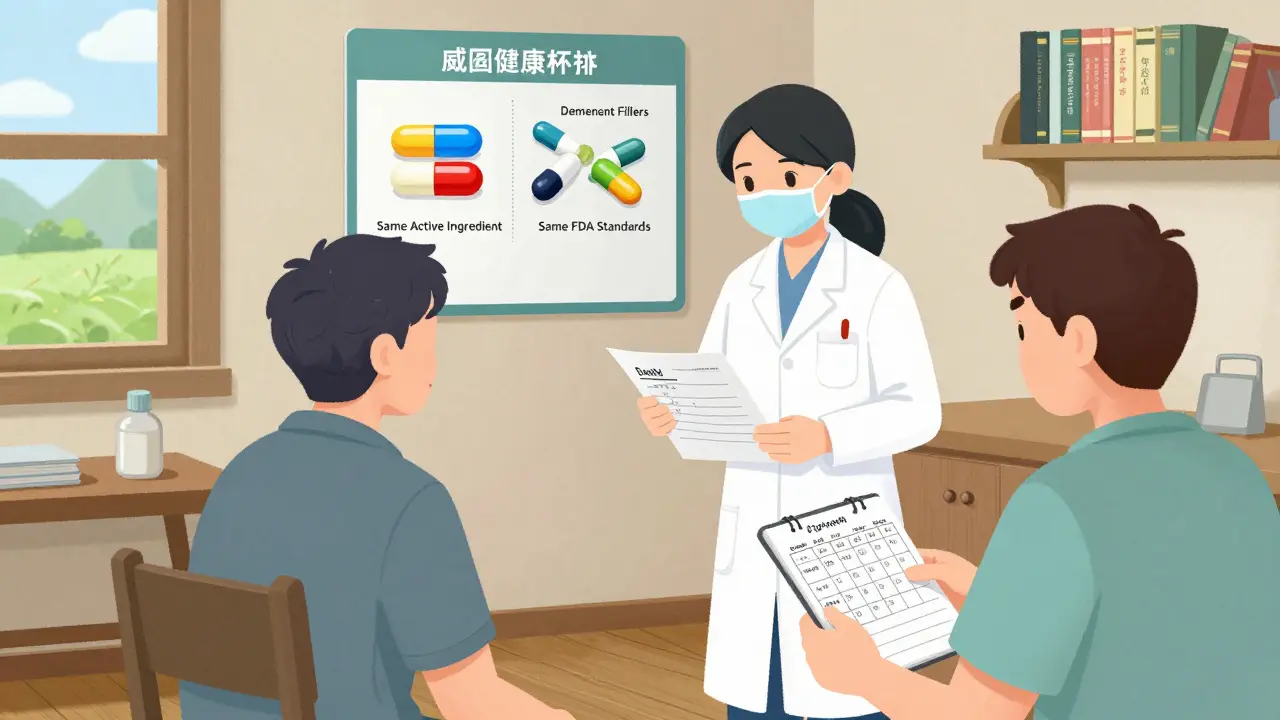
What’s Next for Patient Support Groups
The FDA is now officially using patient stories from these groups to shape drug policies. They call it “real-world evidence.” That means your experience could help change how generics are approved in the future. In 2024, the Association for Accessible Medicines is launching a verified directory of support groups-so you can find one that’s safe and reliable. Hospitals are starting to refer patients to these groups as part of chronic disease care. Pharmacy apps are building in-chat features that connect you to peer groups right after you fill a generic prescription. The goal? Get the substitution rate from 87% to 95%. That could save Medicaid $271 million on just 20 common drugs. But more than money, it’s about dignity. It’s about not having to choose between your health and your budget.How to Find a Good Support Group
If you’re thinking about joining one, here’s how to pick wisely:- Look for groups tied to hospitals, clinics, or pharmacies. They’re more likely to have professional oversight.
- Check if they mention FDA or peer-reviewed studies in their discussions.
- Avoid groups where people blame every side effect on generics without checking with a doctor.
- Ask if they have a pharmacist or nurse moderating. If yes, that’s a good sign.
- Join a group for your specific condition-diabetes, high blood pressure, depression. General groups can be too broad.
What to Say When You Join
You don’t need to be an expert. Just say this: > “I just switched to a generic [medication]. I’m nervous because I’ve been on the brand for years. Has anyone else felt the same way? Did anything change?” That’s it. You’ll get answers. You’ll feel less alone. And you might just find out that your body doesn’t care what the label says-it just cares if the medicine works.Are generic medications really the same as brand-name drugs?
Yes. The FDA requires generics to contain the same active ingredients, work the same way in the body, and meet the same quality standards as brand-name drugs. They must be bioequivalent-delivering between 80% and 125% of the brand’s effect. The only differences are inactive ingredients like fillers or dyes, which don’t affect how the drug works. Thousands of studies confirm this.
Why do some people feel different on generics?
Sometimes, it’s not the drug-it’s the mind. This is called the nocebo effect. If you expect to feel worse, your brain can make you feel worse. Other times, it’s a temporary adjustment period. Your body may need a week or two to adapt to a slightly different filler. Rarely, a person has a rare reaction to an inactive ingredient. If symptoms persist, talk to your doctor or pharmacist. Don’t stop the medication without checking.
Can support groups help me convince my doctor to prescribe generics?
Yes. Many doctors now use patient stories to guide decisions. If you bring in real experiences from a trusted group-like “I switched to generic metformin and my blood sugar improved”-it helps your doctor see what works for real people. Some clinics even have printed patient stories to share with providers. Your experience isn’t just personal-it’s clinical evidence.
Are there support groups for specific conditions like diabetes or high blood pressure?
Absolutely. The most effective groups are condition-specific. For diabetes, groups focus on insulin switches and biosimilars. For high blood pressure, they talk about ACE inhibitors and calcium channel blockers. These groups track lab results, side effects, and cost savings over time. You’ll find them through local clinics, the American Diabetes Association, or the American Heart Association’s patient resources.
How do I know if a support group is safe to join?
Look for three things: 1) Is there a pharmacist, nurse, or doctor moderating? 2) Do they reference FDA guidelines or peer-reviewed studies? 3) Do they encourage you to talk to your provider before making changes? Avoid groups that say “never go back to brand-name” or “all generics are dangerous.” Real groups say, “Here’s what worked for me-check with your doctor.”




12 Comments