
Medication Reformulation Impact Calculator
Development Parameters
Enter your estimated budget for a pharmaceutical project to see how many drugs you can bring to market.
Have you ever picked up a prescription bottle only to notice the pill looks different? Maybe it’s a new color, a smaller size, or even a different shape than what you’ve taken for years. It’s easy to panic. Did the pharmacy make a mistake? Is this a counterfeit drug? Or has the manufacturer quietly changed the recipe?
In most cases, the active ingredient-the part that actually treats your condition-remains exactly the same. However, the rest of the pill has likely undergone a process known as medication reformulation, which is the strategic modification of a drug's composition, delivery mechanism, or physical properties while maintaining the same active pharmaceutical ingredient. This isn't just about aesthetics. It’s a complex pharmaceutical strategy driven by regulatory shortcuts, manufacturing efficiency, and genuine efforts to improve how patients take their medicine.
Understanding why companies change drug formulas helps separate fact from fear. It also explains why some medications become more affordable or easier to swallow, while others raise concerns about "evergreening" tactics used to extend patent life. Let’s look at what is really happening inside those pills.
The Anatomy of a Pill: Active Ingredients vs. Excipients
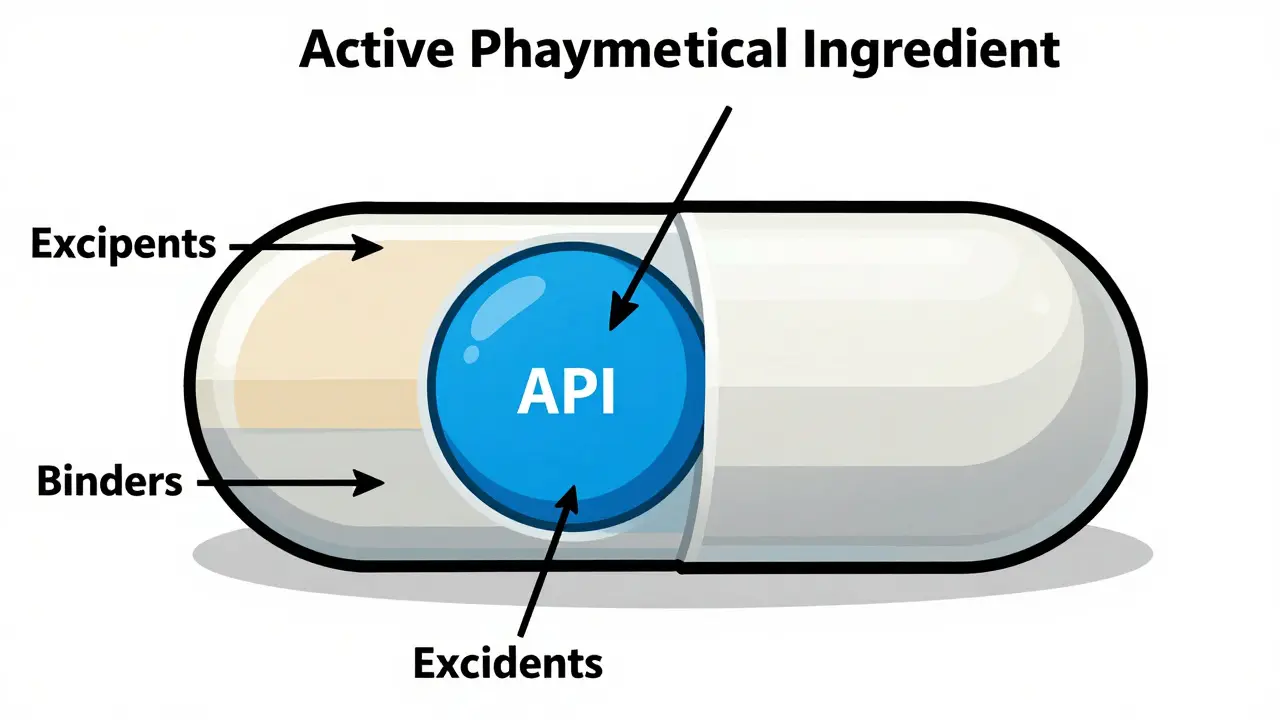
To understand reformulation, you first need to know what goes into a tablet. Every medication consists of two main parts: the Active Pharmaceutical Ingredient (API) and excipients.
The API is the star of the show. It is the chemical compound that interacts with your body to treat the disease. In a reformulation, the structure of the API typically does not change. As noted in research published in PMC4865745, no change should occur in the structure of the API unless it involves a specific chiral switch. The goal is to keep the therapeutic effect identical.
Excipients are the supporting cast. These are inactive ingredients like fillers, binders, coatings, and preservatives. They hold the pill together, control how fast it dissolves in your stomach, and protect the API from moisture or light. When a company reformulates a drug, they are almost always tweaking these excipients or changing how the API is delivered.
| Component | Role in Drug | Common Changes During Reformulation |
|---|---|---|
| Active Pharmaceutical Ingredient (API) | Treats the medical condition | Rarely changed; may adjust concentration or salt form |
| Excipients | Binder, filler, coating, stabilizer | Frequently swapped for cost, stability, or allergy reasons |
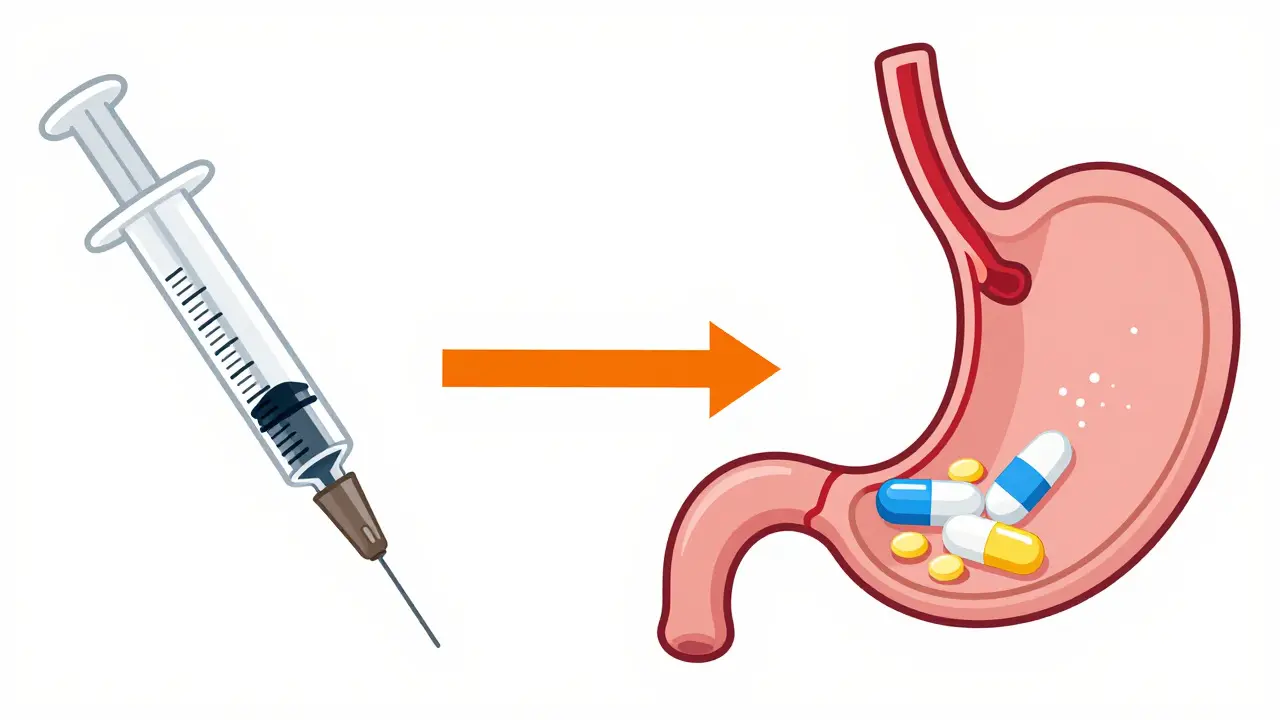
| Delivery Mechanism | How the drug enters the body | Changed from injection to oral, or immediate to extended release |
| Packaging | Protection and shelf-life | Updated materials to improve stability or reduce waste |
For example, a manufacturer might replace a lactose-based filler with a cornstarch alternative to accommodate patients with lactose intolerance. Or they might add a new coating to mask a bitter taste. These changes don’t alter the drug’s core function, but they do require rigorous testing to ensure safety.
Why Do Companies Reformulate Drugs?
You might wonder why a pharmaceutical company would bother changing a drug that already works. The answer usually falls into one of three categories: patient compliance, lifecycle management, or regulatory strategy.
Improving Patient Compliance: If patients hate taking a medication, they stop taking it. This leads to worse health outcomes and lower sales. Reformulation can solve this. A study highlighted by Walsh Medical Media notes that converting an injectable drug into an oral tablet significantly improves quality of life. Similarly, ZIM Labs reports that simplifying administration routes makes it easier for patients to adhere to their treatment plans. If a pill is too large to swallow, shrinking it through better compression technology can be a game-changer.
Extending Product Lifecycle: This is the controversial side. Pharmaceutical patents expire, allowing generic competitors to flood the market with cheaper versions. To maintain exclusivity, companies may reformulate the brand-name drug. By creating a new delivery system-like a once-daily version instead of twice-daily-they can file for a new patent on the formulation itself. Critics call this "evergreening," arguing it delays access to affordable generics without offering real clinical benefits. However, industry experts counter that meaningful reformulations often deliver substantial patient benefits beyond just patent extension.
Regulatory Efficiency: Developing a completely new drug is expensive and risky. According to Biopharm International, only about 10% of new molecular entities gain approval. In contrast, repurposed or reformulated drugs have a success rate of roughly 30%. That threefold improvement in efficiency is hard to ignore. The FDA’s 505(b)(2) pathway allows sponsors to rely on existing data from previously approved products, speeding up the review process significantly.
The Regulatory Shortcut: FDA’s 505(b)(2) Pathway
The Food and Drug Administration (FDA) recognizes that reformulating an existing drug is less risky than inventing a new one. This is where the 505(b)(2) regulatory pathway comes in. Established in the 1980s, this route facilitates the approval of reformulated drugs by allowing manufacturers to use data already in the public domain or previously submitted by others.
Instead of running full-scale Phase III clinical trials involving thousands of patients, developers often need only to demonstrate bioequivalence, which is proof that the new formulation delivers the active ingredient into the bloodstream at the same rate and extent as the original product. If the blood levels of the drug match the original within a strict statistical range, the FDA assumes the therapeutic effect will be the same.
However, if the reformulation creates a new therapeutic profile-for instance, changing the route of administration from oral to inhalable-full clinical trials may still be required. The Review of Ophthalmology notes that when drugs are reformulated, the data used for the original approval can often support the new application, representing a significant shortcut compared to New Molecular Entity (NME) development.
Cost, Time, and Success Rates
The financial and temporal stakes of drug development are staggering. Bringing a novel drug to market costs an average of $2.6 billion and takes 10 to 15 years. Reformulation is a fraction of that burden.
Industry analyses suggest that reformulation projects typically require between $50 million and $100 million and take 3 to 5 years to complete. In aggressive scenarios, such as the Kymanox case study from 2022, mid-size pharmaceutical companies have achieved comprehensive development and manufactured registration batches within a 12-month timeline. This speed is crucial for orphan drugs, where limited treatment options exist for rare diseases.
| Metric | Novel Drug Development | Medication Reformulation |
|---|---|---|
| Average Cost | $2.6 Billion | $50 - $100 Million |
| Time to Market | 10 - 15 Years | 3 - 5 Years (sometimes 12 months) |
| Approval Success Rate | ~10% | ~30% |
| Clinical Trial Scope | Full Phase I-III Trials | Often Bioequivalence Studies Only |
This efficiency makes reformulation an attractive option for both large pharmaceutical giants and specialized mid-size firms. It accounts for approximately 27% of all new drug applications submitted to the FDA annually, according to data from the Journal of Market Access & Health Policy.
What Patients Should Watch For
While reformulation offers many benefits, it is not without risks. Patients should remain vigilant, especially when switching between brands or when a manufacturer announces a formula change.
Allergic Reactions: Since excipients change, a patient who was fine with the old version might react to a new dye, binder, or preservative. Always check the inactive ingredients list on the label.
Efficacy Concerns: Even with bioequivalence standards, some patients report feeling different effects after a reformulation. While scientifically the drug should perform the same, individual metabolism and sensitivity to excipients can vary. If you notice increased side effects or reduced efficacy, consult your doctor immediately. Do not stop taking the medication abruptly.
Generic Substitution: Pharmacists often substitute brand-name drugs with generics. Generics are, by definition, reformulations that must meet bioequivalence standards. However, different generic manufacturers use different excipients. If you are sensitive to certain fillers, you may request a specific manufacturer’s version from your pharmacist.
The Future of Drug Delivery
The landscape of medication reformulation is evolving rapidly. Recent FDA guidance from 2022 on the "Development of New Dosage Forms for Already Approved Drugs" streamlines the approval pathway for certain innovations. We are seeing a surge in complex generic formulations and advanced delivery systems.
Future trends point toward personalized medicine. Imagine a reformulation tailored not just to the disease, but to the patient’s genetic makeup or lifestyle. Advances in nanotechnology and lipid nanoparticles (similar to those used in mRNA vaccines) are opening new doors for delivering established APIs more effectively. As PharmTech analysts predict, reformulation strategies will continue to provide developers with a head start, particularly in addressing unmet needs in specialized populations.
Ultimately, medication reformulation is a double-edged sword. It drives innovation, reduces costs, and improves patient experiences. But it also requires careful scrutiny to ensure that profit motives do not overshadow patient welfare. By understanding the science behind the pill, you can navigate these changes with confidence and advocate for your own health.
Is a reformulated drug safe?
Yes, generally. Reformulated drugs must undergo rigorous testing to prove bioequivalence, meaning they deliver the active ingredient into your bloodstream at the same rate and extent as the original. The FDA reviews this data before approval. However, because inactive ingredients (excipients) may change, individuals with specific allergies should check the new ingredient list.
Why did my pill change color or shape?
Changes in appearance are usually due to updates in the manufacturing process or the substitution of inactive ingredients like dyes and binders. Sometimes, a new manufacturer produces the generic version, and each company uses its own unique coloring and shaping techniques. As long as the active ingredient and dosage remain the same, the visual change is cosmetic.
What is the difference between reformulation and a generic drug?
A generic drug is a type of reformulation designed to be a lower-cost alternative to a brand-name drug after its patent expires. All generics are reformulations, but not all reformulations are generics. Brand-name companies also reformulate their own drugs to improve efficacy, change the delivery method (e.g., from pill to patch), or extend patent protection.
Can I ask my pharmacist for the same manufacturer every time?
You can request a specific manufacturer, but insurance plans and pharmacy stock may limit availability. If you have experienced adverse reactions to a particular generic version, inform your doctor and pharmacist. They may write the prescription as "Dispense as Written" (DAW) to prevent automatic substitution, ensuring you receive the specific brand or generic you tolerate best.
What is "evergreening" in pharmaceuticals?
Evergreening refers to the practice of making minor, often clinically insignificant changes to an existing drug-such as altering the dosage form or adding a new indication-to secure new patents and delay the entry of cheaper generic competitors. While some reformulations offer real benefits, critics argue that evergreening primarily serves to maximize profits rather than improve patient care.
Do reformulated drugs work differently than the original?
In most cases, no. The goal of reformulation is to maintain the same therapeutic effect. However, changes in the release mechanism (e.g., from immediate-release to extended-release) can alter how the drug behaves in your body over time. Always follow your doctor’s instructions regarding timing and dosage, as these may change with a new formulation.






10 Comments