
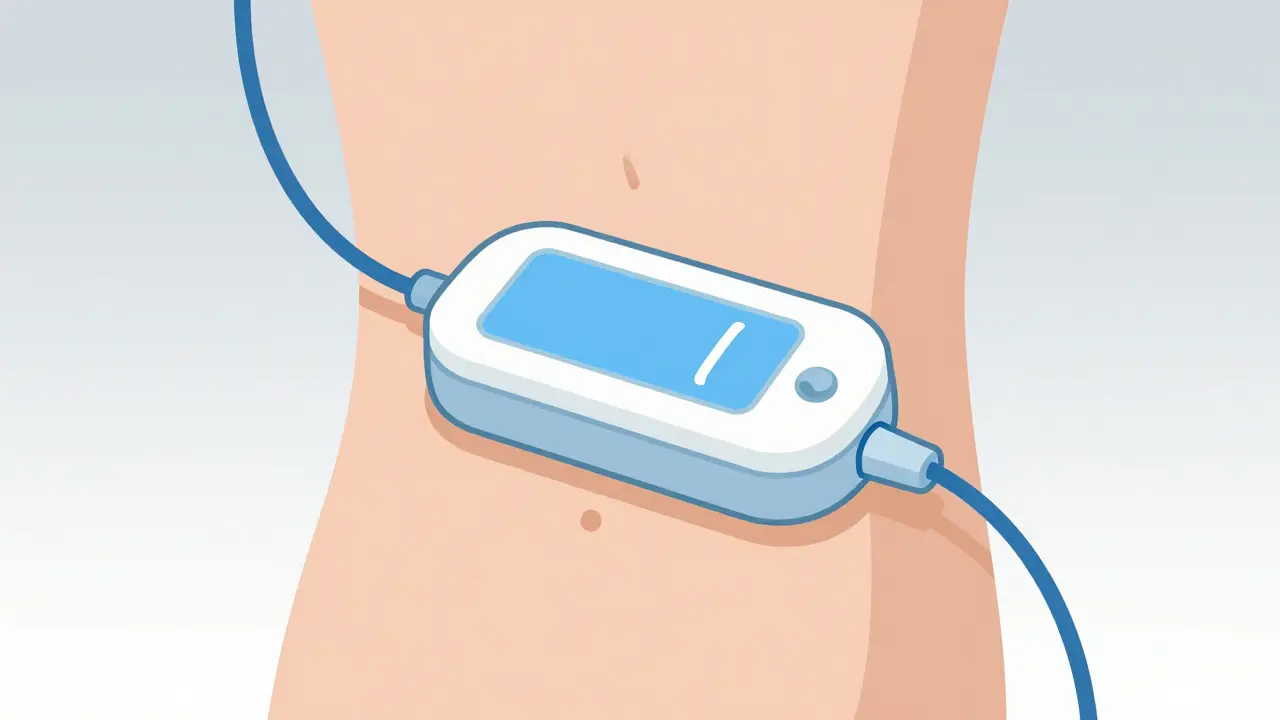
Imagine having a device that mimics your pancreas 24 hours a day, delivering insulin precisely when your body needs it. That is exactly what Continuous Subcutaneous Insulin Infusion (CSII), or insulin pump therapy, does. Unlike the old-school method of multiple daily injections, where you're stuck with a few big shots a day, a pump provides a steady stream of rapid-acting insulin through a small tube under your skin. It is a game-changer for people with type 1 diabetes or unstable type 2 diabetes, but it isn't a "set it and forget it" tool. Because the pump is always delivering insulin, a simple mistake in settings or a technical glitch can lead to dangerous blood sugar drops or a rapid climb into hyperglycemia.
| Feature | What it does | Key Safety Tip |
|---|---|---|
| Basal Rate | Background insulin delivered hourly | Test over 24 hours while fasting |
| Bolus Dose | Insulin for meals or high sugar | Use bolus calculators to avoid errors |
| Infusion Set | The tube and cannula under the skin | Change every 2-3 days to avoid infection |
| CGM Integration | Real-time glucose monitoring | Use for automated low-glucose suspension |
Getting Your Settings Right: The Basics of Programming
To make a pump work, you have to speak its language. The core of your therapy relies on three main settings. First is the Basal Rate, which is the continuous background insulin your body needs to keep blood sugar stable between meals. Since your insulin needs change-maybe you're more resistant in the morning-most pumps let you program different rates for every hour of the day. Typically, this background insulin makes up about 40-50% of your total daily dose.
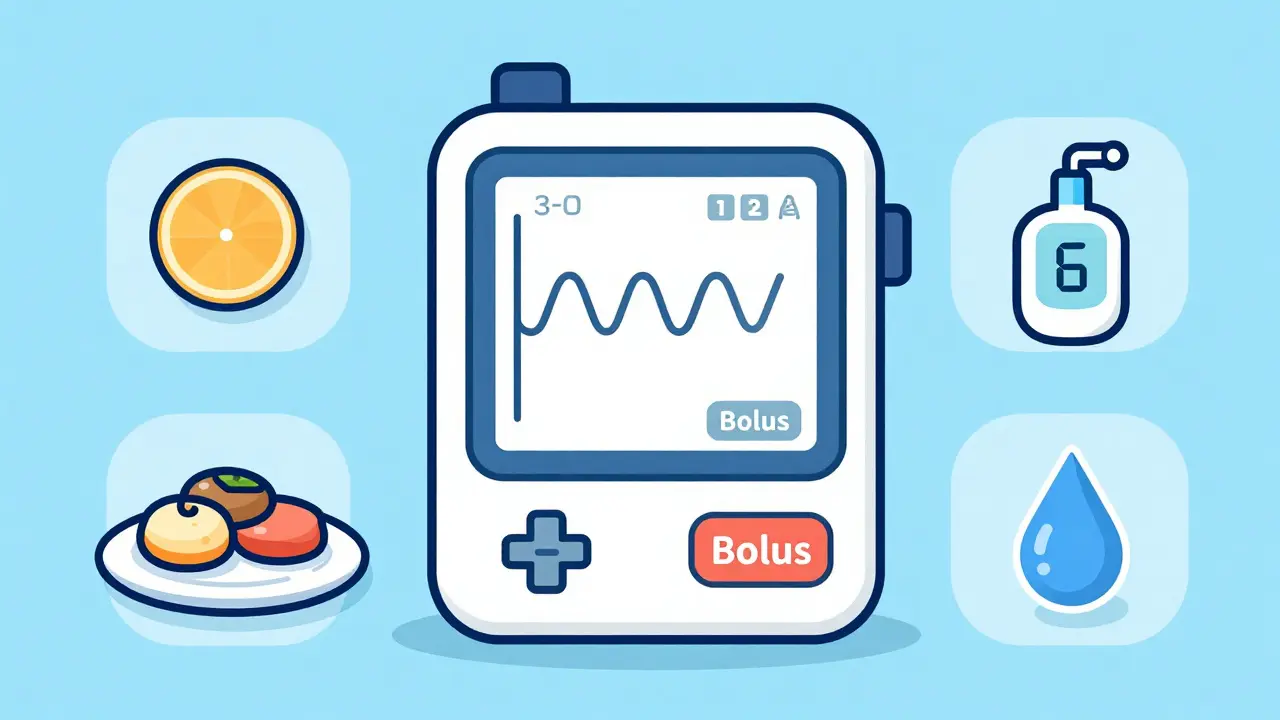
Then there are the "active" settings. The Insulin-to-Carbohydrate Ratio (ICR) tells the pump how many grams of carbs one unit of insulin covers. For example, if your ratio is 1:10, you need one unit for every 10 grams of carbs. Alongside this is the Insulin Sensitivity Factor (ISF), also known as the correction factor. This determines how much your blood sugar will actually drop for every single unit of insulin you take. These aren't one-size-fits-all numbers; they depend entirely on your body's unique physiology.
Finally, you'll deal with boluses. While a standard bolus is for a normal meal, some foods-like a greasy pizza-digest slowly. For those, you use an extended bolus or a dual-wave bolus, which spreads the insulin delivery over a longer period so you don't crash before the food actually hits your bloodstream.
The Safety Checklist: Avoiding Common Pump Pitfalls
The biggest risk with CSII is that it only uses rapid-acting insulin analogs, like Humalog or Novolog. In the old days, if you missed a dose of long-acting insulin, you had a buffer. With a pump, if the infusion set fails or the tube gets pulled out, you have zero long-acting insulin in your system. This can lead to Diabetic Ketoacidosis (DKA) surprisingly fast-sometimes within just 2 to 4 hours.
To stay safe, you have to be meticulous about your hardware. You must change your infusion set every 2-3 days. If you leave it in too long, you risk site infections or something called lipohypertrophy-basically fatty lumps under the skin that make insulin absorption unpredictable. Rotate your sites between your abdomen, thighs, and upper arms to keep the skin healthy.
Monitoring is also non-negotiable. Even with a fancy pump, the American Diabetes Association suggests checking your glucose at least four times a day. You should be especially vigilant two hours after you change your infusion site to make sure the new cannula is working correctly. If you start experiencing persistent lows (hypoglycemia) and can't stabilize them, the rule is simple: remove the cannula and the pump immediately and follow your emergency protocol.
Managing Special Scenarios: Surgery and Life Changes
What happens when you go under general anesthesia? The answer depends on the surgery. For minor procedures where you'll eat within a few hours of waking up, you can often keep the pump in place. However, you'll need a full reservoir, fresh batteries, and a stable blood sugar reading (usually between 4-12 mmol/L) before going in. For major surgeries that require long periods of fasting, the pump usually comes off, and doctors switch you to an intravenous insulin infusion until you're recovered enough to eat again.
Life transitions like childbirth also require a settings overhaul. Pregnancy changes insulin sensitivity drastically. Immediately after birth, pump settings must be switched to post-delivery profiles. If you're breastfeeding, you might find you need to reduce your insulin doses by another 10-20% as your body adjusts to the energy demands of feeding.
The Tech Evolution: Closed-Loop and Beyond
We've moved far beyond the basic pumps of the 80s. Today, we have Hybrid Closed-Loop Systems. A great example is the Medtronic MiniMed 670G, which uses an algorithm to automatically adjust basal insulin to prevent lows and highs. It's not a full "artificial pancreas" yet-you still have to tell it when you're eating-but it takes a huge load off your mind.
The industry is also moving toward interoperability. In the past, you were locked into one company's ecosystem. Now, devices like the Omnipod 5 can work with different Continuous Glucose Monitoring (CGM) systems. We're even seeing ultra-compact devices like the Tandem Mobi, designed to be unobtrusive, especially for kids.
| Feature | CSII (Pump) | MDI (Injections) |
|---|---|---|
| Insulin Type | Rapid-acting only | Rapid + Long-acting |
| Precision | High (can deliver 0.025 units) | Lower (limited by syringe/pen) |
| Flexibility | Easy to adjust basal rates | Fixed long-acting dose |
| Risk | Rapid DKA if pump fails | Slower onset of DKA |
| Daily Effort | High (tech management) | Moderate (multiple needles) |
The Learning Curve: What to Expect
Starting a pump is a marathon, not a sprint. Most experts recommend beginning your therapy at the start of a week so you have a full few days of clinical support. You'll likely spend about 15 hours in structured education before you even touch the device. While you can get the hang of the basic buttons in a few weeks, mastering the advanced stuff-like temporary basal rates for exercise-usually takes 3 to 6 months.
The biggest struggle for new users is often carbohydrate counting. About 38% of high-sugar episodes in pump users happen simply because they guessed the carbs wrong. It's a steep learning curve, and it requires a high level of commitment. If you aren't willing to monitor your sugar at least four times a day or struggle with severe hypoglycemia unawareness, a pump might not be the safest choice for you.
How often should I change my insulin pump infusion set?
You should change your infusion set every 2 to 3 days. This prevents the buildup of scar tissue (lipohypertrophy) and reduces the risk of localized inflammation or infection at the insertion site.
What should I do if I suspect my pump has failed or disconnected?
If you notice unexplained high blood sugar or feel sick, check your infusion site immediately. Because pumps use only rapid-acting insulin, a disconnection can lead to Diabetic Ketoacidosis (DKA) within 2 to 4 hours. If the pump failed, switch to your backup injection pen or syringe immediately.
Can I keep my pump on during surgery?
For minor procedures where you'll eat within 2-3 hours of waking, you can often keep it on if your doctor agrees, provided you have fresh batteries and a full reservoir. For major surgeries with long fasts, the pump is typically removed and replaced with IV insulin.
What is the difference between a basal rate and a bolus?
The basal rate is a continuous, low-level drip of insulin that keeps your blood sugar steady between meals. A bolus is a larger, one-time dose delivered specifically to cover the carbohydrates in a meal or to bring down a high blood sugar reading.
Do I still need to prick my finger if I have a pump?
Yes. While many pumps integrate with CGMs, standard medical guidelines still recommend monitoring your glucose at least four times daily, especially during the first few months of therapy, during illness, or after changing your infusion site.
Next Steps for Users
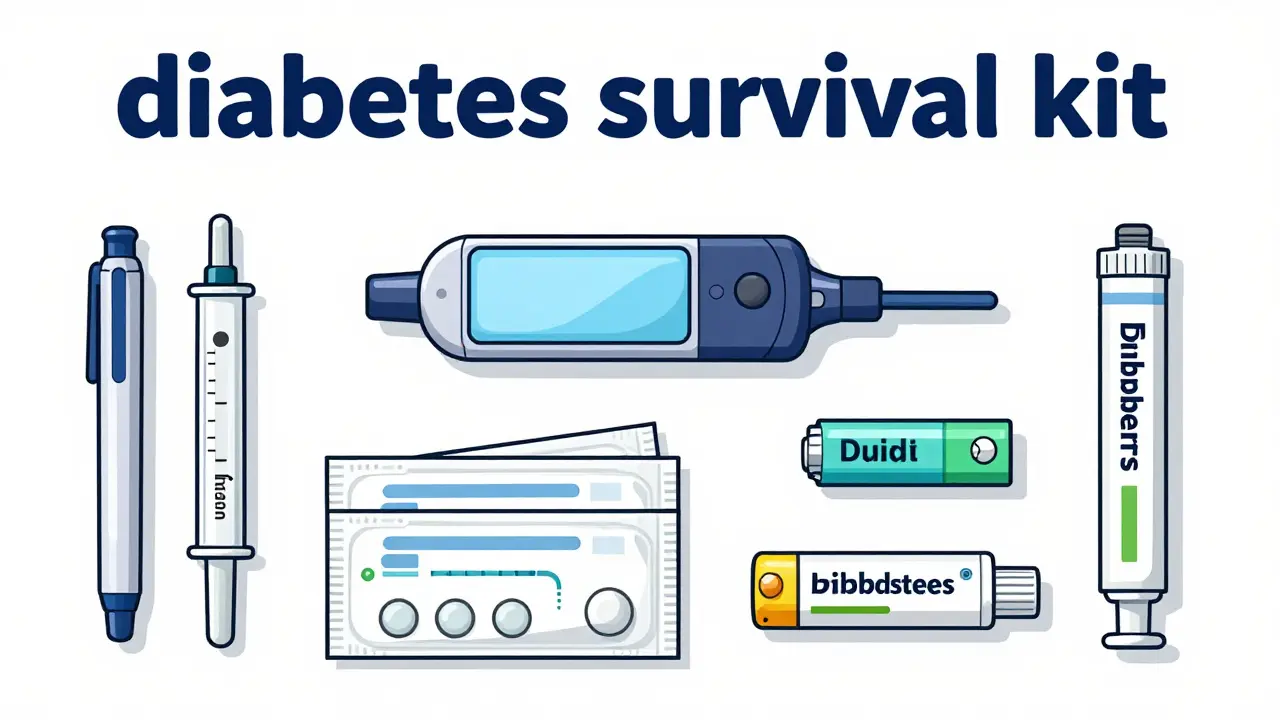
If you're just starting out, your first priority is a basal rate test. This involves fasting for 24 hours (no exercise, no snacks) to see if your background insulin is actually keeping you stable. If you're an experienced user, look into interoperable systems to see if a different CGM could give you better accuracy. Regardless of where you are in your journey, always carry a "survival kit": extra infusion sets, backup insulin pens, a fresh battery, and fast-acting glucose tablets. Technology is great, but a mechanical failure shouldn't become a medical emergency.





11 Comments