Medication Side Effect vs. Disease Symptom Analyzer
Symptom Assessment Checklist
Quick Reference Guide
| Indicator | Points |
|---|---|
| Immediate onset | +3 |
| Dose-dependent | +3 |
| Known side effect | +3 |
| Polypharmacy risk | +1-2 |
Scores 7-12 suggest likely medication side effect. Scores 0-3 suggest disease symptom. Always verify with healthcare provider.
Imagine you start a new prescription for high blood pressure. A week later, you feel dizzy and tired. Is your body reacting to the pill, or is your condition getting worse? This confusion isn't just annoying-it’s dangerous. According to the U.S. Food and Drug Administration's MedWatch program, adverse drug reactions cause about 1.3 million emergency room visits every year in the United States alone. Of those, 350,000 require hospitalization. The problem often starts with a simple mistake: mistaking a medication side effect for a symptom of the illness itself.
Distinguishing between these two can mean the difference between effective treatment and unnecessary suffering. If you think your fatigue is from depression but it’s actually from an antidepressant, you might end up taking more pills that make things worse. Understanding the root cause requires looking at timing, dosage, and how your body typically reacts. Let’s break down exactly how to tell them apart so you can manage your health with confidence.
The Core Difference: Timing and Cause
To spot the difference, you first need to understand what each term means in plain English. A disease symptom is a sign that something is wrong with your body due to an underlying condition. For example, if you have Major Depressive Disorder, symptoms like low energy, insomnia, and trouble concentrating are part of the disease itself. These happen because of the pathology of the condition, not because of what you take to treat it.
A medication side effect, on the other hand, is an unintended response to a drug taken at normal doses. The World Health Organization defines this clearly: it’s a reaction that occurs during prophylaxis, diagnosis, or therapy. Crucially, side effects are often predictable. Doctors know that certain drugs cause certain issues. For instance, ACE inhibitors like lisinopril frequently cause a persistent cough in 5-20% of patients. This isn’t lung disease; it’s a known reaction to the medication class.
The biggest clue is usually timing. Side effects typically appear shortly after you start a new medication or change a dose. If you started a new pill three days ago and suddenly developed nausea, that’s likely a side effect. Disease symptoms, however, follow the natural progression of the illness. They don’t usually spike dramatically right after you swallow a capsule unless the disease is actively worsening for other reasons.
Reading the Timeline: When Did It Start?
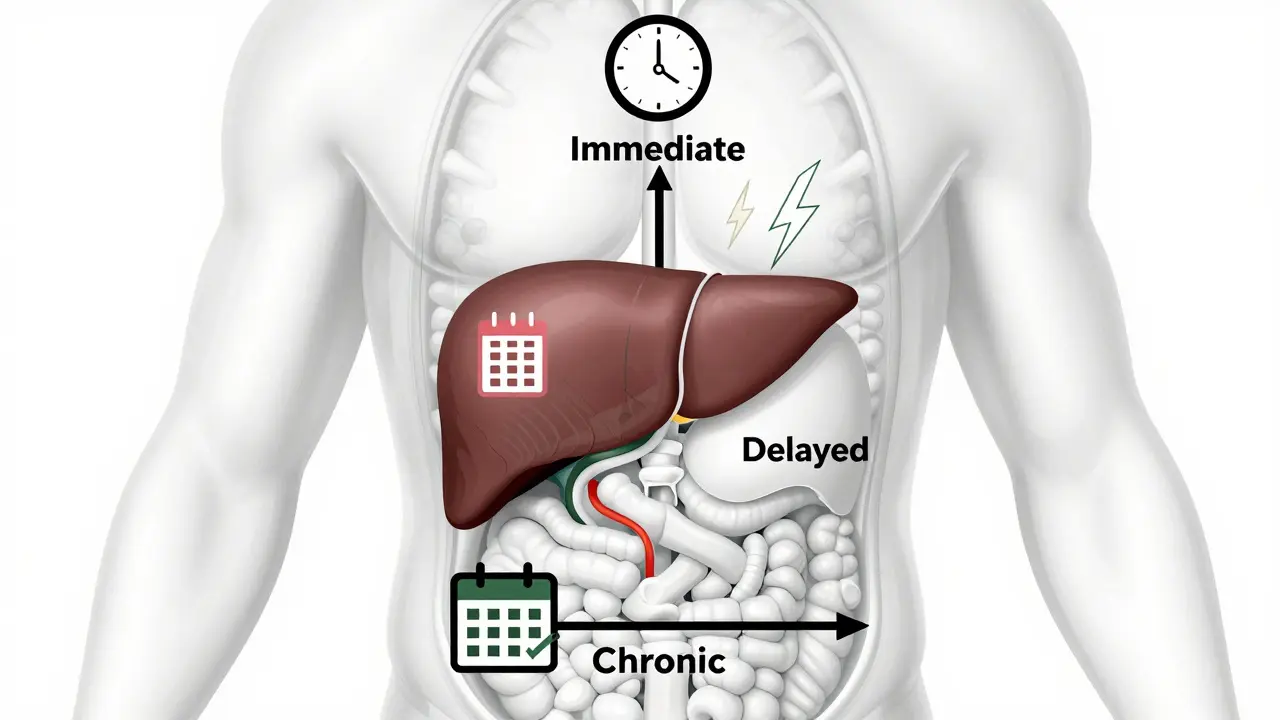
Timing is your best detective tool. Medical experts use specific windows to categorize reactions. Immediate reactions happen within minutes to hours. Think of the drowsiness you get from diphenhydramine (an antihistamine). That’s immediate. Delayed reactions show up over days or weeks. Weight gain from antidepressants like paroxetine often takes a few weeks to become noticeable. Chronic effects, like bone thinning from long-term steroid use, develop over months or years.
If a symptom appeared before you took the medication, it’s almost certainly a disease symptom. If it appeared after, pause and look closer. A landmark study in the Annals of Internal Medicine found that 32% of patients with chronic conditions incorrectly blamed their disease for side effects. This led to unnecessary tests and stronger treatments. By tracking when symptoms start relative to when you start meds, you cut through the noise.
The Dosage Test: Does More Mean Worse?
Here is a rule of thumb that saves doctors hours of guesswork: side effects are often dose-dependent. Research in the British Journal of Clinical Pharmacology shows that about 70% of medication side effects intensify when you increase the dose and improve when you lower it. Disease symptoms generally do not care about your pill count. Your arthritis pain won’t magically vanish because you lowered your blood pressure med, nor will it spike solely because you took an extra tablet.
Consider SSRIs like sertraline. Sexual dysfunction is a common side effect, affecting 30-70% of users. If you notice this issue worsening after a dosage increase, it’s highly likely linked to the drug. In contrast, anxiety levels in someone with Generalized Anxiety Disorder might fluctuate based on life stressors, not necessarily the milligram strength of their medication.
Allergic Reactions vs. Common Side Effects
Not all bad reactions are created equal. You must distinguish between a standard side effect and an allergic reaction. Allergies affect about 7-10% of the population and present differently. They are usually immediate-occurring within minutes to hours-and they are dose-independent. A tiny amount of penicillin can trigger a massive reaction in an allergic person.
Look for specific signs: hives, rash, itchy skin, facial swelling, or trouble breathing. These are red flags. A common side effect might be mild nausea or dry mouth. An allergic reaction is your immune system attacking the substance. If you experience respiratory distress or swelling, seek emergency help immediately. Do not wait to see if it passes. Standard side effects often resolve on their own as your body adjusts, usually within a few weeks.
The Polypharmacy Problem
Things get tricky when you take multiple medications. This is called polypharmacy. About 35% of patients taking five or more drugs experience interactions that create symptoms indistinguishable from disease progression. Dr. Thomas Moore from Johns Hopkins notes that these interactions can mimic worsening dementia or heart failure.
In elderly patients, this is especially critical. Studies show that 15-20% of 'new dementia' diagnoses in older adults were actually side effects from anticholinergic medications. If you are on several prescriptions, one drug might be canceling out another, or two might be combining to create a new symptom. Keeping a list of everything you take, including supplements, is non-negotiable for safety.

Practical Steps to Identify the Culprit
You don’t need to be a doctor to track this, but you do need a system. The American Medical Association recommends a four-step approach:
- Document Onset: Write down exactly when the symptom started. Was it within 72 hours of starting a new med? That suggests an acute reaction. One to four weeks? Likely a common side effect.
- Check Dose Correlation: Did the symptom get worse after a dose increase? If yes, suspect the drug.
- Consult Resources: Use tools like the FDA’s Drug Interaction Checker. Look up your specific medication’s known side effects. If your symptom matches the top five listed, it’s a strong candidate.
- Maintain a Journal: Record medication times, dosages, and symptom severity on a scale of 1-10. Studies show this improves diagnostic accuracy by 41%.
Some patients try 'drug holidays'-stopping a med to see if symptoms clear. While effective, this is risky. Never stop heart, blood pressure, or psychiatric meds without talking to your doctor first. Withdrawal can cause severe rebound symptoms that look like disease progression, confusing the picture further.
| Feature | Disease Symptom | Medication Side Effect |
|---|---|---|
| Onset Timing | Follows natural disease course | Often shortly after starting/changing med |
| Dose Relationship | Independent of medication dose | Often worsens with higher doses |
| Predictability | Varies by individual pathology | Often predictable based on drug class |
| Resolution | Requires treating the disease | May resolve as body adjusts or med stops |
| Allergy Link | No | Can indicate allergic reaction (rash/swelling) |
When to Call the Doctor
Don’t play guessing games with serious symptoms. If you experience chest pain, difficulty breathing, severe swelling, or sudden confusion, seek help immediately. Even if you suspect it’s a side effect, these are emergencies. For less urgent issues, contact your provider if a side effect disrupts your daily life. Daytime sedation affects 45% of working patients, and insomnia impacts 38%. These aren’t just annoyances; they affect your safety and productivity.
Bring your symptom journal to your appointment. Show your doctor the timeline. Ask specifically: "Could this be related to my recent medication change?" Most doctors appreciate this data. It helps them decide whether to adjust the dose, switch drugs, or treat the symptom separately. Remember, you are the expert on your body. Your observations combined with medical expertise lead to the safest outcomes.
How quickly do medication side effects usually appear?
Side effects vary by type. Immediate reactions occur within minutes to hours, such as drowsiness from antihistamines. Delayed reactions manifest within days to weeks, like weight gain from antidepressants. Chronic effects may take months or years to develop. Generally, if a new symptom appears within the first 1-4 weeks of starting a medication, it is likely a side effect.
Can side effects go away on their own?
Yes, many common side effects resolve spontaneously as your body adjusts to the medication. This process typically takes a few weeks. For example, initial nausea from SSRIs often fades after consistent use. However, some side effects, like weight gain or sexual dysfunction, may persist and require medical intervention to manage or switch medications.
What is the Naranjo Adverse Drug Reaction Probability Scale?
The Naranjo Scale is a clinical tool used by healthcare providers to determine the likelihood that a medication caused a specific reaction. It assesses ten criteria, including temporal relationship, previous patient reactions, alternative causes, and rechallenge response. A higher score indicates a probable link between the drug and the symptom.
Why is polypharmacy dangerous regarding symptom identification?
Polypharmacy, or taking multiple medications, increases the risk of drug-drug interactions. These interactions can create new symptoms that mimic disease progression, making it hard to identify the true cause. For example, combinations of drugs might cause cognitive fog that looks like dementia, leading to misdiagnosis and incorrect treatment adjustments.
Should I stop my medication if I suspect a side effect?
Never stop prescribed medication abruptly without consulting your doctor. Sudden discontinuation can cause withdrawal symptoms or rebound effects that worsen your condition. Instead, document the symptoms, note the timing, and contact your healthcare provider. They can advise whether to taper off, switch, or continue monitoring safely.