
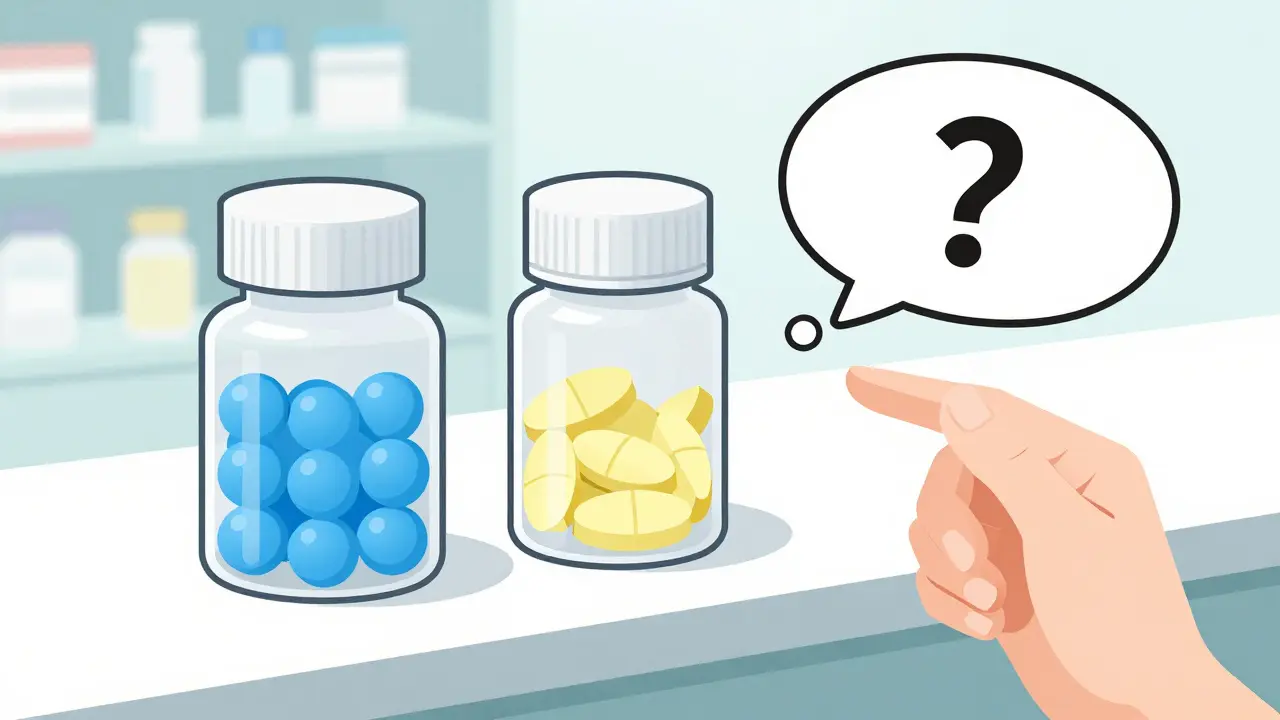
Why Appearance and Trust Matter
It sounds simple, but the look of a pill can change everything. In some cultures, specific colors are linked to healing properties, while others view certain shapes or hues as a sign of lower quality. When a patient switches from a branded drug to a generic, they often notice a change in size, shape, or color. For some, this is a non-issue. For others, it triggers a deep-seated concern that the generic version is less potent or "fake." This isn't just a feeling; it's reflected in the data. A 2022 FDA survey found that about 28% of African American patients expressed concerns that generics might be less effective than branded drugs, compared to only 15% of non-Hispanic White patients. These doubts often stem from historical medical discrimination and a lack of trust in a healthcare system that hasn't always prioritized their needs. When a pill looks different, it can reinforce the feeling that the medication isn't "made for them," leading to lower adherence and worse health outcomes.The Hidden Ingredients: Excipients and Religious Laws
While the active ingredient in a generic is the same as the brand, the inactive ingredients-called excipients is inactive substances formulated alongside the active ingredient of a medication, used as binders, fillers, or coatings-can vary wildly. This is where cultural and religious considerations become critical. For example, many capsules use gelatin, which is often derived from pork. For a Muslim or Jewish patient, a pork-based capsule is not an option. Finding a culturally appropriate alternative isn't always a quick search. Some pharmacists spend hours calling different manufacturers to find a liquid version or a synthetic capsule that meets Halal or Kosher standards. The frustration lies in the lack of transparency. In the US, only about 37% of generic package inserts provide detailed excipient information, which is far lower than the 68% seen in the European Union. This gap leaves both the patient and the provider guessing, often delaying necessary treatment.
Bridging the Gap in the Pharmacy
Community pharmacies are often the first point of contact for diverse populations. This makes the pharmacist's role in cultural competence is the ability of healthcare providers to deliver services that meet the social, cultural, and linguistic needs of patients crucial. It's not just about translating a label into another language; it's about understanding the "why" behind a patient's hesitation. To do this effectively, pharmacy teams need more than a brochure. They need access to comprehensive formulation databases and specific training on religious dietary restrictions. Research shows that successful pharmacies-those that have reduced the time to find a Halal or Kosher alternative from hours to minutes-invest in dedicated resources and staff training. Usually, this involves about 8 to 12 hours of specialized education to help staff recognize how social determinants of health impact a patient's willingness to trust a generic substitute.| Feature | Branded Medication | Generic Medication | Cultural Impact |
|---|---|---|---|
| Appearance | Consistent look/color | Varies by manufacturer | May be perceived as lower quality |
| Excipients | Standardized list | Varies by generic maker | Risk of religious non-compliance (e.g., gelatin) |
| Trust Level | Higher perceived efficacy | Variable based on background | Higher skepticism in minority communities |
| Availability | Single source | Multiple manufacturers | Opportunity to find a "culturally safe" version |
Industry Shifts and the Future of Inclusivity
The pharmaceutical industry is finally waking up to the fact that inclusivity is a competitive advantage. With the passage of the Food and Drug Omnibus Reform Act (FDORA) in December 2022, there is a much stronger push for diversity in clinical trials and a better understanding of how underrepresented populations respond to treatment. Giant generic players are starting to move. Teva Pharmaceutical Industries launched a Cultural Formulation Initiative in 2023 to document excipients across 15 major therapeutic areas. Similarly, Sandoz is developing a Global Cultural Competence Framework to improve transparency. These moves are essential because the financial stakes are high-unmet pharmaceutical needs among minority populations in the US alone are estimated at around $12.4 billion, particularly in areas like diabetes and hypertension where the disease burden is disproportionately high.
Practical Tips for Patients and Caregivers
If you or a loved one have specific cultural or religious requirements, don't be afraid to be vocal with your healthcare provider. It is your right to know what is in your medicine. Here are a few ways to handle the conversation:- Ask for the "Inactive Ingredients" list: Specifically ask about gelatin, lard, or alcohol if those are concerns for you.
- Discuss appearance changes: If your generic pill looks different, ask your pharmacist to explain why the active ingredient is still identical.
- Request a "Formulation Review": If you have strict Halal or Kosher needs, ask the pharmacist to check multiple generic manufacturers to find a compatible version.
- Clarify instructions: If there is a language barrier, ask for written instructions in your primary language to avoid dosing errors.
Common Pitfalls in Cultural Care
One of the biggest mistakes healthcare providers make is assuming that a patient's refusal of a generic is based on a lack of education. Often, it's not about not "understanding" that generics work; it's about a clash of values. Forcing a patient to take a medication that violates their faith or makes them feel unseen in the healthcare system doesn't just lead to non-adherence-it destroys the patient-provider relationship. Another pitfall is the "one size fits all" approach to translation. A label translated literally may not convey the nuance of how to take a medication within a specific cultural lifestyle (such as fasting periods during Ramadan). True cultural competence means adjusting the delivery of care to fit the life of the patient, not the other way around.Why do some people trust brand-name drugs more than generics?
Trust often comes down to consistency and historical experience. In some cultural communities, there is a lingering perception that generics are "cheap" versions with lower potency. This is often compounded by differences in pill color or shape, which can lead patients to believe the medication is different or less effective, despite having the same active ingredient.
What are the most common religious concerns with generic medications?
The most frequent concerns involve excipients, specifically the use of animal-derived gelatin (often from pigs) in capsules, which is prohibited for Muslim and Jewish patients. There are also concerns regarding the use of alcohol as a solvent in certain liquid formulations.
How can I find out if my generic medication is Halal or Kosher?
You can start by checking the package insert for a list of inactive ingredients. If the information is unclear, ask your pharmacist to contact the manufacturer directly. Some pharmacy chains now have dedicated databases to identify certified medications more quickly.
Does the color of a pill actually affect how it works?
Chemically, the dye used for color generally does not affect the drug's efficacy. However, psychologically, color can influence a patient's perception of the drug. If a patient believes a certain color is linked to healing (or conversely, to a lack of strength), it can impact their confidence in the treatment and their adherence to the regimen.
What is the role of FDORA in improving medication access?
The Food and Drug Omnibus Reform Act (FDORA) focuses on increasing diversity in clinical trials. By ensuring that medications are tested on a wider variety of ethnic and racial groups, the industry can better understand how different populations react to drugs and identify social determinants of health that might hinder treatment success.







10 Comments