
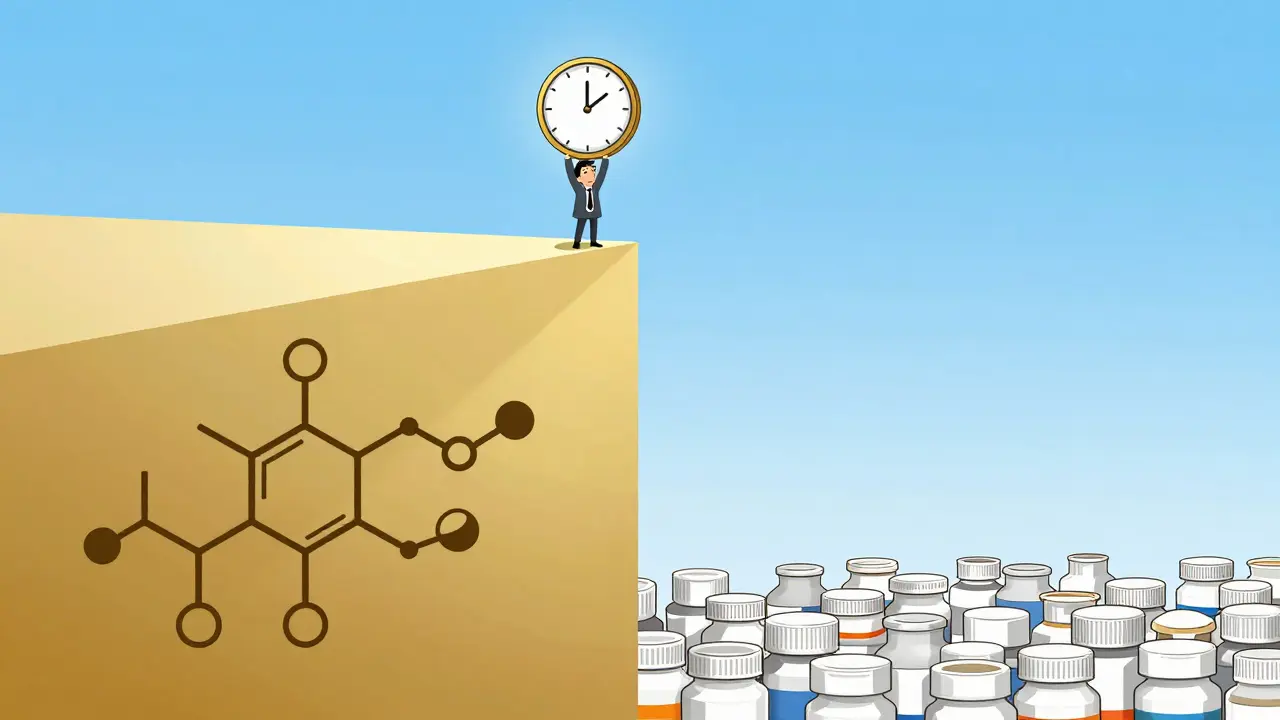
| Strategy Component | Typical Extension | Primary Goal |
|---|---|---|
| Secondary Combination Patents | 3 to 8 years | Block generic versions of the combination |
| Regulatory Exclusivities | 3 to 7 years | FDA-granted protection for new clinical data |
| Patent Term Extensions (PTE) | Up to 5 years | Recover time lost during FDA approval |
Building the 'Picket Fence' Around a Blockbuster
Pharma companies don't just rely on one patent; they build a "picket fence." This is a dense web of overlapping patents-often called patent thickets-that cover every conceivable version of a drug. While the core "composition-of-matter" patent protects the molecule itself, formulation patents protect the delivery system. For example, if a company has a successful intravenous drug, they might develop a subcutaneous version. By patenting this new delivery method, they create a new product that is more convenient for the patient, effectively shifting the market to the new, patented version just as the old one is about to become generic. Roche did this with Phesgo®, a subcutaneous combination of trastuzumab and pertuzumab. Even though some core patents were aging, the convenience of the new formulation limited the impact of biosimilar competition.The Legal Hurdle: Proving it's Not 'Obvious'
It isn't as simple as just mixing two drugs and calling it a new invention. The USPTO (United States Patent and Trademark Office) uses a strict "obviousness" test. Following the landmark Supreme Court case KSR International Co. v. Teleflex Inc., examiners generally assume that combining two known drugs for a known purpose is obvious. To get a patent approved, brands must prove "unexpected results." This means they need hard data showing that the combination does something significantly better than the individual parts-like reducing toxicity or drastically increasing absorption. Precision is everything here. A lawyer might tell you that a claim for a 10mg/50mg ratio could be rejected as obvious, but a highly specific 9.8mg/51.2mg ratio might get granted because it hits a precise "sweet spot" of efficacy. This is why companies spend an extra $28 to $42 million in R&D just to generate the specific data needed to survive a patent challenge.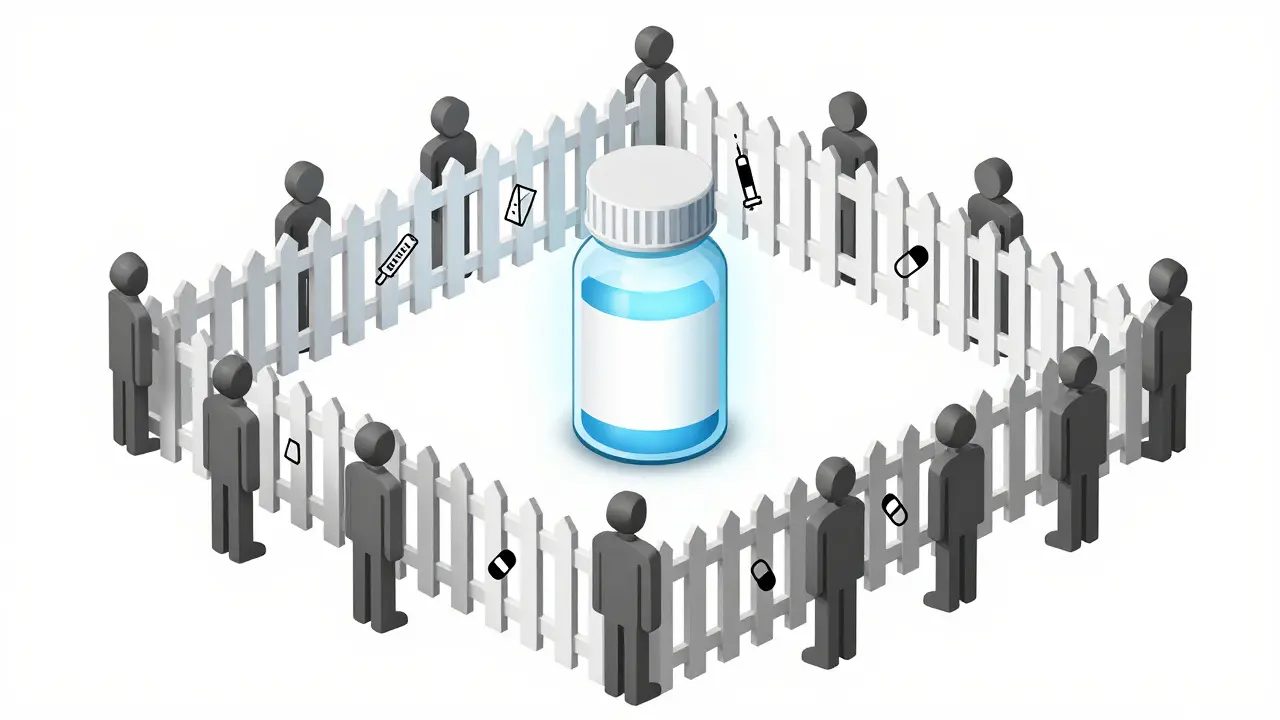
Navigating the Orange Book and FDA Exclusivities
When a drug is approved, its patents are listed in the FDA Orange Book. This isn't just a directory; it's a legal shield. Generic manufacturers must reference these patents when filing an Abbreviated New Drug Application (ANDA). Beyond patents, companies chase "regulatory exclusivities." These are not patents but periods where the FDA refuses to approve a competitor. For instance, if a company conducts a new clinical investigation for a different use of an existing drug, they can get 3 years of exclusivity. If it's an orphan drug for a rare disease, that protection jumps to 7 years. By layering a combination patent on top of a new clinical exclusivity period, a brand can keep a generic version off the shelf for nearly a decade after the original molecule patent expires.The Dark Side: Product Hopping and Price Hikes
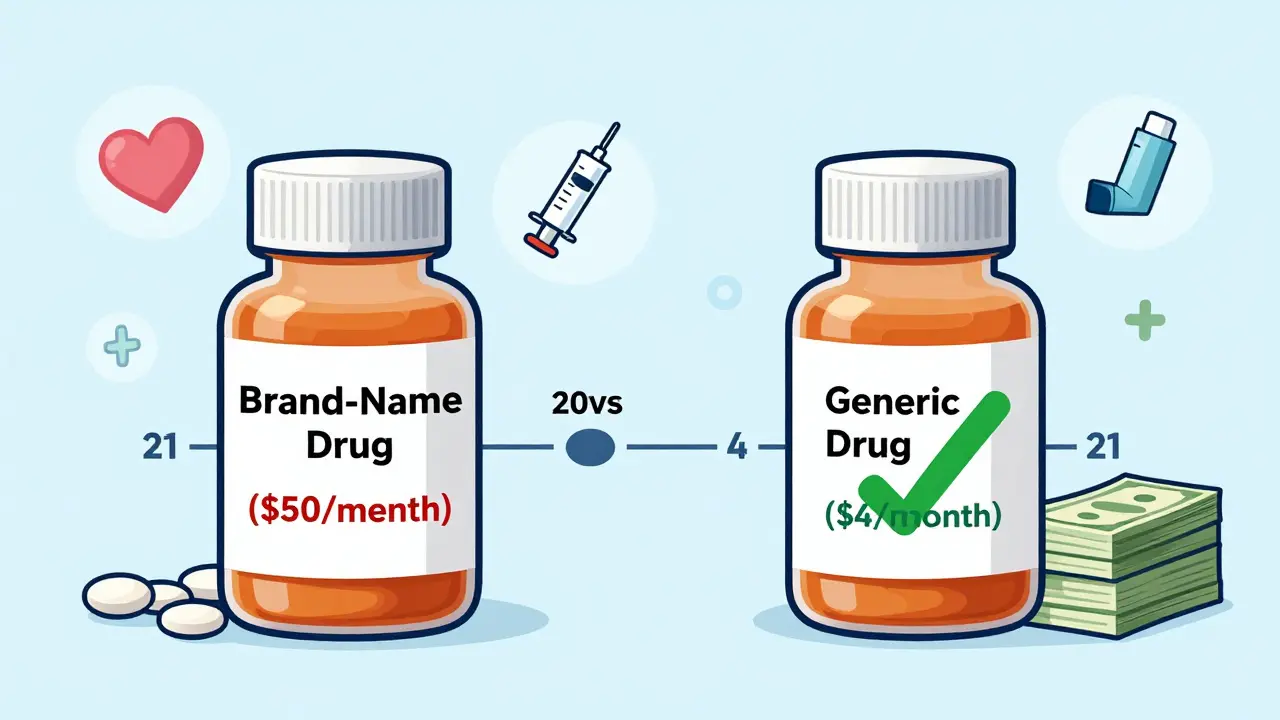
Not everyone sees this as savvy business. The Federal Trade Commission (FTC) and various health advocates argue that some of these patents are "trivial." They point to cases of "product hopping," where a company stops selling the old version of a drug and forces patients onto the new, patented formulation just to reset the exclusivity clock. Critics, including experts from Harvard Medical School, argue that this practice doesn't actually help patients; it just keeps prices high. Some data suggests that these secondary patents can increase U.S. drug prices by 17% to 23% beyond what actual innovation justifies. When a company patents a minor change-like a different salt form or a slightly different pill coating-without providing a real clinical benefit, it's often criticized as "patent privateering."
How Generics Fight Back: The Paragraph IV Challenge
Generic companies aren't just waiting for the clock to run out. They use a legal maneuver called a Paragraph IV challenge. This is essentially a lawsuit where the generic company claims that the brand's formulation patent is either invalid or that their generic version doesn't infringe upon it. These challenges are becoming more successful. Recent data shows that about 45% of formulation patents are invalidated when challenged in court. Generic firms are getting better at "designing around" patents-finding a way to create the drug that provides the same benefit but uses a slightly different delivery mechanism or ratio that doesn't trigger the patent. This creates a high-stakes game of cat-and-mouse between the R&D teams of big pharma and the legal teams of generic manufacturers.Looking Ahead: A Shifting Legal Landscape
The era of easy evergreening might be ending. The FDA is considering new rules that would require "clinical superiority evidence" to grant the 3-year exclusivity for new formulations. This means a company can't just make a "me-too" version of their own drug; they have to prove it's actually better for the patient. We are also seeing a shift toward more complex biologics. Because biologics are harder to copy than simple chemical pills, the focus is moving toward high-tech delivery systems, such as pH-sensitive release technology. While the average extension period is expected to drop from about 5 years to under 4 years due to stricter courts, the strategy remains the primary way the industry protects its most valuable revenue streams.What is the difference between a primary and secondary patent?
A primary patent, known as a composition-of-matter patent, protects the actual chemical molecule of the drug. Secondary patents, like formulation or combination patents, protect the specific way that molecule is delivered, the dosage, or how it's combined with another drug. Primary patents usually offer the strongest protection, while secondary patents are used to extend the time a brand has no competition.
How does

Amber McCallum
April 28, 2026 AT 09:48This is just greed disguised as science. It's honestly sad how they play with people's lives just to make a few more bucks.

Thomas Jorquez
April 29, 2026 AT 04:06The legal loop holes here are quite fascinatin. Its a shame that the system allows this kind of manipulation of the patent process.

Timothy Brown
April 29, 2026 AT 21:33Exactly. It's a total scam. They aren't innovating; they're just gaming the system to keep the prices high for people who actually need the meds.

Darrin Oneto
April 30, 2026 AT 11:07Absolute clown show in the courts. These pharma gaint's are just sprinkleing fairy dust on old formulas to keep the money rainin.

Aubrey Johnson
April 30, 2026 AT 18:03It is quite simple. These companies are merely optimizing their revenue streams. Those who cannot understand basic capitalism will always be outraged by the efficiency of corporate law.

Jonathan Hall
May 1, 2026 AT 08:36While I try to see both sides of the argument, it is absolutely infuriating that we allow these predatory practices to continue in a civilized society, especially when you consider that the sheer scale of this manipulation effectively creates a monopoly that strips away the fundamental right to affordable healthcare for millions of people who are just trying to survive their chronic conditions while the board members get bigger bonuses for essentially inventing a new way to package the same pill, and it's high time we stopped pretending that this is about research and development and started admitting it's about systemic corporate greed that exploits every single legal loophole available to ensure that the public suffers while the profit margins stay astronomical for decades on end.

prince king
May 1, 2026 AT 20:47I think it's great that generics are fighting back! 🛡️ It's all about balance in the end. Maybe the shift toward biologics will lead to even cooler tech for everyone 🌟✨. Let's hope the new FDA rules make things fairer for the patients! 😊

Jean Robert
May 3, 2026 AT 20:21It's really heartening to see that there are legal avenues like the Paragraph IV challenge that allow for more competition, because at the end of the day, the goal should always be making sure that the people who need these medications can actually get them without going bankrupt, and while the process is slow and frustrating, the fact that nearly half of these formulation patents are being invalidated shows that the truth eventually comes out, so we should stay hopeful that the legal landscape will continue to evolve in a way that prioritizes human health over corporate profits, providing a better future where innovation is rewarded but not at the expense of those who are most vulnerable in our healthcare system.


8 Comments