
Why Air Pollution Makes Asthma Worse
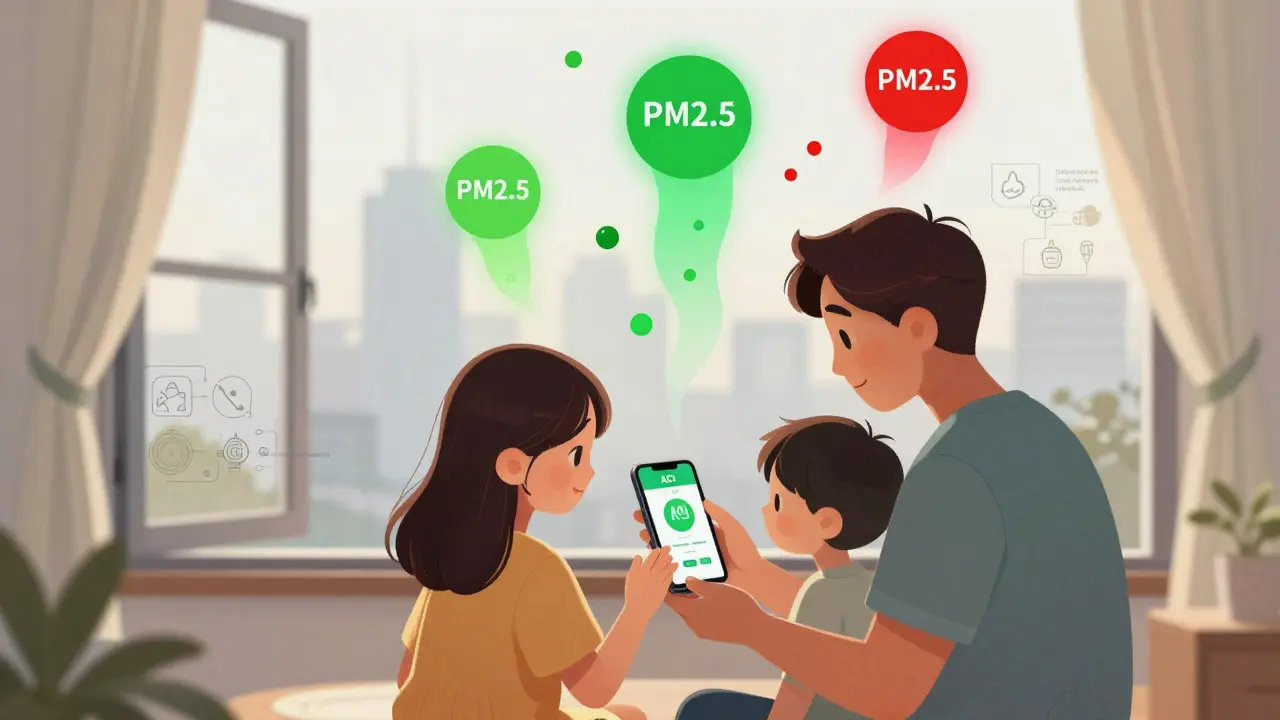
If you or someone you love has asthma, breathing on a smoggy day isn’t just uncomfortable-it’s dangerous. Air pollution doesn’t cause asthma, but it makes it far worse. Every year, millions of people with asthma end up in emergency rooms because of dirty air. Pollutants like PM2.5 (tiny particles from car exhaust, wildfires, and factories), nitrogen dioxide from traffic, and ground-level ozone from sunlight reacting with emissions all inflame the airways. This triggers coughing, wheezing, chest tightness, and forces people to use their inhalers more often.
Studies show that when pollution levels rise, asthma attacks spike. One 2024 review found that during periods of cleaner air-like during COVID lockdowns-people with asthma saw their symptom control improve dramatically. Their Asthma Control Test (ACT) scores jumped from an average of 17.3 to 19.7. Hospital visits dropped by nearly 40%. This isn’t coincidence. It’s cause and effect.
How to Check Air Quality (And What to Do When It’s Bad)
The first step in protecting yourself is knowing what’s in the air. The Air Quality Index (AQI) is a simple scale from 0 to 500 that tells you how clean or polluted the air is. You don’t need a fancy app-just check AirNow.gov or your local weather app. It’s free, real-time, and updated hourly.
- AQI 51-100 (Moderate): Sensitive groups-including people with asthma-should cut back on long outdoor workouts.
- AQI 101-150 (Unhealthy for Sensitive Groups): Everyone with asthma should limit time outside, especially during peak traffic hours.
- AQI 151-200 (Unhealthy): Avoid prolonged outdoor activity. Stay indoors with windows closed.
- AQI 201+ (Very Unhealthy to Hazardous): Don’t go outside unless absolutely necessary. Even short walks can trigger an attack.
One asthma mom in Ohio used the AirVisual app to track daily pollution and adjusted her daughter’s outdoor playtime. Within six months, her daughter’s rescue inhaler use dropped by nearly half. That’s not magic-it’s data-driven action.
Make Your Home a Safe Zone
Indoor air can be just as bad-or worse-than outdoor air. Cooking, cleaning products, dust mites, and even outdoor pollution that sneaks in through cracks and open windows can build up. The good news? You can fix this.
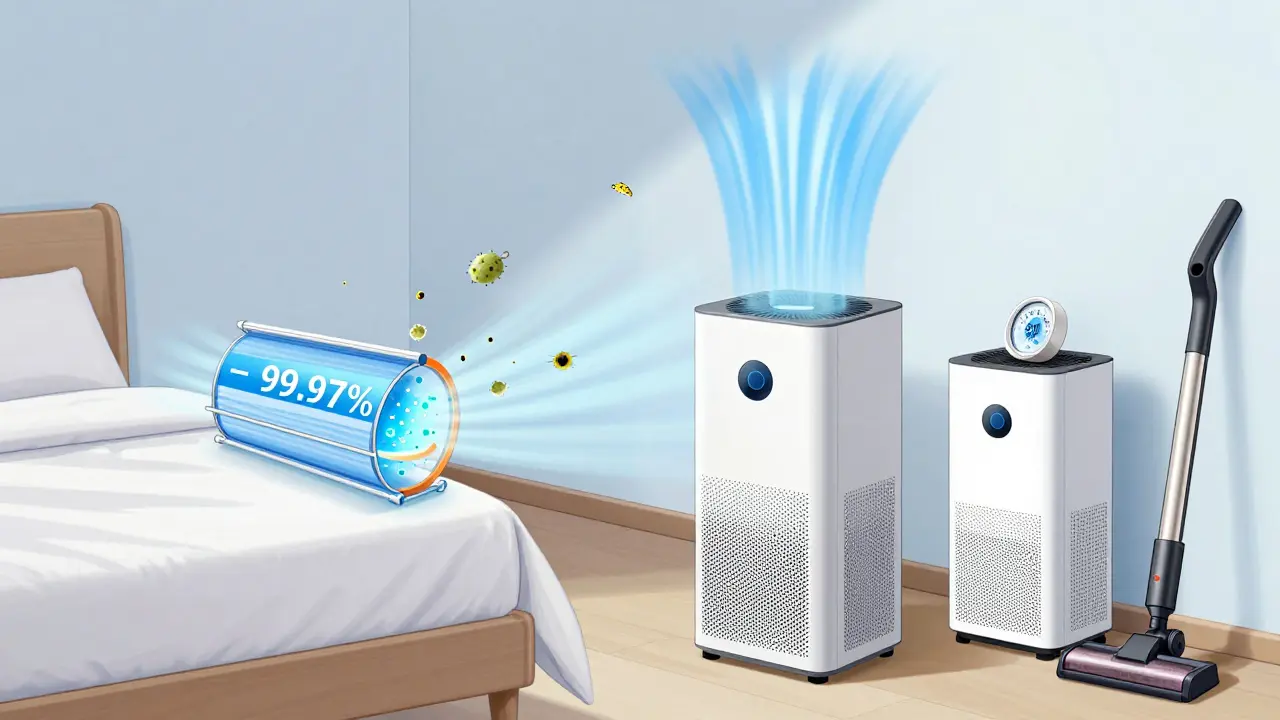
The most effective tool is a HEPA air purifier. These filters trap 99.97% of particles as small as 0.3 microns-exactly the size of PM2.5. Look for a unit with a Clean Air Delivery Rate (CADR) that matches your room size. For a 300-square-foot bedroom, aim for a CADR of at least 200. A 2021 Johns Hopkins study showed homes with HEPA filters cut indoor PM2.5 by 55-67%.
Don’t just buy any purifier. Avoid cheap models that don’t list CADR ratings. Place it away from walls-72% of people put them too close, cutting effectiveness by 30-50%. And replace filters on time: only 43% of users do this, but skipping it turns your purifier into a dust recycler.
Pair your purifier with other steps: use a dehumidifier to keep indoor humidity between 30-50% (to fight mold and dust mites), avoid scented candles and aerosols, and vacuum weekly with a HEPA-filter vacuum.
Protect Yourself Outside-Without Giving Up Life
Staying indoors all the time isn’t realistic for most people. If you work outside, take your kids to school, or need to run errands, you need smart strategies.
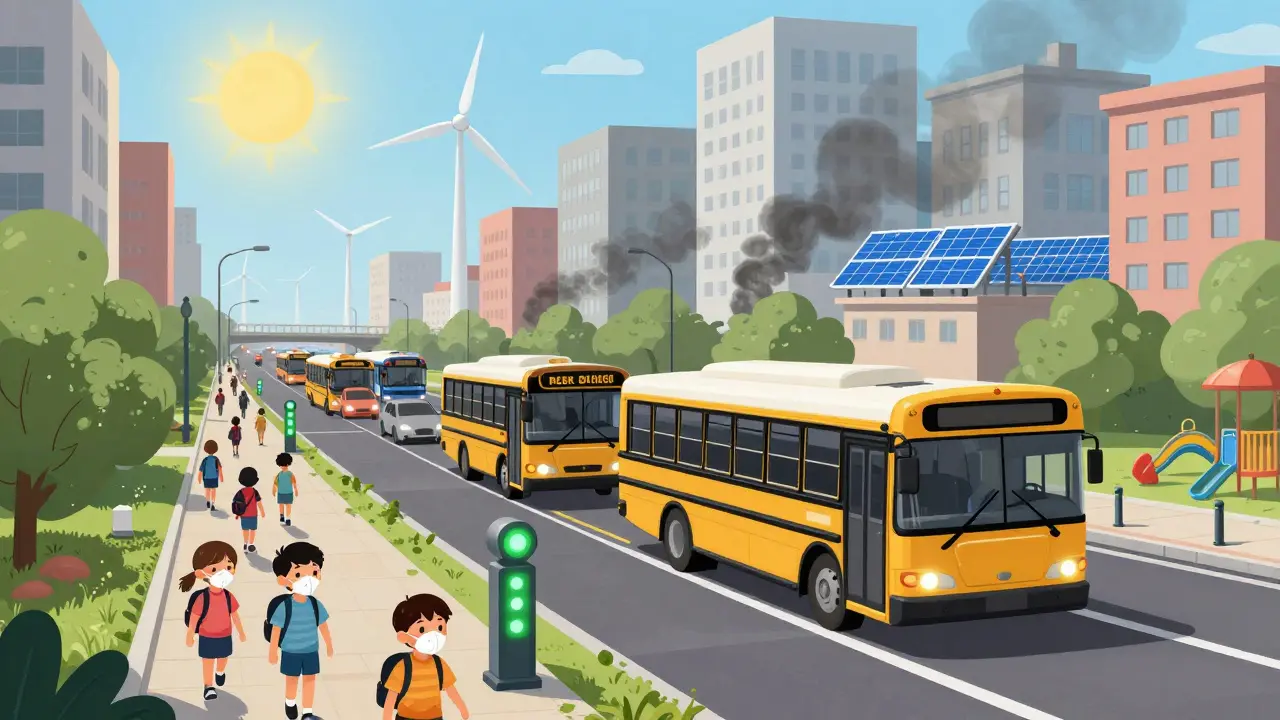
When pollution is high, wear an N95 respirator-not a cloth mask. N95s block 95% of fine particles when fitted properly. But here’s the catch: many people wear them wrong. They slip, gaps form, and kids often refuse to keep them on. Dr. John Balmes from UCSF warns that masks can create a false sense of safety. Use them only when necessary, and teach kids how to wear them correctly.
Timing matters. Avoid being outside during rush hour (7-9 a.m. and 4-6 p.m.), especially near highways. Traffic emissions spike then. If you walk to the bus stop, choose a route away from busy roads. Schools in Massachusetts reduced indoor pollution by 22-35% just by moving bus drop-off zones 200 feet from playgrounds and banning idling.
What Works Best? The Numbers Don’t Lie
Not all strategies are created equal. Here’s what the data says about real-world results:
| Strategy | Effectiveness | Cost Range | Key Limitation |
|---|---|---|---|
| Mobile pollution alerts (app-based) | 15.8% improvement in ACT scores | $0 (free apps) | Requires consistent user action |
| HEPA air purifiers in homes | 55-67% reduction in indoor PM2.5 | $50-$800 (plus $20-$100/year in filters) | Only works in one room; doesn’t fix outdoor air |
| Anti-idling policies at schools | 22-35% drop in indoor PM2.5 | $0-$5,000 (for signage, education) | Needs community buy-in |
| N95 masks | Up to 95% particle filtration (if fitted) | $1-$3 per mask | Improper use reduces effectiveness |
| Electric school buses | Up to 60% reduction in traffic-related exposure | $300,000-$400,000 per bus | Requires government funding and policy |
The clearest takeaway? Combining strategies works best. Using an app to avoid high-pollution days, running a HEPA filter at night, and wearing an N95 during short outdoor trips adds up. One study found that people who used two or more methods saw twice the improvement in asthma control compared to those who used just one.
Policy Changes Are the Real Game-Changer
Individual actions help-but they can’t fix a polluted city. That’s where policy comes in.
The EPA’s current annual PM2.5 standard is 12 μg/m³. But the American Thoracic Society says it should be 8 μg/m³ to truly protect kids and older adults. In 2024, the EPA proposed lowering it to 9-10 μg/m³. That’s progress, but still not enough.
Real wins are happening on the ground. California is replacing all diesel school buses with electric ones by 2035. Los Angeles schools saw a 35% drop in indoor PM2.5 after switching. London’s Ultra Low Emission Zone cut childhood asthma hospitalizations by nearly 12% in two years.
And it’s not just buses. Cities like New York and Seattle are expanding green spaces, creating low-traffic neighborhoods, and pushing for cleaner energy. These changes don’t just help people with asthma-they help everyone breathe easier.
What’s Holding People Back?
Many people know what to do-but they can’t do it. A 2022 survey of 2,500 asthma patients found that while 68% check air quality, only 32% change their behavior when it’s bad. Why?
- 78% said they can’t skip work (construction, delivery, cleaning jobs)
- 65% said they need to drop kids off or pick them up
- 52% said they can’t afford a good air purifier
This isn’t about laziness. It’s about inequality. Clean air shouldn’t be a luxury. If you’re struggling, talk to your doctor or asthma educator. Some clinics offer free or low-cost air purifiers. Some schools have programs to help families. Community groups in places like Oakland and Chicago are distributing filters to low-income households. Ask around-you’re not alone.
What’s Next? The Future of Asthma and Air Quality
Technology is catching up. The NIH is testing wearable sensors that alert kids with asthma when pollution spikes-right on their phones. Some hospitals are starting to pull air quality data directly into electronic health records, so doctors can see if a spike in symptoms matches a bad air day.
By 2050, climate change could increase ozone-related asthma cases by 10-15%. That means the work we do now matters more than ever. Cleaner energy, fewer cars on the road, and stronger pollution rules aren’t just good for the planet-they’re medical necessities.
Start Today: Your 5-Step Action Plan
- Check the AQI daily. Bookmark AirNow.gov or download a free app like AirVisual.
- Get a HEPA air purifier for your bedroom. Match the CADR to your room size.
- Wear an N95 mask on bad air days when you must go out.
- Ask your school or workplace if they have anti-idling policies or air quality plans.
- Advocate. Contact your city council. Ask them to support electric buses, green spaces, and stricter air rules.
You don’t need to do everything at once. Pick one step. Do it for a week. Then add another. Small changes, done consistently, add up to better breathing-and better life.






8 Comments