
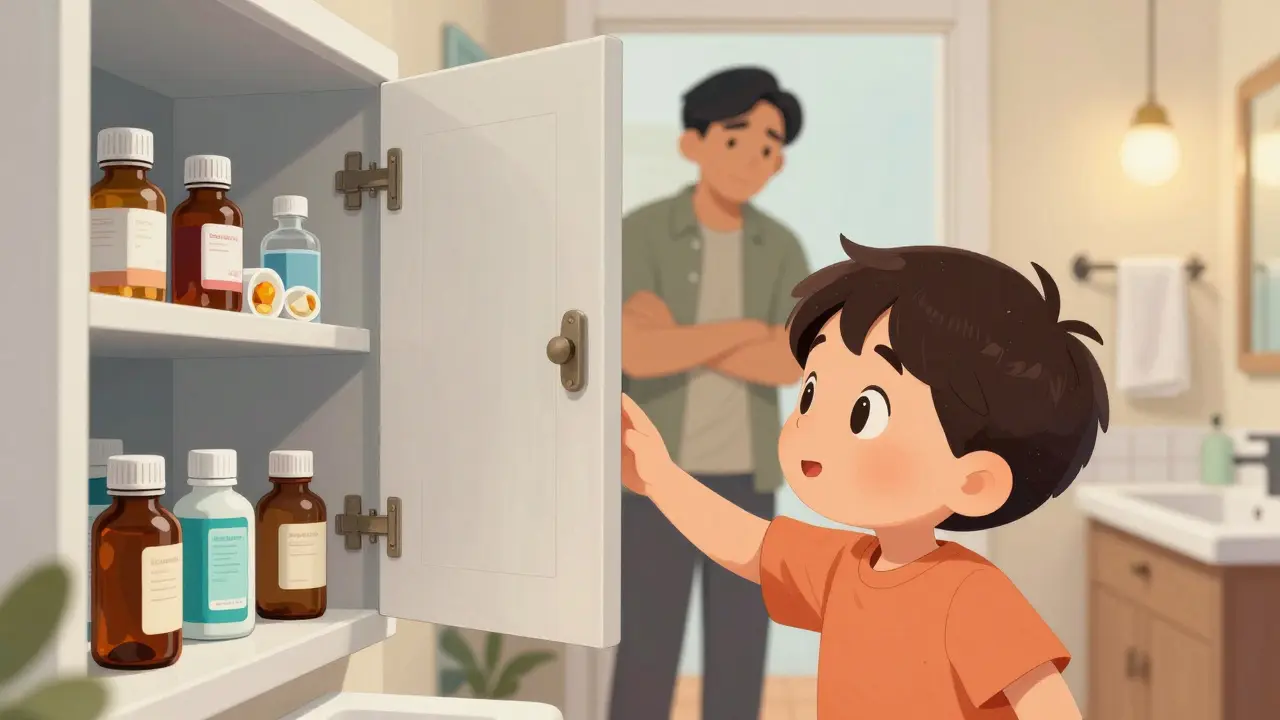
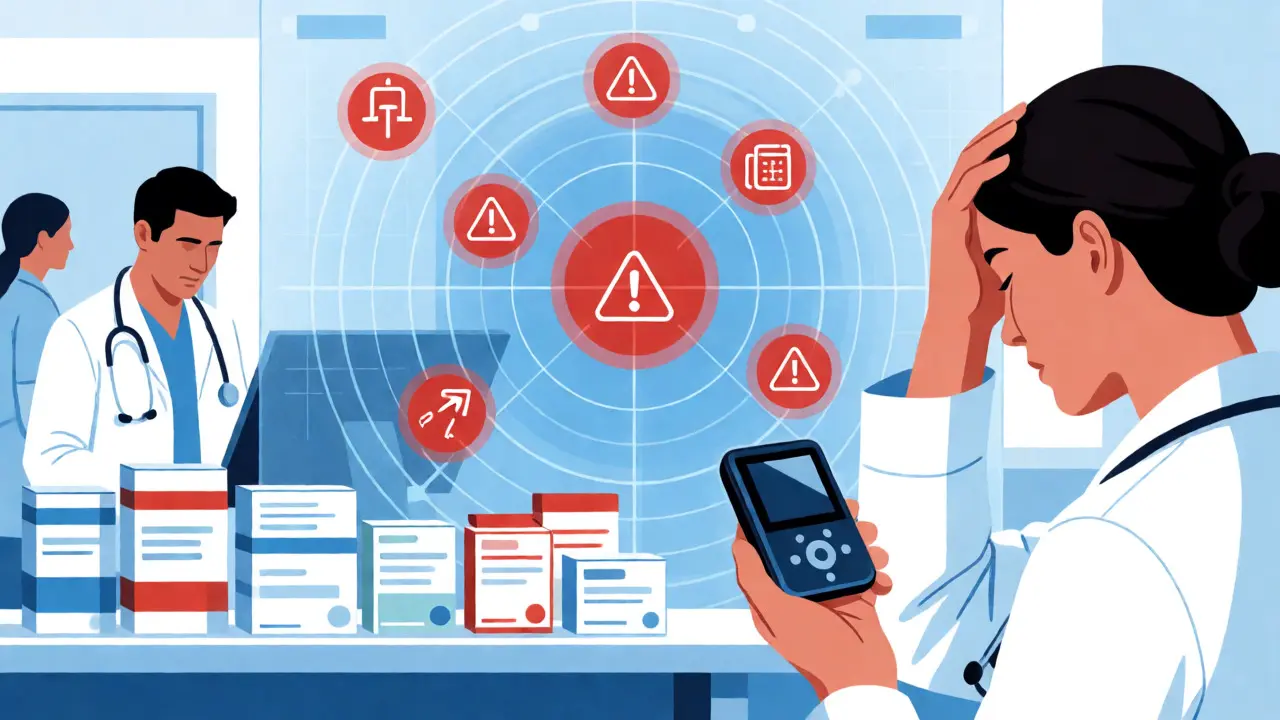
Every year, around 60,000 children under five end up in emergency rooms because they accidentally swallowed medicine they shouldn’t have. That’s more than 160 kids every single day. It’s not just a rare accident - it’s a preventable crisis. And the truth is, most of these incidents happen because medicine was left within reach, even for just a minute. You think you’re being careful. You leave the pill bottle on the counter while you answer the door. You put the liquid medicine in the bathroom cabinet because it’s convenient. You don’t lock it up because your child is too young to climb. But here’s the hard truth: kids as young as 18 months can open standard child-resistant caps, climb onto chairs, and pull down cabinets. They don’t know what’s safe. They only know what’s within reach.
Why "Out of Sight" Isn’t Enough
Many parents believe that if the medicine is on a high shelf or in a cabinet, it’s safe. But research shows otherwise. A 2022 study from the Journal of Pediatric Health Care tracked 1,200 homes with young children. The results were clear: storing medicine on a high shelf alone prevented access in only 72% of cases. But when families used a locked cabinet, that number jumped to 98%. Why? Because children can open cabinet latches. By age two, most kids have figured out how to twist, pull, or push their way into drawers and cabinets. Even if the medicine is tucked away, if it’s not locked, it’s not safe.And it’s not just about height. The U.S. Consumer Product Safety Commission tested how long it takes toddlers to open common containers. The average time? Less than 90 seconds. That’s less than two minutes. The CDC’s "Two-Minute Rule" says: never leave medicine unattended for longer than that. Not even while you’re in the next room. Not even while you’re on the phone. Not even while you’re putting on your shoes to run an errand. A child can access medicine faster than you can say "I’ll be right back."
Child-Resistant Packaging? Not Reliable
You’ve probably seen those twist-off caps. They’re called child-resistant for a reason - they’re designed to be hard for little hands to open. But here’s what most people don’t realize: child-resistant doesn’t mean child-proof. In fact, a 2023 analysis from Express Scripts found that half of all children under five can open those caps in under a minute. And once they figure it out? They remember. They’ll try again tomorrow. And the next day. And the day after that.What’s worse? Some medications look like candy. Chewable antacids? They’re shaped like gummies. Flavored syrups? They come in bright colors. Aspirin tablets? They can look like Skittles. A 2022 study from Children’s Mercy Hospital found a 17% spike in accidental ingestions among kids aged 2-4 when the medicine resembled popular candies. That’s not coincidence. That’s a design flaw we’ve ignored for too long. The FDA’s 2025 pilot program is starting to fix this by requiring pictogram labels on all prescription bottles - simple icons that show exactly where to store medicine. But until then, don’t rely on packaging alone.
Locked Storage: The Only Real Solution
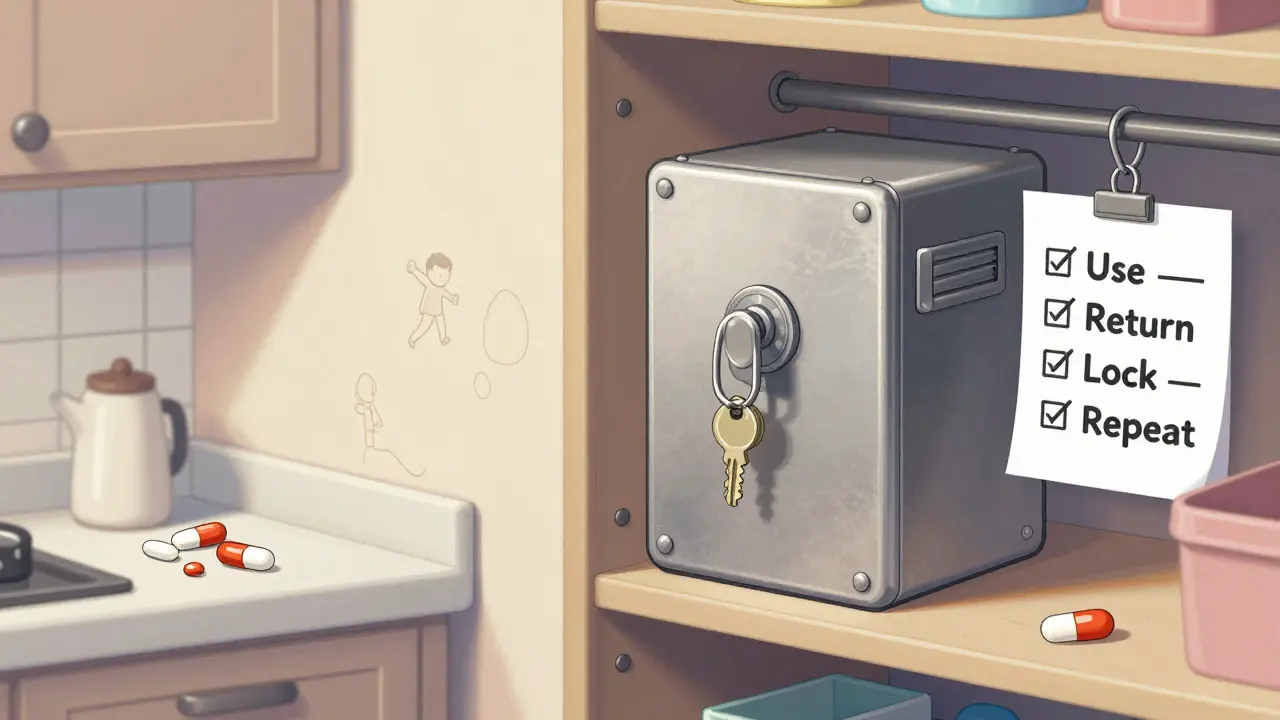
The gold standard? A locked container. Not just any lock. A real one. Steel or hardened plastic. Tamper-evident. At least 6 inches by 4 inches by 2 inches - big enough to hold your daily meds. And it should be mounted high, out of reach, and secured with a key or combination. The Up and Away campaign, launched by the CDC and backed by 12 national health organizations, says this method is 3.2 times more effective than relying on child-resistant caps.Here’s how to set it up:
- Keep all medicines - prescription, over-the-counter, vitamins, supplements - in the same locked box.
- Don’t store them in the bathroom. Humidity ruins pills. Plus, kids can reach the sink and climb onto the counter.
- Avoid the kitchen counter. Even if it’s high, it’s too easy to grab during meal prep.
- Store medicine in a bedroom closet or high cabinet in the hallway. Out of daily sight, but easy for adults to access.
- Use a key, not a code, if you need quick access during emergencies. Codes get forgotten. Keys don’t.
Specialized lockboxes cost between $45 and $120. Some even have biometric locks or Bluetooth alerts. But don’t overcomplicate it. A simple key lock box from a pharmacy or hardware store works just fine. Amazon reviews show that users of Med-Tek lockboxes report 92% effectiveness at preventing access. That’s not marketing - that’s real data from real families.
Travel, Guests, and Grandparents - The Hidden Risks
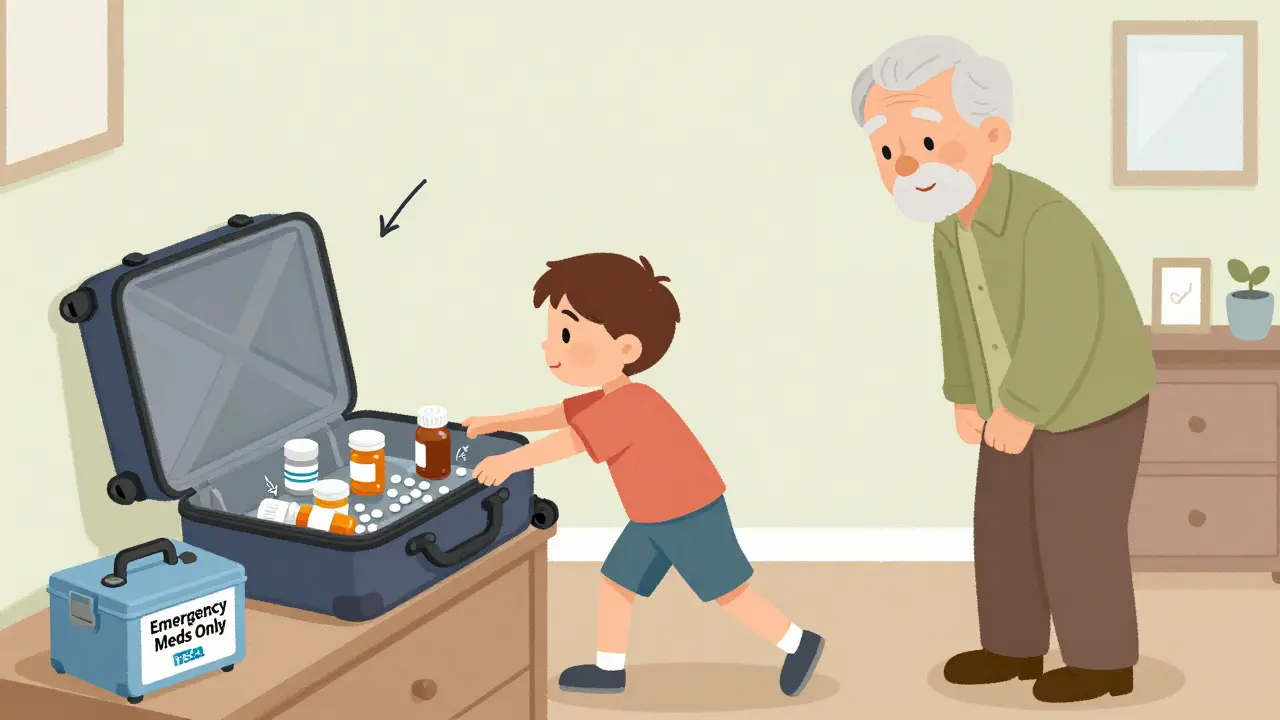
One of the most dangerous times for accidental ingestion? When you’re not at home. A 2023 survey by Safe Kids Worldwide found that 41% of parents store medicine in bathroom cabinets at home - even though they know kids can reach them. Why? Convenience. But when they travel? They leave pills in suitcases, hotel drawers, or overnight bags. The CDC documented a case in 2022 where a 22-month-old found opioids in an unsecured overnight bag and was hospitalized. That could’ve been your child.And grandparents? They’re often the biggest risk. A 2024 Express Scripts interview found that 76% of grandparents don’t lock up medicine when grandchildren visit. Why? "My grandchild knows not to touch medicine." But kids don’t understand danger. They see a bottle, they smell the sweet flavor, they try it. And 68% of grandparents believe their grandchild is too well-behaved to touch it. That’s the myth that kills.
Here’s what to do:
- Always carry a portable lockbox when visiting family.
- Leave it with the host and say: "Please keep this locked. I don’t want to risk my child getting into it."
- Never leave medicine in purses, coat pockets, or nightstands.
- Use the CDC’s new "Travel Safety Kits" - small, TSA-approved lockboxes that fit in hotel safes.
What About Emergency Medications?
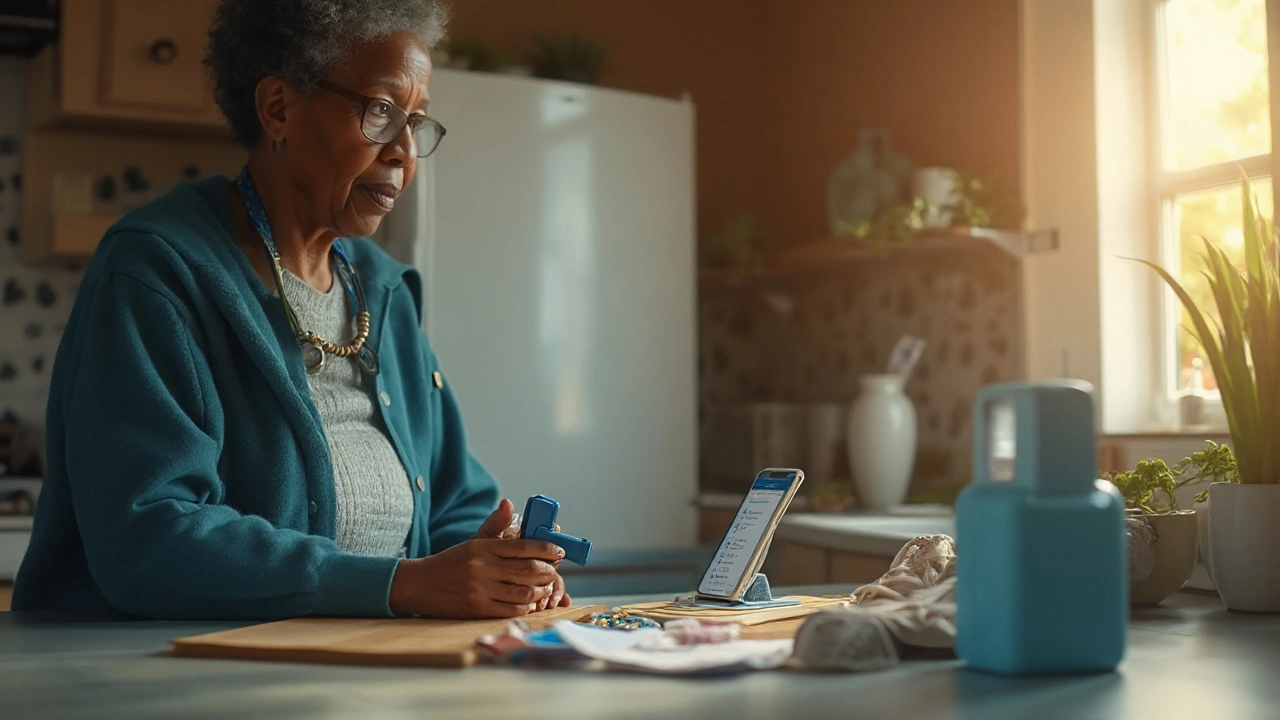
You might think: "What if my child has asthma? Or an allergy? I need quick access." That’s valid. But you don’t have to choose between safety and speed. Seattle Children’s Hospital recommends a "medication triage system":- Emergency meds (like inhalers, EpiPens, Narcan): Store in a clearly labeled, quick-access lockbox - near the front door or in the kitchen. Use a key, not a combination. Make sure every adult in the house knows where it is.
- Daily meds: Locked box, high up, out of reach.
- Occasional meds (like pain relievers or sleep aids): Store in a separate, locked container in a closet or garage.
This way, you’re not risking your child’s life to save 10 seconds. You’re making safety part of your routine.
Dispose of What You Don’t Need
Old, expired, or unused medicine is a hidden danger. A 2023 FDA survey found that 78% of U.S. communities now have permanent disposal kiosks at pharmacies. Use them. Don’t flush pills. Don’t throw them in the trash. Mix them with coffee grounds or cat litter, seal them in a plastic bag, and drop them off. It’s free. It’s safe. And it removes temptation.Training and Routine Matter
Safe storage isn’t just about the lockbox. It’s about habits. The American Academy of Family Physicians found that families who practice a "lock-up routine" - meaning they lock medicine every single time, without exception - reduce accidental access by 83%. That’s not luck. That’s consistency.Do this every time:
- Use medicine.
- Immediately return it to the locked box.
- Lock it.
- Repeat.
Teach older kids too. If you have teenagers, use a monitored system: they log each dose with a parent’s signature. Data from 12,000 families shows this reduces prescription misuse by 67%.
The Cost of Not Acting
Every emergency room visit for a child who swallowed medicine costs an average of $3,217. Multiply that by 60,000 visits a year - that’s over $67 billion in medical costs and lost work time. The lockbox industry is now worth $287 million a year because families are finally listening. But too many still aren’t.It’s not about being paranoid. It’s about being smart. You lock your car. You use a car seat. You install smoke detectors. Medicine is just as dangerous. Treat it that way.
Can’t I just keep medicine in the bathroom cabinet?
No. Bathroom cabinets are one of the most dangerous places to store medicine. Kids can climb onto the sink or toilet to reach them. Humidity can also ruin pills, making them less effective or unsafe. Store medicine in a high, locked cabinet in a bedroom, hallway, or closet instead.
Are child-resistant caps enough?
No. Child-resistant caps are designed to slow kids down - not stop them. Studies show 50% of children under five can open them in under a minute. Relying on caps alone is like leaving your front door unlocked because it has a latch. You need a lock.
What if my child has a medical condition and needs quick access to medicine?
Keep emergency medications like inhalers or EpiPens in a separate, clearly labeled, quick-access lockbox - placed near a main door or in the kitchen. Use a key, not a code, so any adult can open it fast. Make sure everyone who cares for your child knows where it is.
How do I safely dispose of old or expired medicine?
Mix the medicine with something unappetizing - like coffee grounds or cat litter - seal it in a plastic bag, and take it to a pharmacy with a disposal kiosk. Over 78% of U.S. communities now offer this service for free. Never flush pills or throw them in the trash.
Why do grandparents often leave medicine unlocked?
Many believe their grandchild "knows not to touch medicine." But children don’t understand danger. A 2024 survey found 76% of grandparents don’t lock up medicine during visits. Always bring your own lockbox when visiting, and politely ask them to use it.





15 Comments