
When you’re treating a stubborn fungal infection-whether it’s nail fungus, a systemic yeast infection, or something more serious like invasive aspergillosis-antifungals can be life-saving. But behind their effectiveness lies a quiet, serious risk: liver damage. Many people don’t realize that the very drugs meant to clear infections can quietly harm the organ responsible for detoxifying them. And it’s not just one drug. Different antifungals carry different risks, and some of them can cause severe, even fatal, liver injury without warning.
Which Antifungals Are Most Dangerous for Your Liver?
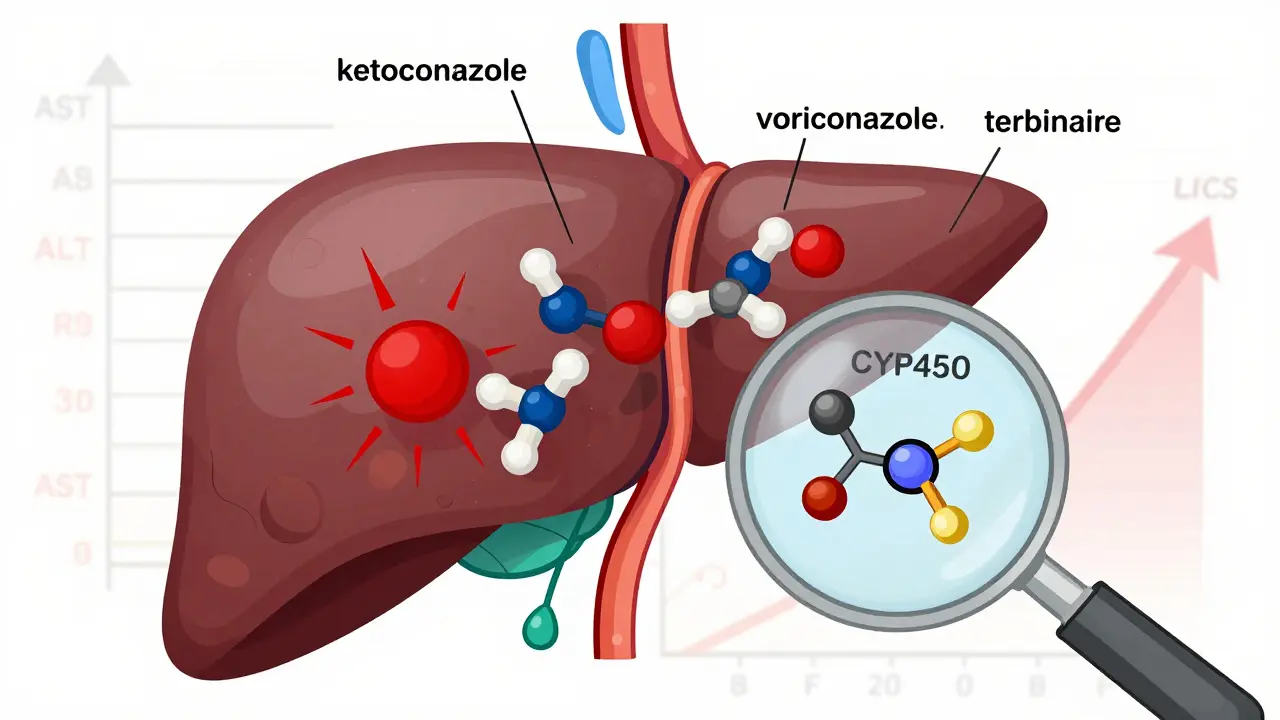
Not all antifungals are created equal when it comes to liver safety. The biggest red flags come from the azole class. Ketoconazole, once a go-to for fungal infections, now carries one of the strongest warnings from the FDA. It’s been pulled from the European market and restricted in the U.S. to only the most extreme cases, like certain endemic fungal infections, because it can cause acute liver failure in about 1 in 500 users. One patient in a Reddit thread reported ALT levels over 1,200 U/L (normal is under 56)-a sign of massive liver stress that landed them in the hospital. Itraconazole and voriconazole aren’t far behind. Data from the FDA’s Adverse Event Reporting System (2004-2021) shows these two trigger liver injury more often than other azoles. Voriconazole, especially, is tricky because its toxicity often shows up between 2 and 8 weeks into treatment. If you’re on it for a fungal lung infection, you might feel fine until suddenly you’re exhausted, your skin turns yellow, or your urine darkens. That’s not normal fatigue-it could be liver damage in progress. Fluconazole is safer by comparison. It’s still monitored, but only if you’re taking it for more than two weeks or already have liver issues. Terbinafine, used mostly for nail fungus, has a lower risk-about 0.1% of users. But it still has a black box warning. One Healthline user described mild jaundice at week five of treatment. It resolved after stopping, but it was enough to scare them. Echinocandins like caspofungin and micafungin were once thought to be liver-safe. That idea has changed. Real-world data now shows they can cause liver injury too. Anidulafungin, in particular, had the highest mortality rate (50%) among reported DILI cases. That sounds terrifying, but it’s likely because it’s often used in patients who are already very sick-maybe with pre-existing liver failure. Micafungin, on the other hand, seems to be the safest of the echinocandins.Why Do These Drugs Hurt the Liver?
The liver breaks down most drugs. Antifungals are no exception. But some of them interfere with the liver’s natural detox pathways, especially the CYP450 enzyme system. This is where drug interactions come in. For example, voriconazole is metabolized by CYP2C19. If you’re also taking omeprazole, certain antidepressants, or even grapefruit juice, your body can’t clear it properly. That leads to toxic buildup. A 2022 study found that people with a specific genetic variation in CYP2C19 had a 3.7 times higher risk of liver injury from voriconazole. That’s not rare-it affects about 15-20% of people of European descent. We’re talking about a simple genetic test that could prevent serious harm. Ketoconazole is even worse. It doesn’t just get broken down poorly-it actively blocks other drugs from being processed. That means if you’re on statins, blood thinners, or even some over-the-counter pain relievers, your body could be overwhelmed. Alcohol? Don’t even think about it. The FDA explicitly warns against mixing ketoconazole with alcohol.Who’s at Highest Risk?
It’s not just about the drug. Your body matters too. Older adults (65+) face a risk 7 times higher than younger people. Their livers don’t process drugs as efficiently, and they’re more likely to be on multiple medications. A study from Taiwan showed liver injury rates of 17.8 cases per 10,000 patients-year in seniors, compared to 2.4 in the general population. People with pre-existing liver disease-like fatty liver, hepatitis, or cirrhosis-should avoid ketoconazole entirely. Even fluconazole needs caution. And here’s something most patients don’t know: long-term use for minor infections increases risk. Terbinafine for nail fungus usually lasts 6-12 weeks. But if you’re taking it for six months because the infection keeps coming back? That’s when liver enzymes start climbing. A 2020 study found that less than 40% of primary care doctors even checked liver tests during terbinafine therapy. That’s a gap in care.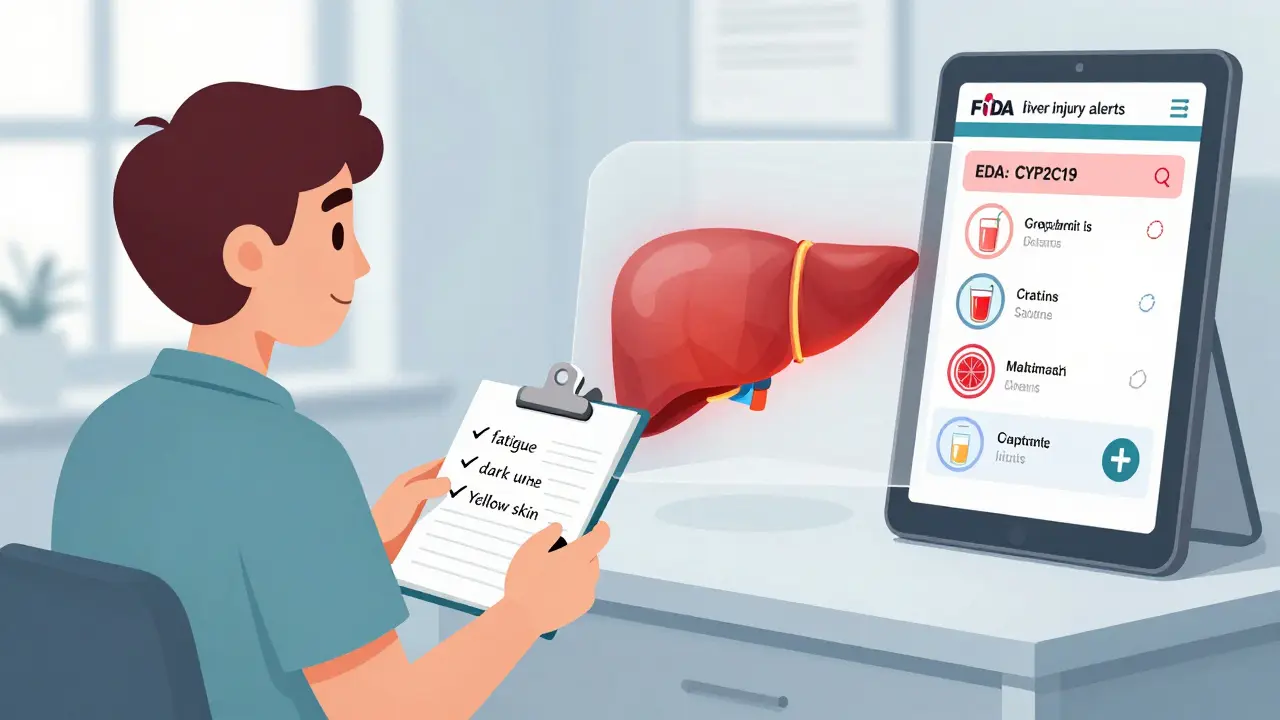
What Should You Do? Monitoring Protocols That Save Lives
The good news? Liver damage from antifungals is often preventable-if you know what to watch for. Baseline liver tests are non-negotiable. Before starting any systemic antifungal, get ALT, AST, bilirubin, and ALP checked. That’s your starting point. For high-risk drugs:- Ketoconazole, itraconazole, voriconazole: Check liver enzymes weekly for the first month, then every two weeks.
- Terbinafine: Test at 4-6 weeks, then again if treatment goes beyond 8 weeks.
- Fluconazole: Only if you’re on it longer than 2 weeks or have liver disease.
What’s Changing in 2026?
The field is evolving fast. Ketoconazole is nearly gone. Its market share has dropped to less than 0.5% since the FDA’s 2013 warning. Hospitals now use echinocandins like micafungin as first-line for invasive candidiasis-68% of cases, according to IDSA guidelines. New tools are emerging. The FDA’s Sentinel Initiative now tracks antifungal liver injury in real time using electronic health records. In October 2022, researchers identified a genetic marker that predicts voriconazole toxicity. By 2026, some clinics are starting to offer pre-treatment CYP2C19 testing-especially for cancer patients who need long-term antifungal coverage. Even newer drugs are being designed with liver safety as a top priority. Olorofim and ibrexafungerp, currently in late-stage trials, have shown 78% fewer liver enzyme spikes than older azoles. These could be game-changers.
What If You’re Already on an Antifungal?
If you’re currently taking one, here’s what to do:- Don’t stop cold turkey-especially if it’s for a serious infection. Talk to your doctor first.
- Ask if your liver function has been checked recently. If not, request it.
- Review all other medications and supplements. Even herbal products like milk thistle or green tea extract can interact.
- Limit alcohol completely while on these drugs.
- Keep a symptom journal: fatigue, appetite, skin color, pain.
Frequently Asked Questions
Can antifungals cause permanent liver damage?
Yes, in rare cases. Most liver injury from antifungals reverses after stopping the drug. But if damage is severe and prolonged-especially with ketoconazole or voriconazole-it can lead to permanent scarring (cirrhosis) or acute liver failure requiring a transplant. Early detection is critical.
Is terbinafine safe for long-term use?
Terbinafine is generally safe for short-term use (6-12 weeks for nail fungus), but the risk of liver injury increases after 8 weeks. The FDA recommends liver tests at 4-6 weeks and again if treatment extends beyond that. If you’re on it for months, your doctor should monitor you closely-even if you feel fine.
Why is ketoconazole still available if it’s so dangerous?
It’s not widely available. The FDA restricted it to second-line use only-for rare fungal infections like coccidioidomycosis when other drugs don’t work. Oral ketoconazole is no longer sold for skin infections or acne. Topical versions (shampoos, creams) are still considered safe because very little is absorbed into the bloodstream.
Can I take antifungals if I have hepatitis C?
It depends on the drug and your liver function. Many antifungals are avoided in advanced liver disease. Fluconazole may be used cautiously with monitoring. Voriconazole and itraconazole are generally avoided. Always have your liver enzymes checked before starting, and discuss alternatives with your infectious disease specialist.
Are there any antifungals that are completely safe for the liver?
No antifungal is 100% liver-safe. But echinocandins like micafungin and caspofungin have the lowest rates of liver injury among systemic antifungals. They’re often preferred for hospitalized patients with higher risk. Topical antifungals (creams, sprays) carry almost no liver risk because they’re not absorbed systemically.








8 Comments