
Steroid Recovery Risk Calculator
Calculate Your Recovery Risk
Every year, thousands of athletes-professional and weekend warriors alike-take medications not to heal, but to push past their natural limits. They’re not just using caffeine or creatine. Many are turning to anabolic steroids, stimulants, human growth hormone, and unregulated SARMs, hoping to gain muscle faster, recover quicker, or run longer. But what they don’t always realize is that these substances don’t just boost performance-they change their bodies in ways that can last a lifetime.
What Athletes Are Actually Taking
Anabolic steroids are still the most common performance-enhancing drug used by athletes. They mimic testosterone, tricking the body into building muscle faster. In controlled studies, users gained 4.5 to 11 pounds of muscle in just 10 weeks-far beyond what natural training can achieve. But this isn’t magic. It’s chemistry. These drugs bind to androgen receptors, forcing protein synthesis to skyrocket. Doses range from 50 to 1,000 mg per week, often taken in cycles: six to twelve weeks on, followed by four to sixteen weeks off.
Stimulants like amphetamines and high-dose caffeine are another popular choice. Athletes use them to sharpen focus, reduce fatigue, and improve reaction time. A 3 to 6 mg per kg dose of caffeine can boost alertness within 30 minutes. But the line between performance aid and overdose is thin. In the U.S. alone, energy drink overdoses send over 2,000 people to emergency rooms every year.
Blood doping-injecting oxygen-carrying substances like EPO or even transfusing your own blood-is used mostly by endurance athletes. It can raise VO2 max by 5 to 15%, giving a clear edge in races. But when hematocrit levels climb above 50%, the blood thickens. That increases stroke risk by seven times. One athlete in their late 20s suffered a stroke after years of blood doping-no prior heart issues, no family history. Just a body pushed too far, too fast.
Then there are the so-called “safer” alternatives: SARMs. Marketed as selective androgen receptor modulators, they promise muscle gain without the harsh side effects of steroids. But the FDA tested over 100 SARMs products sold online. Nearly 9 out of 10 contained different, unlisted chemicals. Some had liver-toxic compounds. Others had banned steroids hidden in the formula. There’s no safety data. No long-term studies. Just guesses and hopes.
The Hidden Costs: Physical Damage
The gains come with a price tag written in scar tissue and broken organs.
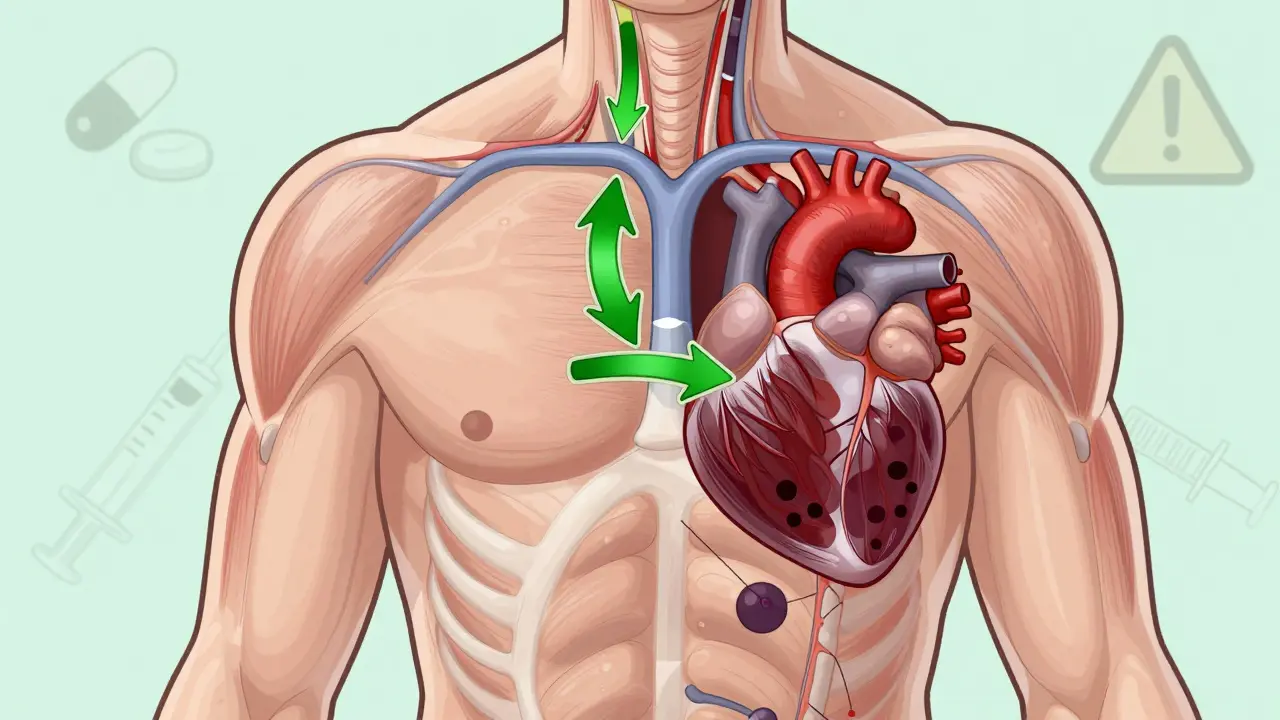
Cardiovascular damage is the most serious and least talked about. Anabolic steroid users show 27 to 45% more heart muscle mass than non-users-even after adjusting for size and age. That extra muscle doesn’t make the heart stronger. It makes it stiffer. Echocardiograms show reduced ejection fractions by 8 to 12%. The heart can’t pump as efficiently. Studies from the American Heart Association confirm a 36% higher risk of major cardiac events like heart attacks and strokes. Some athletes develop heart failure before they turn 30.
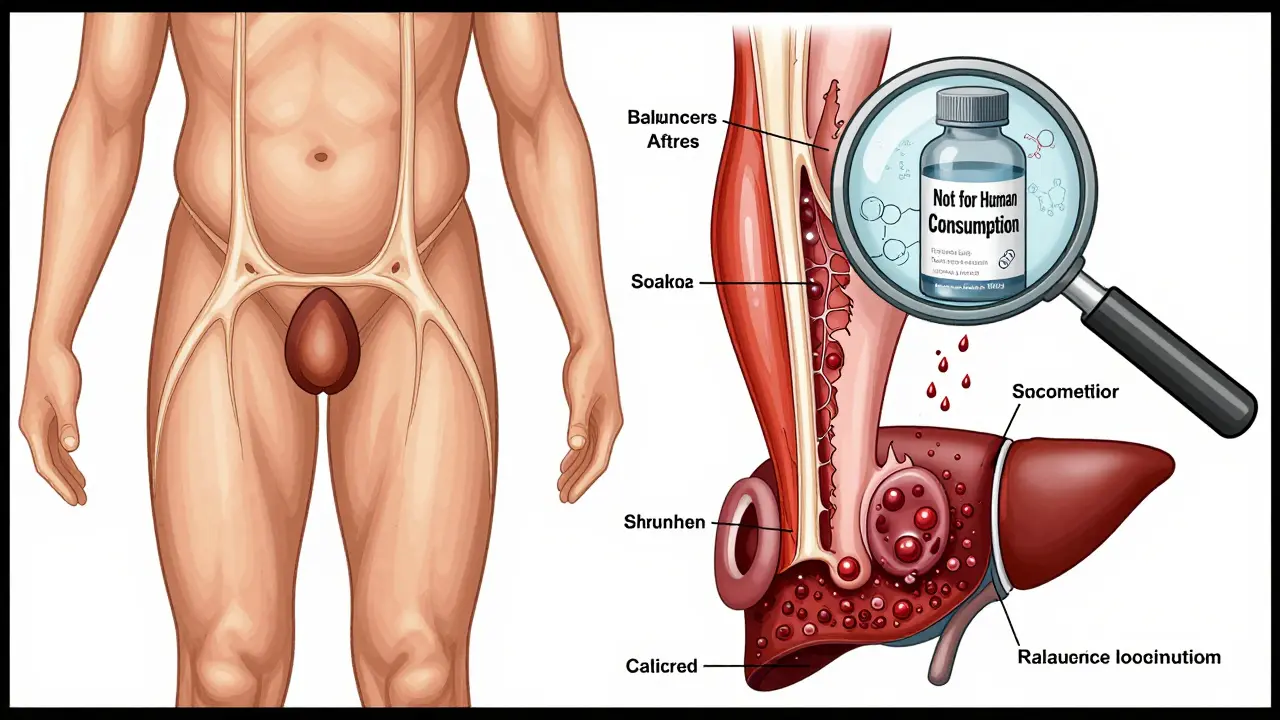
Liver damage is common with oral steroids. About 68% of users show elevated liver enzymes-signs of stress or injury. Some develop peliosis hepatis, where blood-filled cysts form in the liver. In rare cases, it ruptures. Others develop liver tumors. These aren’t theoretical risks. They’re documented in hospital records.
Reproductive harm is equally severe. Men who use steroids often see their testicles shrink to the size of a grape-testicular volume dropping from a normal 15-25 mL to just 2-4 mL. Sperm counts crash below 1 million per mL. Normal is over 15 million. Many never recover. One study found 38% of chronic users needed lifelong testosterone replacement therapy after quitting.
Women face irreversible changes. About 35% experience permanent voice deepening. Clitoral enlargement beyond 2.5 cm is common. Facial hair grows. Menstrual cycles vanish. Some never get them back.
And then there’s the connective tissue. Muscles grow faster than tendons and ligaments. That’s a recipe for disaster. Athletes report tendon ruptures at loads they could’ve handled before-70% of their predicted capacity. One weightlifter tore his biceps tendon lifting a weight he’d handled for years. He wasn’t careless. His body had changed. His tendons hadn’t kept up.
Mental Health: The Rollercoaster
It’s not just the body that breaks. The mind does too.
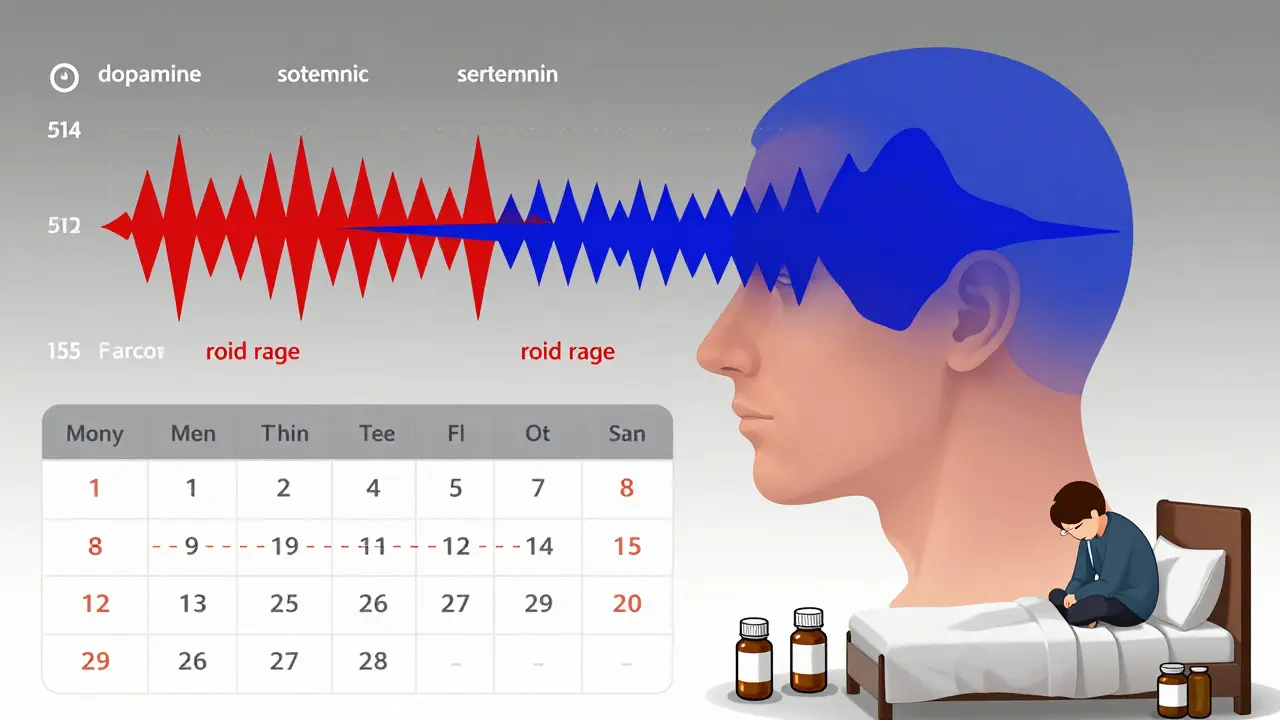
Up to 83% of recreational steroid users report severe mood swings-irrational anger, paranoia, aggression. Some call it “roid rage.” But it’s more than that. It’s a chemical imbalance. Dopamine and serotonin systems get rewired. After a cycle ends, many crash into deep depression. One Reddit user wrote: “I gained 25 pounds of muscle in 10 weeks. Then I lost it all in 8 weeks off-cycle. But the worst part? I couldn’t get out of bed for months.”
Studies show 67% of users experience clinically significant depression during off-cycles. That’s not just feeling down. That’s needing therapy or medication. And it’s not just about the drop in hormones. It’s the psychological dependency. Many feel they can’t train hard, look good, or feel confident without the drugs.
Some users cycle for years. They stack multiple drugs. They take pills, inject liquids, and chase the next high. When they stop, their bodies don’t bounce back. They’re left with low testosterone, fatigue, and a sense of loss. They don’t just miss the gains-they miss the version of themselves the drugs created.
Who’s Really Using These Drugs?
Most people think performance-enhancing drugs are only for elite athletes. They’re wrong.
Today, 60 to 80% of steroid users aren’t Olympians or pros. They’re gym-goers. Men and women in their 20s and 30s trying to look like Instagram models or keep up with friends. Recreational users now make up 65 to 70% of the market. Elite athletes? Just 15 to 20%.
And it’s getting worse. Between 2018 and 2022, pediatric cases of steroid-induced heart damage doubled. Kids as young as 14 are showing up in ERs with enlarged hearts. They’re getting them from online vendors, friends, or even wellness clinics that market “bio-identical hormone therapy” without telling patients what they’re really getting.
Even doctors are caught off guard. AAFP reports that 7 out of 10 family physicians miss signs of steroid use during routine checkups. Why? Because users don’t volunteer it. And the symptoms-fatigue, low libido, mood changes-look like stress or aging. No one asks. No one tests.
Why It’s So Hard to Stop
Quitting isn’t just a matter of willpower. It’s a medical process.
After stopping steroids, the body needs 6 to 12 months to restart natural testosterone production. For many, it never fully recovers. That’s why so many end up on long-term hormone replacement therapy. And withdrawal symptoms? They’re brutal: fatigue, insomnia, anxiety, loss of appetite, and crushing depression.
Therapeutic Use Exemptions (TUEs) exist for athletes with legitimate medical conditions-like hypothyroidism or adrenal insufficiency. But they’re tightly controlled. You need two blood tests showing testosterone below 250 ng/dL. You need proof the drug is medically necessary. You can’t get one just because you want to recover faster or build more muscle.
Most users never tell their doctors. They buy drugs online. They skip blood work. They don’t know their liver enzymes, cholesterol, or hematocrit levels. They’re flying blind. And when something goes wrong-chest pain, dizziness, sudden swelling-they show up in the ER, confused and scared.
What’s Being Done? And Is It Enough?
The World Anti-Doping Agency (WADA) updates its banned list every year. In 2023, they added three new SARMs to the monitoring list. But detection is slow. In 2022, only 0.7% of 250,000 drug tests came back positive. Experts believe actual usage is closer to 10% in some recreational circles.
Why the gap? Because new drugs are designed to evade tests. “Research chemicals” are sold as “not for human consumption.” They’re legal to buy-until they’re banned. By then, a new version is already on the market.
Some labs are developing “steroid metabolism fingerprints” that can detect synthetic testosterone use up to 18 months after the last dose. That’s promising. But it’s expensive. And most recreational users will never be tested.
Regulation is catching up-but not fast enough. The global PED market is projected to hit $683 million by 2027. But underground sales? Those numbers aren’t tracked. They’re hidden in dark web stores, Instagram ads, and gym locker rooms.
The Real Choice
There’s no magic pill that gives you elite performance without risk. Every drug that boosts strength, speed, or endurance does so by overriding your body’s natural limits. And your body doesn’t forgive those overrides easily.
The gains are real. But so are the consequences: a heart that can’t pump well, a liver that’s scarred, a mind that’s worn thin, and a body that never fully returns to what it was.
Some say, “If it’s not banned, it’s not cheating.” But the question isn’t about rules. It’s about health. You don’t need to be an Olympian to risk your life. You just need to want to look better, lift heavier, or feel stronger. And that’s exactly what makes this so dangerous.
There’s no shortcut to a healthy, strong body. Only time, consistency, and patience. Everything else is borrowing from your future.
Can athletes use any medications without breaking rules?
Yes-but only if the medication is medically necessary and approved through a Therapeutic Use Exemption (TUE). WADA allows exemptions for conditions like asthma (with inhalers), ADHD (with specific stimulants), or hormone deficiencies. But TUEs are not given for performance enhancement, anti-aging, or general wellness. Athletes must prove the drug is essential for health, not improvement. Even then, they must submit detailed medical records and lab results.
Are SARMs safe alternatives to steroids?
No. SARMs are not safe. Despite marketing claims, they’re unregulated, untested, and often contaminated. The FDA found that 89% of SARMs products sold online contain different, undisclosed substances-sometimes including banned steroids or liver-toxic chemicals. There’s no long-term safety data. Many users report hormonal crashes, liver damage, and permanent testosterone suppression. They’re not safer-they’re riskier because you don’t know what you’re actually taking.
How long does it take to recover after stopping steroids?
Recovery varies. Natural testosterone production can take 6 to 12 months to restart, and in 38% of chronic users, it never fully returns. Some need lifelong hormone replacement. Liver enzymes may normalize in weeks, but heart and tendon damage can be permanent. Mental health symptoms like depression often linger for months after stopping. Full recovery isn’t guaranteed-especially with long-term or high-dose use.
Do performance-enhancing drugs affect women differently?
Yes. Women face irreversible side effects that men typically don’t. About 35% experience permanent voice deepening. Clitoral enlargement beyond 2.5 cm is common. Facial hair growth, menstrual loss, and reduced breast size are also frequent. These changes often persist even after stopping use. Because female physiology responds more sensitively to androgens, even small doses can cause lasting harm. Many women don’t realize the risks until it’s too late.
Why don’t doctors catch more cases of steroid use?
Because patients rarely admit to using them. And the symptoms-low energy, low libido, mood swings, acne-look like stress, aging, or depression. Most doctors don’t ask about supplement or drug use during routine visits. AAFP reports that 7 out of 10 physicians miss signs of steroid use. Without direct questioning or blood tests, it’s easy to overlook. Add to that the rise of underground products with unknown ingredients, and detection becomes nearly impossible without suspicion.
Is it possible to build muscle without drugs?
Absolutely. Natural athletes can build significant muscle and strength over time with proper training, nutrition, and recovery. While steroids may speed up gains by 10-20%, natural progress is slower but sustainable. Most elite natural bodybuilders take 5-10 years to reach their peak. The difference isn’t just size-it’s longevity. Natural athletes avoid organ damage, hormonal crashes, and mental health struggles. Their bodies last longer. Their health lasts longer.






10 Comments