
When standard antidepressants don’t work, people with treatment-resistant depression (TRD) often feel trapped. About 3 in 10 individuals with major depression don’t get relief after trying two or more medications. For them, time isn’t just a factor-it’s life or death. That’s where ketamine and esketamine come in. These aren’t your typical mood stabilizers. They work fast, sometimes within hours, and they’re changing how we treat severe depression.
How Ketamine and Esketamine Are Different
Ketamine and esketamine come from the same chemical family, but they’re not the same drug. Ketamine is a racemic mixture-it contains both the (R)- and (S)-enantiomers. Esketamine is just the (S)-enantiomer, purified and sold under the brand name Spravato®. This small difference changes everything: how it’s given, how strong the side effects are, and how quickly it works.
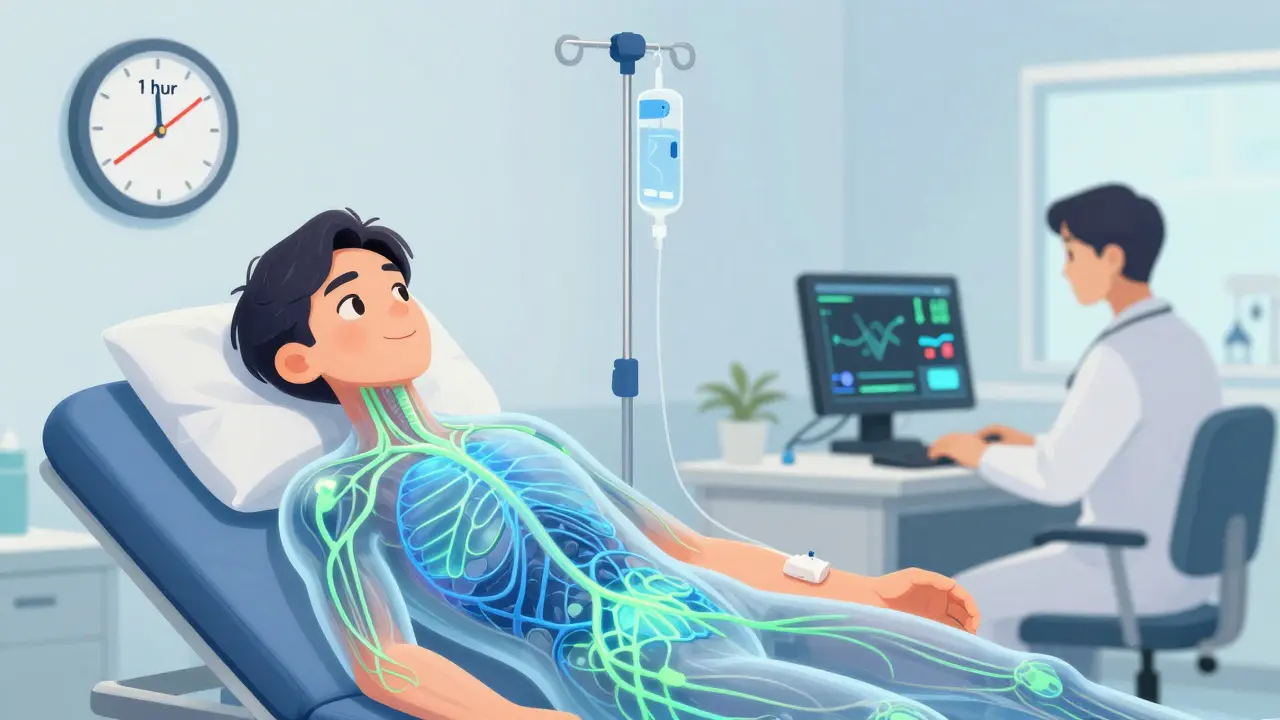
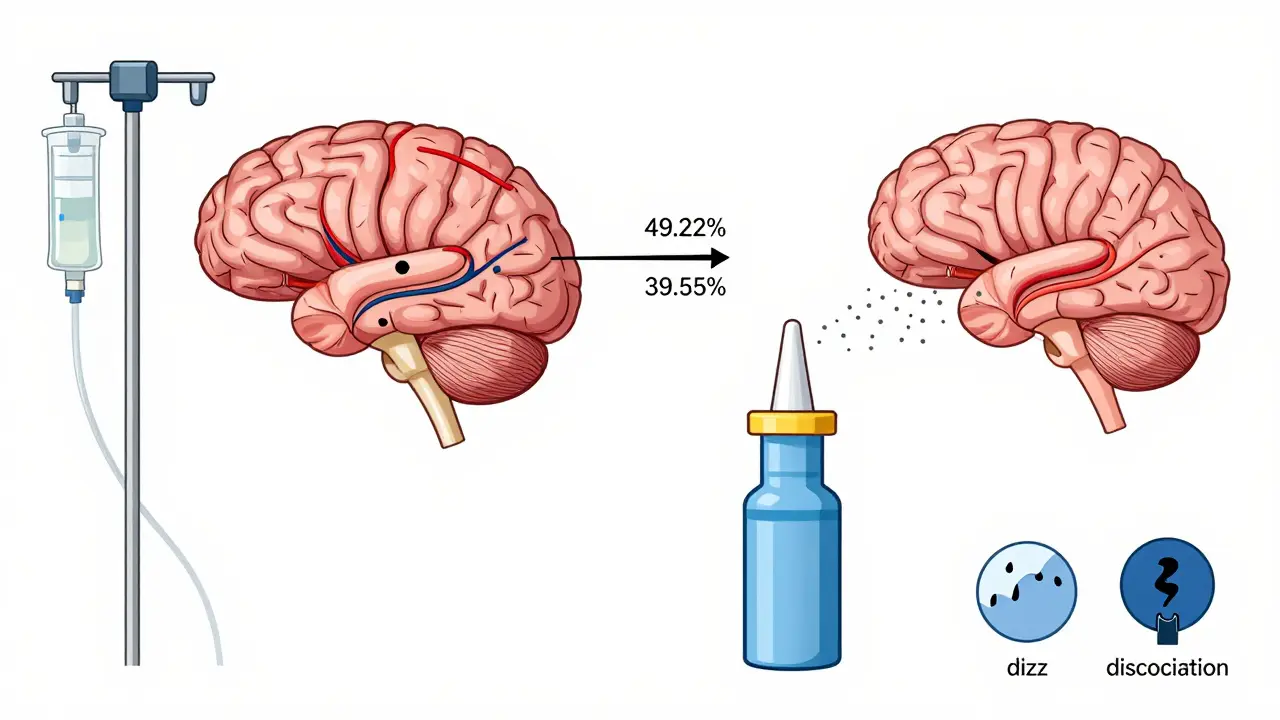
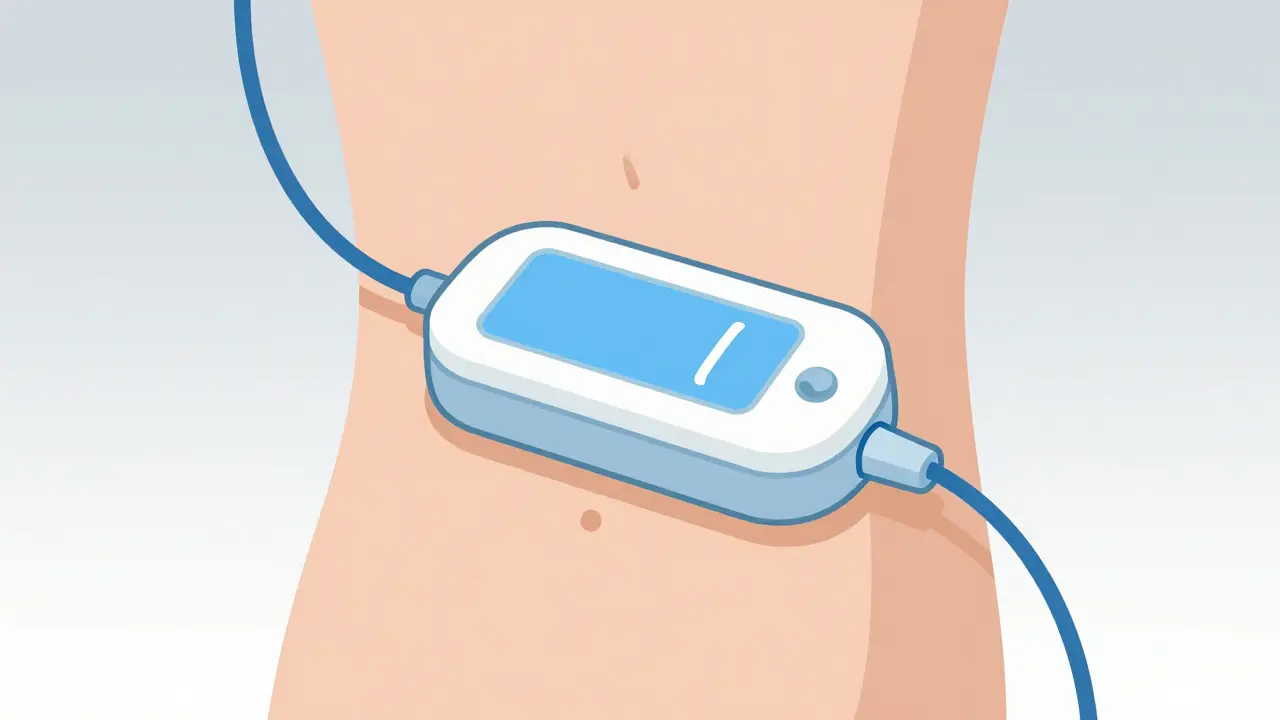
Ketamine is usually given through an IV drip over 40 minutes. The dose? Around 0.5 mg per kilogram of body weight. It’s not a quick poke-it’s a controlled, monitored process. Esketamine, on the other hand, comes as a nasal spray. Patients self-administer it under supervision, with doses of 56 mg or 84 mg, twice a week at first. One is an infusion. The other is a spray. One needs a vein. The other just needs a nose.
Which One Works Better?
A major 2025 study from Mass General Brigham tracked 153 adults with treatment-resistant depression. 111 got IV ketamine. 42 got intranasal esketamine. The results were clear: ketamine won.
- IV ketamine reduced depression scores by 49.22% after the full course.
- Esketamine dropped scores by 39.55%.
And the speed? Ketamine kicked in after the first session. Some patients felt better before they even left the clinic. Esketamine needed two treatments before most saw a real change. A 2020 meta-analysis in PMC7704936 confirmed this pattern: ketamine consistently outperformed esketamine across all time points-from 24 hours to eight weeks.
But here’s the catch: it’s not just about numbers. The same study found that 42.3% of IV ketamine patients had noticeable dissociation-feeling detached from their body or surroundings. For esketamine, that number was 28.7%. That’s a big difference when you’re trying to sit through a workday after treatment.
Real-World Experience Matters
Numbers tell part of the story. Real people tell the rest. On PatientsLikeMe, over 1,200 users shared their experiences as of 2025.
- 63.2% of IV ketamine users said they felt major relief within 24 hours.
- 51.7% of esketamine users said the same.
But when asked about overall experience? Esketamine scored higher. 78.4% rated it as “good” or “excellent.” Only 62.9% said the same for IV ketamine. Why? Because the nasal spray doesn’t feel like a medical procedure. No IV line. No monitoring for hours. Just a spray, a chair, and a 2-hour wait. For many, that’s less scary.
Safety, Side Effects, and Risks
Both drugs carry risks. Both are controlled substances. Both can cause dizziness, nausea, or dissociation. But the intensity differs.
Ketamine’s dissociative effects are stronger. Some users report feeling like they’re floating or seeing vivid colors. In rare cases, it can trigger anxiety or paranoia. That’s why it’s given in settings with trained anesthesiologists who can manage airways and monitor vital signs. The American Society of Anesthesiologists says only providers with advanced training should give IV ketamine.
Esketamine’s side effects are milder. The nasal route limits the dose and slows absorption. The FDA says 37.2% fewer patients experience severe dissociation with esketamine compared to IV ketamine. That’s why it’s approved for use in psychiatric clinics-even without an anesthesiologist on-site. Basic life support certification is enough.
Both carry a risk of misuse. Ketamine has been used recreationally for decades. Esketamine is tightly controlled: you can’t take it home. You must be observed for two full hours after each dose. No driving. No leaving alone. It’s a big commitment.
Cost and Insurance: What You’ll Actually Pay
Price is a huge barrier. A full course of eight IV ketamine infusions costs between $4,200 and $5,600 in 2025. That’s about $525 to $700 per session.
Esketamine? A full course runs $5,800 to $6,900. That’s $725 to $860 per spray session. At first glance, ketamine looks cheaper.
But insurance changes the game. In 2025, 67.4% of commercial insurers covered Spravato®. Only 38.2% covered IV ketamine. Why? Because esketamine has an FDA-approved label. Insurance companies follow that. Ketamine is still off-label for depression, even though it’s been used successfully for over 20 years.
And then there’s cost-effectiveness. A 2025 JAMA Psychiatry analysis found IV ketamine delivers $14,327 per quality-adjusted life year (QALY) gained. Esketamine? $18,764. That means ketamine gives more life improvement for less money. But if you can’t get it covered? The price tag might still be too high.
Who Gets Which Treatment?
There’s no one-size-fits-all. Experts have strong opinions.
Dr. John Krystal from Yale says: “For someone actively suicidal or in deep crisis, IV ketamine is the better choice. It works faster and stronger.”
Dr. Christine Denny at Columbia adds: “Esketamine’s convenience and lower side effects make it ideal for long-term maintenance. It’s easier to stick with.”
So who gets what?
- If you’re in acute danger-thoughts of suicide, unable to get out of bed-IV ketamine might be the right first step.
- If you’ve tried multiple meds, aren’t in immediate crisis, and want something less intense, esketamine could be a better fit.
- If you hate needles or can’t take time off work, the nasal spray’s shorter session time might win.
- If you’re uninsured or underinsured, IV ketamine may be your only affordable option-if you can find a clinic that offers it.
Access Is Still a Major Hurdle
Even if you’re a perfect candidate, you might not be able to get treatment.
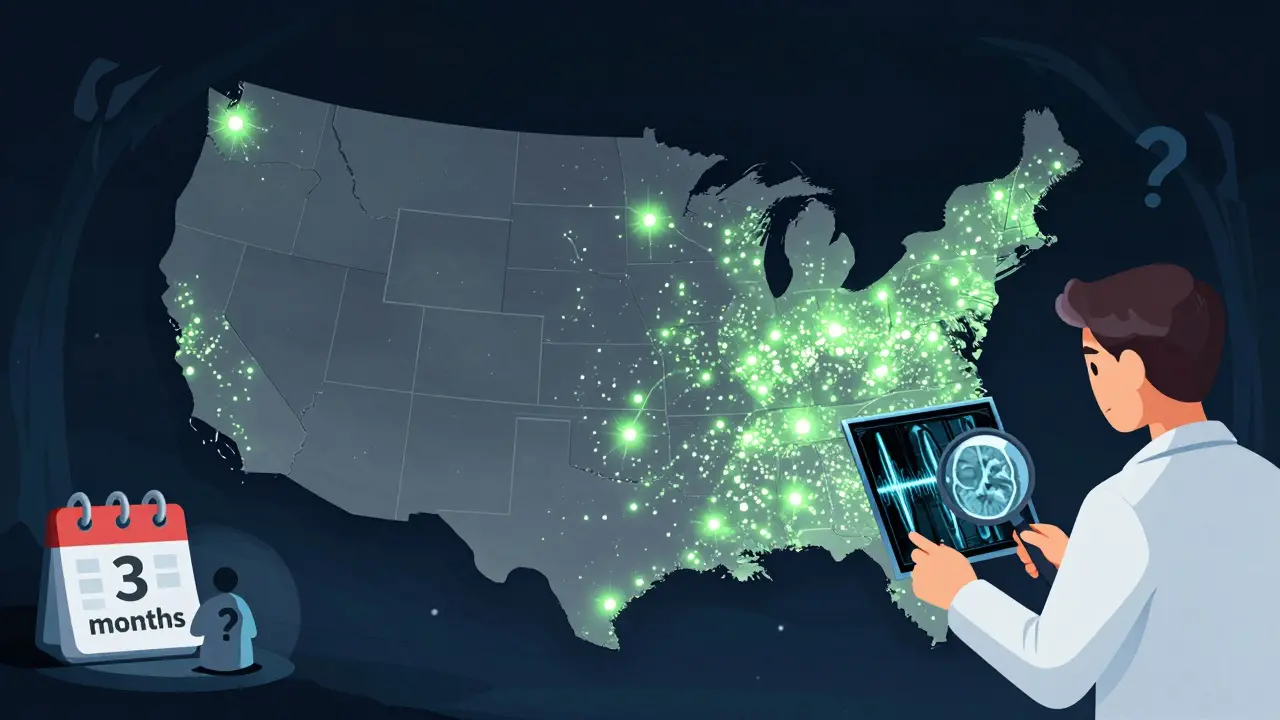
In 2025, only 12.4% of U.S. counties had a certified Spravato® center. Fewer still offered IV ketamine. Many clinics are in big cities. Rural areas? Nearly invisible.
And even when centers exist, waitlists can be months long. Some clinics require a referral from a psychiatrist. Others need proof you’ve tried at least two antidepressants. It’s not easy to get in.
That’s why some patients turn to underground clinics or self-administer ketamine-both risky and illegal. The safest path? Work with a licensed provider who follows FDA guidelines.
What About Long-Term Use?
Both treatments need maintenance. One dose doesn’t fix depression forever.
After the initial phase (usually 4-6 sessions), most patients need ongoing doses. For IV ketamine, that’s often once every 1-3 weeks. Esketamine typically continues twice weekly, then tapers.
A 2024 study in the Journal of Affective Disorders followed patients for six months:
- 56.3% of IV ketamine responders stayed in remission.
- 48.7% of esketamine users did.
That gap suggests ketamine might have a longer-lasting effect. But again-this depends on how well you stick with the schedule. Missing doses means symptoms can return fast.
What’s Next? New Treatments on the Horizon
The field is moving fast.
In September 2025, the FDA accepted Janssen’s application for a higher-dose Spravato®-112 mg. That could mean fewer sessions or stronger effects.
Researchers are also testing intramuscular ketamine (IM ketamine). It’s a middle ground: faster than nasal, less invasive than IV. Phase 3 trials are underway (NCT05528173).
And then there’s the science. A November 2025 study in Nature Mental Health found a possible brain biomarker: increased gamma power in the frontoparietal region after ketamine. That could mean one day, a simple EEG scan will tell doctors if you’re likely to respond-before you even get the first dose.
Final Thoughts
Ketamine and esketamine aren’t magic bullets. But for people stuck in treatment-resistant depression, they’re lifelines. Ketamine works faster and stronger. Esketamine is easier to tolerate and more accessible through insurance. The best choice? It depends on your body, your life, and your access.
If you’re considering either option, talk to a psychiatrist who’s trained in these treatments. Don’t rely on clinics that promise quick fixes. Look for ones that follow guidelines, monitor you closely, and combine treatment with therapy.
Depression doesn’t always wait. Sometimes, the right treatment isn’t the most popular one-it’s the one that gets you back to life before it’s too late.
Is ketamine FDA-approved for depression?
Ketamine itself is not FDA-approved specifically for depression. It was approved in 1970 as an anesthetic. Its use for depression is off-label, though widely supported by research. Esketamine (Spravato®), on the other hand, is FDA-approved for treatment-resistant depression and acute suicidal ideation.
Can I take ketamine or esketamine at home?
No. Both require medical supervision. IV ketamine must be given in a clinical setting with trained staff. Esketamine is administered as a nasal spray under observation, and patients must remain for 2 hours after each dose. You cannot take either home.
How soon do ketamine and esketamine start working?
Ketamine can start working within hours-sometimes after the first infusion. Esketamine usually takes two doses before patients notice improvement. Both are much faster than traditional antidepressants, which can take weeks or months.
Are ketamine and esketamine addictive?
Both are classified as Schedule III controlled substances, meaning they have a potential for abuse. When used under medical supervision in controlled doses, the risk is low. However, recreational use can lead to dependence. That’s why treatment is strictly monitored.
Do I need to stop my other antidepressants to use ketamine or esketamine?
No. In fact, esketamine is only approved when used alongside an oral antidepressant. IV ketamine is often used with existing medications too. Stopping other treatments without medical guidance can be dangerous. Always work with your prescriber.
What if I can’t afford either treatment?
Cost is a real barrier. Some clinics offer sliding-scale fees or payment plans. Research centers sometimes run clinical trials with free treatment. Insurance coverage for IV ketamine is rare, but esketamine is covered by over two-thirds of commercial plans. Talk to your provider about financial assistance programs or local mental health resources.




9 Comments