
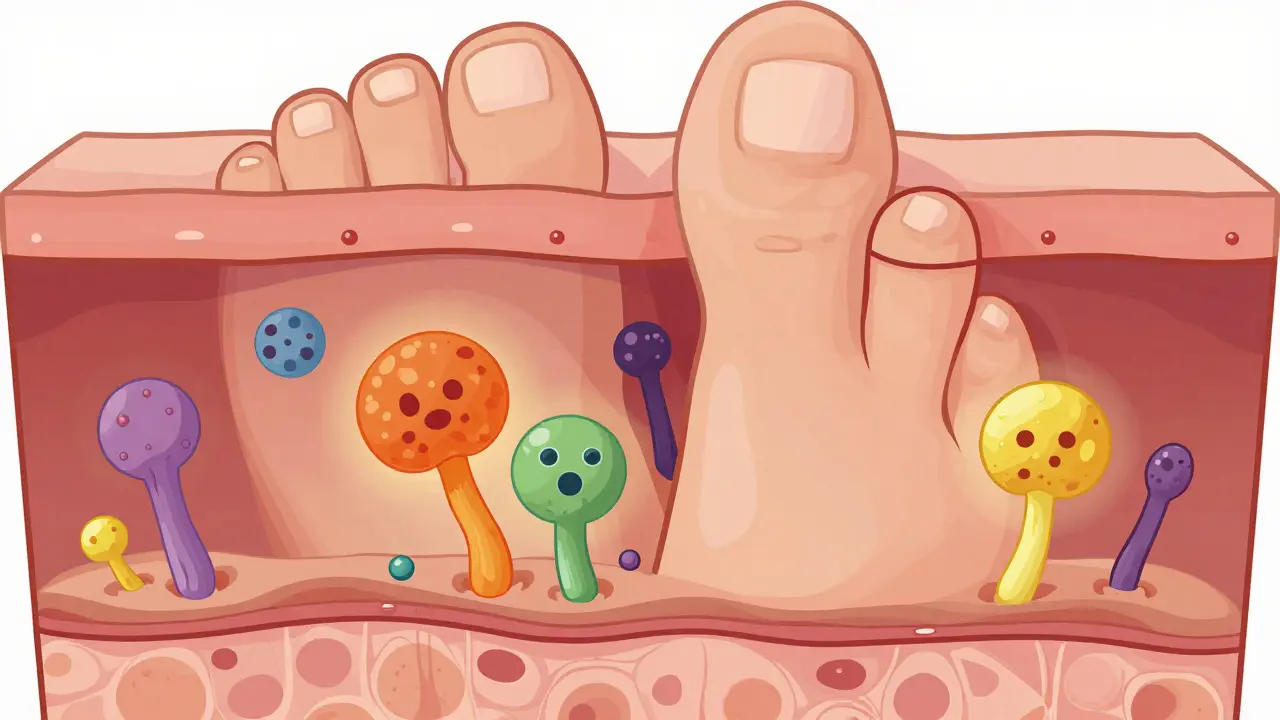
Waking up to itchy, peeling skin between your toes is more than just an annoyance-it's a fungal invasion. Athlete's Foot is a common fungal infection known medically as tinea pedis, caused by dermatophytes that thrive in warm, damp environments. If you've ever spent a day in sweaty boots or walked barefoot in a gym shower, you know how easily this happens. The good news is that about 85% of uncomplicated cases can be handled right at home without a doctor's visit.
Quick Guide to Choosing Your Treatment
Not all OTC antifungal treatments are created equal. Depending on whether your feet are peeling, weeping, or just itchy, you'll want a different active ingredient and formula. Some kill the fungus quickly, while others simply stop it from growing.
| Active Ingredient | Effectiveness | Treatment Duration | Best For... |
|---|---|---|---|
| Terbinafine | Highest (83% cure rate) | 1-2 weeks | Fast results, once-daily use |
| Clotrimazole | High (74% cure rate) | 2-4 weeks | Mixed infections (yeast/mold) |
| Tolnaftate | Moderate (67% cure rate) | 4 weeks | Prevention & interdigital drying |
The Heavy Hitters: Breaking Down the Ingredients
When you're staring at the pharmacy shelf, the names can get confusing. Here is the real talk on what actually works.
Terbinafine is a potent fungicidal agent that kills fungal cells by inhibiting squalene epoxidase. This is often called the gold standard because it doesn't just stop the fungus from growing-it kills it. Because it's so effective, you can usually get away with applying it once a day for a shorter period. If you're short on time and want the fastest recovery, this is your best bet.
Clotrimazole is an imidazole antifungal that inhibits ergosterol synthesis to stop fungal growth. While it takes a bit longer to show results (usually 3 to 5 days), it has a broader spectrum. This means if your infection is a "mixed bag" of different fungi and yeasts, clotrimazole is more likely to cover all the bases. Just be prepared to apply it twice a day for a few weeks.
Tolnaftate is an older antifungal that inhibits fungal squalene cyclase. You'll find this most often in powders. It's not as strong as terbinafine for clearing up a deep infection on the sole of the foot, but it's fantastic for keeping the skin between your toes dry and preventing the fungus from coming back.
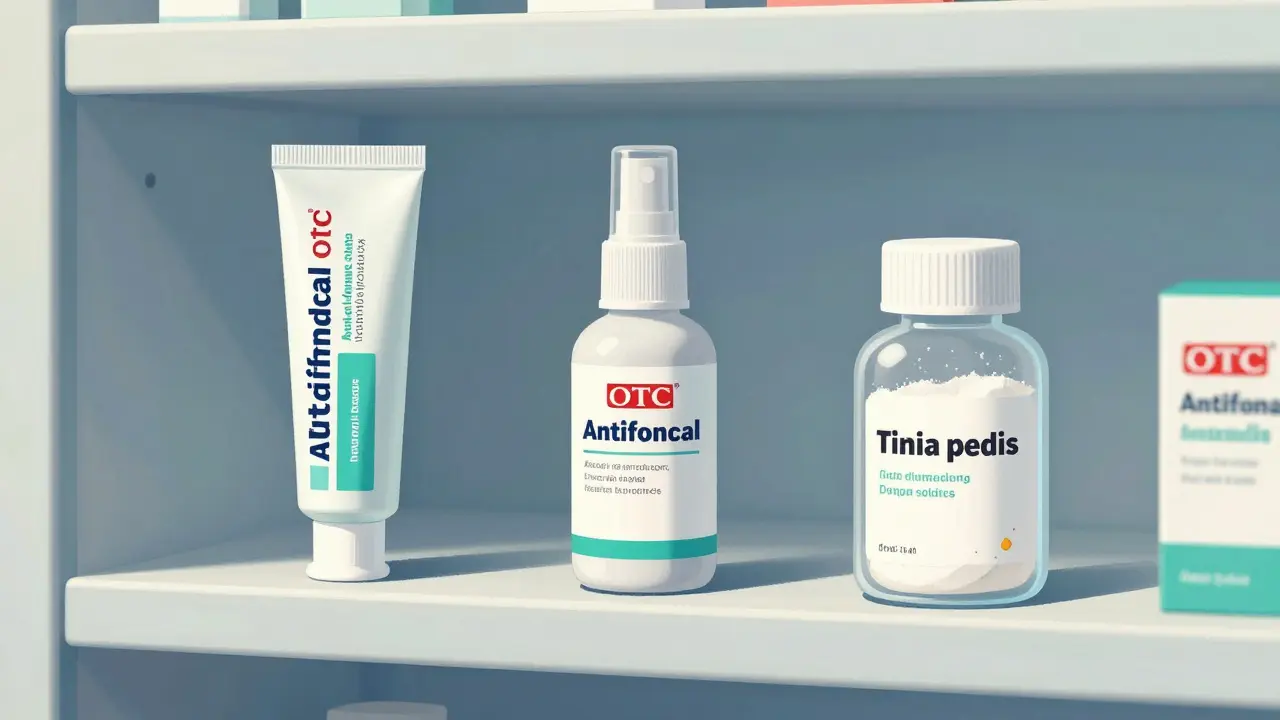
Picking the Right Format: Cream, Spray, or Powder?
The active ingredient matters, but the delivery system is what makes the treatment practical for your lifestyle. Choosing the wrong format can lead to a messy application or, worse, a treatment that doesn't penetrate the skin.
- Creams: These are the go-to for dry, scaly patches. They provide the best skin contact and are generally the most effective for treating the actual infection site.
- Sprays: Perfect for people on the go or those who hate the feeling of cream on their feet. They're great for covering large areas quickly, though they may not penetrate as deeply as a cream.
- Powders: These are less about "curing" and more about "controlling." Use powders to soak up moisture and protect your skin from reinfection. They are ideal for applying inside socks and shoes.
How to Apply Treatment for Maximum Results
Most people fail their treatment not because the medicine doesn't work, but because they stop too early. Many of us stop as soon as the itching disappears, but the fungus is often still there, just hiding. To actually win the war on fungi, follow this protocol:
- Dry perfectly: Wash your feet and dry them thoroughly. A pro tip is to use a hairdryer on a cool setting to ensure the gaps between your toes are bone-dry.
- Apply and expand: Apply a thin layer of the antifungal to the infected area, but don't stop there. Spread it about one inch beyond the visible edge of the rash to catch any "invisible" fungi.
- Treat both feet: Even if only one foot looks infected, treat both. Fungus travels easily, and you don't want to accidentally seed a new infection on the healthy foot.
- The "Buffer Week": Keep using the product for at least one week after the skin looks completely normal. This prevents the fungus from bouncing back the moment you stop.

Stopping the Cycle: Prevention Habits
If you've had athlete's foot once, you're likely to get it again unless you change the environment your feet live in. Fungi love dark, damp, and warm spaces-essentially, the inside of your shoes.
First, rotate your footwear. Don't wear the same pair of sneakers two days in a row; give them 24 to 48 hours to air out and dry completely. Second, ditch the old cotton socks for moisture-wicking materials that pull sweat away from the skin. If you're prone to sweating, change your socks twice a day.
When you're in public areas like gym lockers or hotel showers, never go barefoot. Flip-flops are your primary shield, reducing the risk of picking up a new strain of fungus by up to 85%. For those who struggle with chronic recurrence, applying a light dusting of tolnaftate powder to your shoes every morning can act as a chemical barrier against new growth.
When to Stop the OTC Route and See a Doctor
While OTC options handle the vast majority of cases, some infections are too stubborn for the pharmacy shelf. You should stop self-treating and book an appointment if you notice any of the following:
- Bacterial signs: If you see pus, experience significant swelling, or the area feels hot and painful, you might have a secondary bacterial infection that requires antibiotics.
- No progress: If you've used a product consistently for two weeks and there's zero improvement, you may need a prescription-strength solution like ciclopirox.
- High-risk health factors: If you have diabetes, peripheral vascular disease, or a compromised immune system, don't risk it. A small fungal infection can quickly turn into a serious ulcer or cellulitis in these cases.
How long does it usually take for athlete's foot to clear up?
With a fast-acting agent like terbinafine, you might see clinical resolution in about a week, though full healing usually takes 7 to 14 days. Imidazoles like clotrimazole generally take longer, often requiring 2 to 4 weeks of consistent application to fully clear the infection.
Can I use a powder and a cream at the same time?
Yes, this is actually a recommended strategy for active people. Use the cream to treat the active infection and the powder inside your shoes and socks to manage moisture and prevent the fungus from returning.
Is it normal for my feet to peel while using antifungal cream?
Moderate peeling is often a sign that the skin is shedding the infected layers. However, if the peeling is accompanied by intense burning, blistering, or severe redness, you might be having an allergic reaction to the medication and should stop using it immediately.
Do I really need to treat the foot that looks healthy?
Yes. Fungal spores are microscopic and often spread to the other foot before visible symptoms appear. Treating both feet ensures you aren't leaving a reservoir of fungus that will simply re-infect the first foot once you finish your treatment.
What happens if I stop the cream as soon as the itching stops?
This is the most common cause of treatment failure. Itching is often the first symptom to disappear, but the fungus is still present in the deeper layers of the skin. Stopping too early allows the remaining fungi to multiply, leading to a recurrent infection that may be harder to treat.






11 Comments