
You pack the water. You grab the canned beans. You even remember the flashlight batteries. But what about your heart pills or insulin? If you stash them in a plastic bag and forget about them until disaster strikes, you might be holding onto nothing but expensive chalk. Medications are fragile. Heat, humidity, and light don't just make them look old; they actively break down the chemical structures that keep you alive.
After Hurricane Katrina, the Centers for Disease Control and Prevention (CDC) saw firsthand how quickly medication spoilage becomes a crisis during power outages. Today, with climate change extending average power outages from 1.3 hours in 2000 to nearly 19 hours in 2022, proper storage isn't just a nice-to-have-it's a survival skill. This guide cuts through the noise to show you exactly how to store emergency kits to maximize medication shelf life, ensuring your drugs work when you need them most.
The Science of Spoilage: Why Your Medicine Cabinet Fails
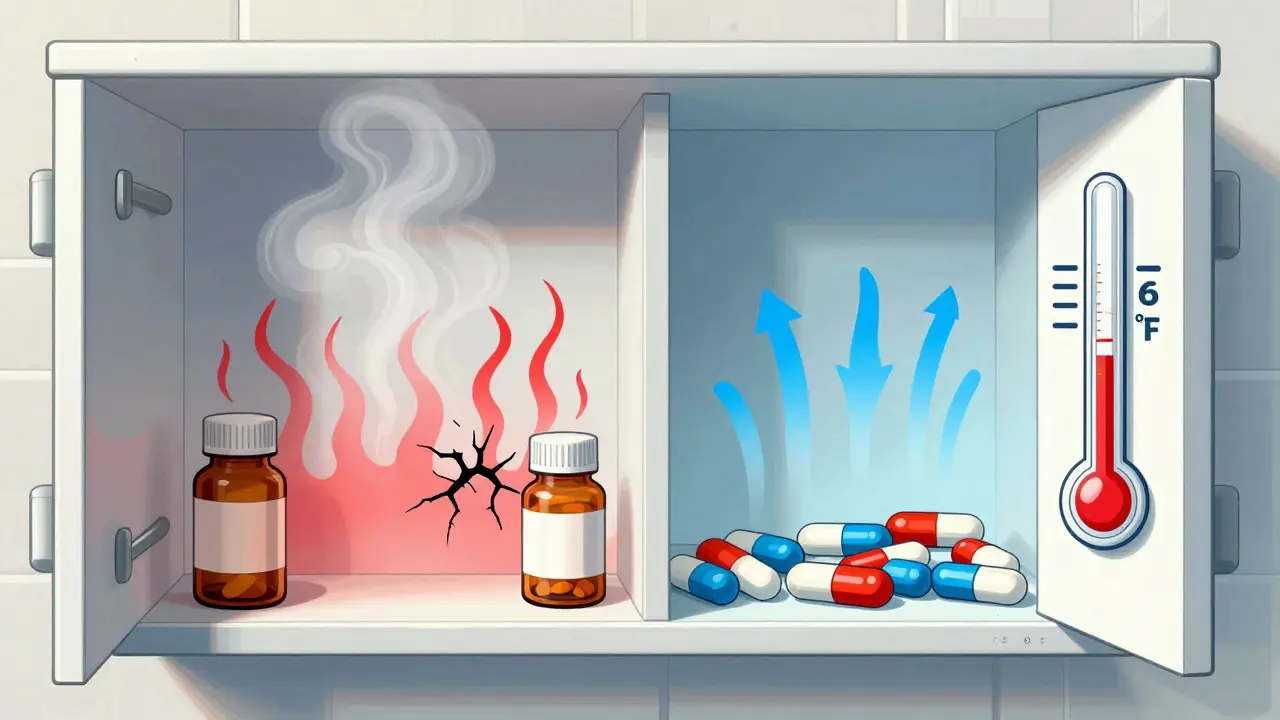
Most people think "cool, dry place" means the bathroom cabinet. That is a dangerous mistake. The American College of Emergency Physicians found that medications stored in bathrooms degrade 40% faster than those in kitchen cabinets due to fluctuating heat and steam from showers. To truly maximize shelf life, you need to understand the three enemies of pharmaceutical stability: temperature, humidity, and light.
Federal guidelines from the Food and Drug Administration (FDA) specify that most solid medications must be kept between 59°F and 77°F (15°C-25°C). Humidity needs to stay below 60%. A 2019 study by the University of Florida showed that acetaminophen tablets exposed to 75% humidity for just 30 days lost 28% of their ability to dissolve in the body. If it doesn't dissolve, it doesn't work. Light is equally destructive. Amoxicillin capsules left in direct sunlight for two days can lose nearly half their active ingredients.
- Temperature: Keep between 59°F-77°F (15°C-25°C) for most solids. Refrigerated meds (like some insulins) need 36°F-46°F (2°C-8°C).
- Humidity: Must remain under 60% relative humidity. Avoid bathrooms entirely.
- Light: Store in opaque containers away from windows. Direct sunlight degrades compounds rapidly.
Vacuum Sealing vs. Original Containers: What Actually Works?
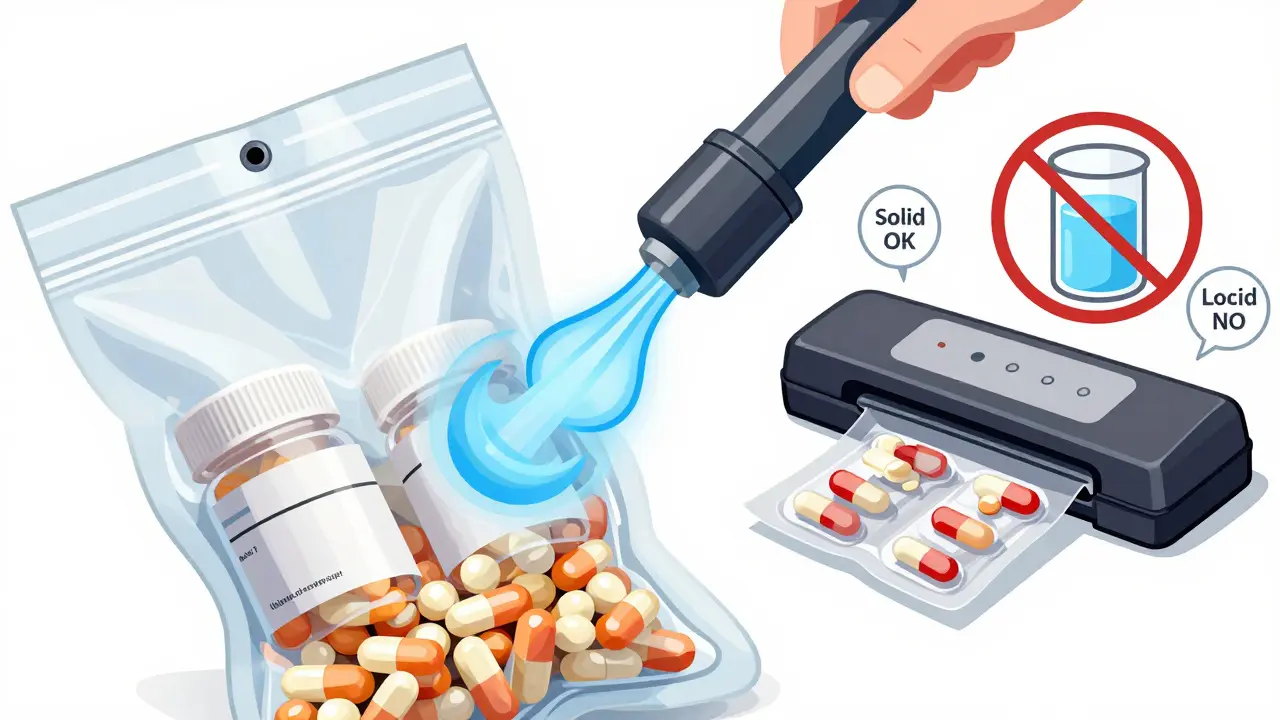
If you want to push the expiration date further, vacuum sealing is your best friend-for the right types of meds. Research by Dr. Michael Rhodes at Intermountain Healthcare indicates that vacuum-sealed solid pills can maintain efficacy for 1-2 years beyond their printed expiration dates. Johns Hopkins University testing confirmed this, showing vacuum-sealed pills retained 95% efficacy after 24 months compared to only 68% for non-sealed counterparts under identical conditions.
However, there are hard limits. Vacuum sealing does not help liquid medications. Liquids generally maintain potency for only 30-60 days past expiration, even in ideal conditions. More importantly, never remove medications from their original packaging if you plan to use them in an emergency. The FDA mandates that labels include National Drug Code (NDC) numbers. In a high-stress disaster scenario, administration errors account for 62% of medication failures. If you transfer pills to a generic zip-lock bag, you risk mixing up dosages or losing critical allergy information.
| Storage Method | Best For | Shelf Life Extension | Key Risk |
|---|---|---|---|
| Original Container + Vacuum Bag | Solid pills, capsules | 1-2 years beyond expiration | Must keep original label visible |
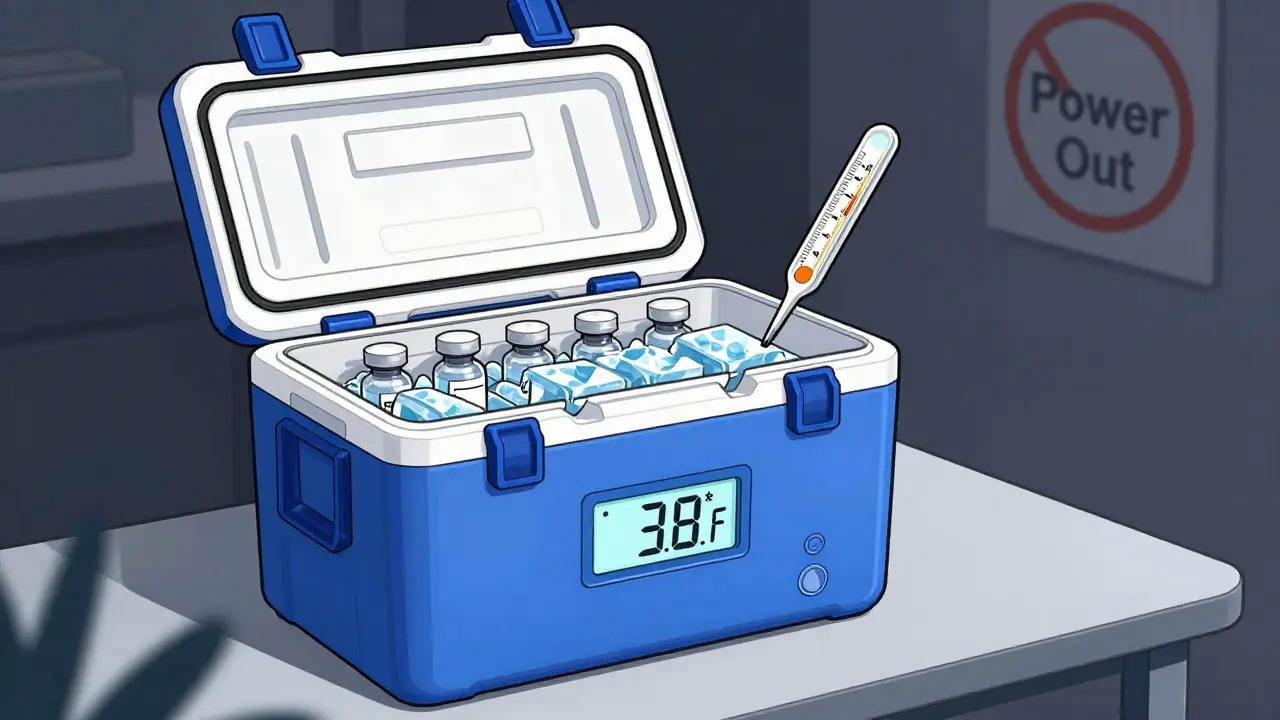
| Battery-Powered Medical Cooler | Insulin, biologics | Maintains potency for 72+ hours | Battery failure requires backup ice packs |
| Toilet Tank Water | Short-term refrigeration backup | 8-12 hours of cooling | Not suitable for long-term storage |
| Kitchen Cabinet (Interior) | General oral medications | Standard shelf life | Avoid top shelves near ceiling heat |
Handling Temperature-Sensitive Medications During Outages
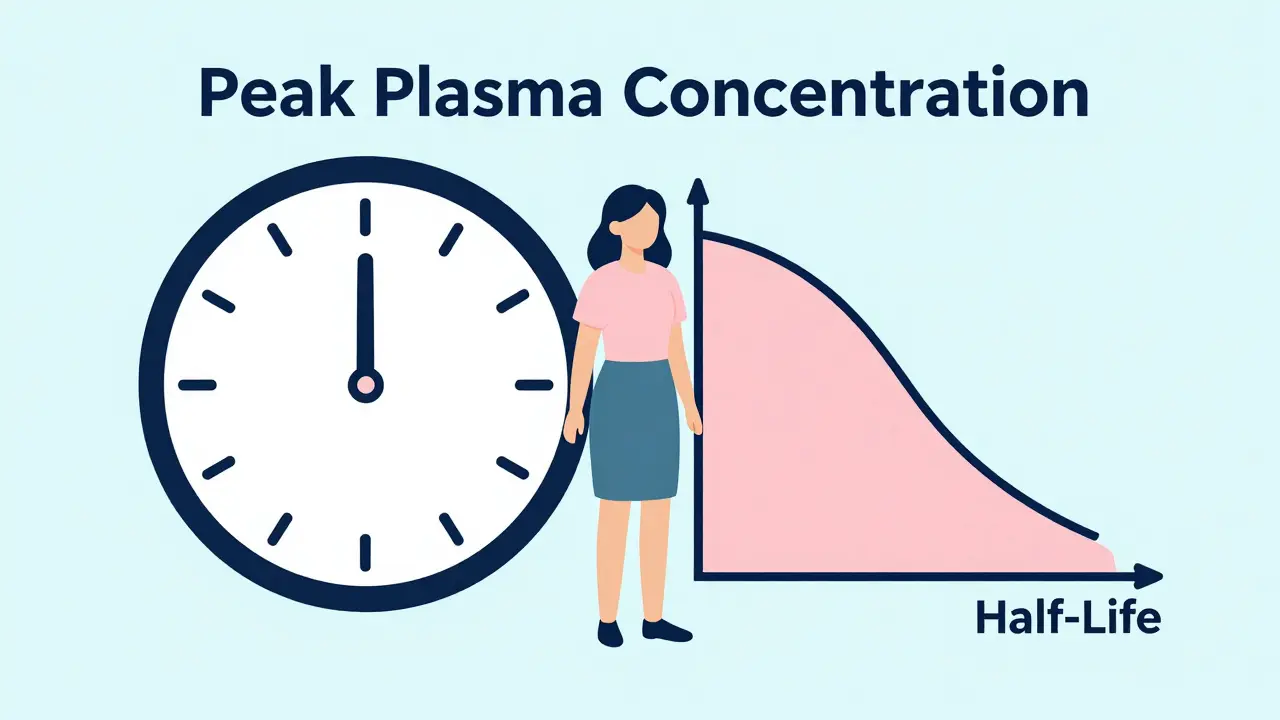
Refrigerated medications are the trickiest part of any emergency kit. Insulin, for example, loses 15% of its potency if exposed to temperatures above 46°F for just 12 consecutive hours, according to Merck’s stability data. When the grid goes down, your fridge warms up fast. Consumer Reports tested various hacks and found that placing sealed medication containers in the toilet tank water keeps them 15-20°F cooler than ambient air for 8-12 hours. It’s a stopgap, not a solution.
For longer outages, invest in a battery-powered medical cooler. These devices maintain proper temperatures for over 72 hours. If you rely on insulin, the American Diabetes Association recommends keeping a 48-hour supply in a portable cooler with ice packs rated for 72+ hours. Always check the temperature. The ANSI/AAMI ST79:2017 standards require monitoring devices with ±0.5°F accuracy. Guessing whether your medicine is safe is a gamble you shouldn't take.
New technology is helping here too. In January 2023, the FDA approved Tresiba®, a room-temperature stable insulin that maintains potency for 56 days at 86°F. If you have access to newer formulations, ask your pharmacist if a temperature-stable alternative exists for your chronic condition. This eliminates the need for complex cooling logistics in your kit.
Building the Kit: Quantity, Rotation, and Safety
How much medicine do you actually need? Dr. Michael Rhodes, writing in JAMA Internal Medicine, states clearly: "Three days is the absolute minimum, but 30 days is what truly constitutes preparedness." The Department of Homeland Security now recommends a minimum 14-day supply for all households. Aim for 30 days if space allows.
Organization saves lives. Use the "oldest first" method. Arrange medications so the ones expiring soonest are at the front. A Veterans Administration pilot program showed this simple system reduces waste by 65%. Check your kit monthly. Spend 15 minutes verifying that seals are intact, colors haven’t changed, and powders haven’t clumped. Epinephrine auto-injectors are special cases-they lose 15% potency annually even in perfect storage. Replace them every 12-18 months regardless of the expiration date.
Security matters too. Locked cabinet storage reduces accidental pediatric exposure by 97%, according to CDC data. However, ensure adults know where the key is. In an emergency, you cannot afford to hunt for a lockbox while treating a diabetic shock or asthma attack. Balance safety with accessibility.
Common Mistakes That Ruin Your Meds
Even well-intentioned preppers make costly errors. Here are the biggest pitfalls to avoid:
- Storing in the car: Vehicles act like ovens. Interior temperatures can exceed 140°F on sunny days, instantly destroying many drugs.
- Using silica gel packets incorrectly: While silica gel helps control humidity, it must be placed in the container, not touching the pills directly, and replaced regularly as it saturates.
- Ignoring color changes: If white pills turn yellow or brown, discard them. Visual degradation is a clear sign of chemical breakdown.
- Freezing medications: Unless the label explicitly says "freeze," do not put meds in the freezer. Freezing can crack glass vials and alter suspension textures in liquids.
Remember, the goal is not just to keep the pill whole, but to keep its molecular structure intact. A pill that looks fine but has degraded chemically is useless-and potentially harmful if it breaks down into toxic byproducts.
Can I vacuum seal liquid medications to extend shelf life?
No. Vacuum sealing is effective only for solid medications like tablets and capsules. Liquid medications generally maintain potency for only 30-60 days beyond their expiration date, even under ideal storage conditions. Vacuum sealing does not prevent chemical degradation in liquids.
Is it safe to store medications in the bathroom cabinet?
No. Bathrooms are one of the worst places to store medications. The combination of heat from showers and high humidity causes medications to degrade 40% faster than in other locations. Store meds in a cool, dry interior closet or kitchen cabinet instead.
How long should my emergency medication supply last?
The Department of Homeland Security recommends a minimum 14-day supply. However, experts like Dr. Michael Rhodes suggest aiming for 30 days to ensure true preparedness for major disasters where supply chains may be disrupted for weeks.
Do I need to replace epinephrine auto-injectors before the expiration date?
Yes. Epinephrine auto-injectors lose approximately 15% of their potency every year, even when stored correctly. The CDC recommends replacing them every 12-18 months regardless of the printed expiration date to ensure full effectiveness in an emergency.
What should I do with refrigerated medications during a power outage?
Use a battery-powered medical cooler for outages lasting more than 12 hours. For short-term backups, placing sealed medication containers in toilet tank water can keep them cool for 8-12 hours. Always monitor temperatures with a calibrated thermometer to ensure they stay within the required range (usually 36°F-46°F).



10 Comments