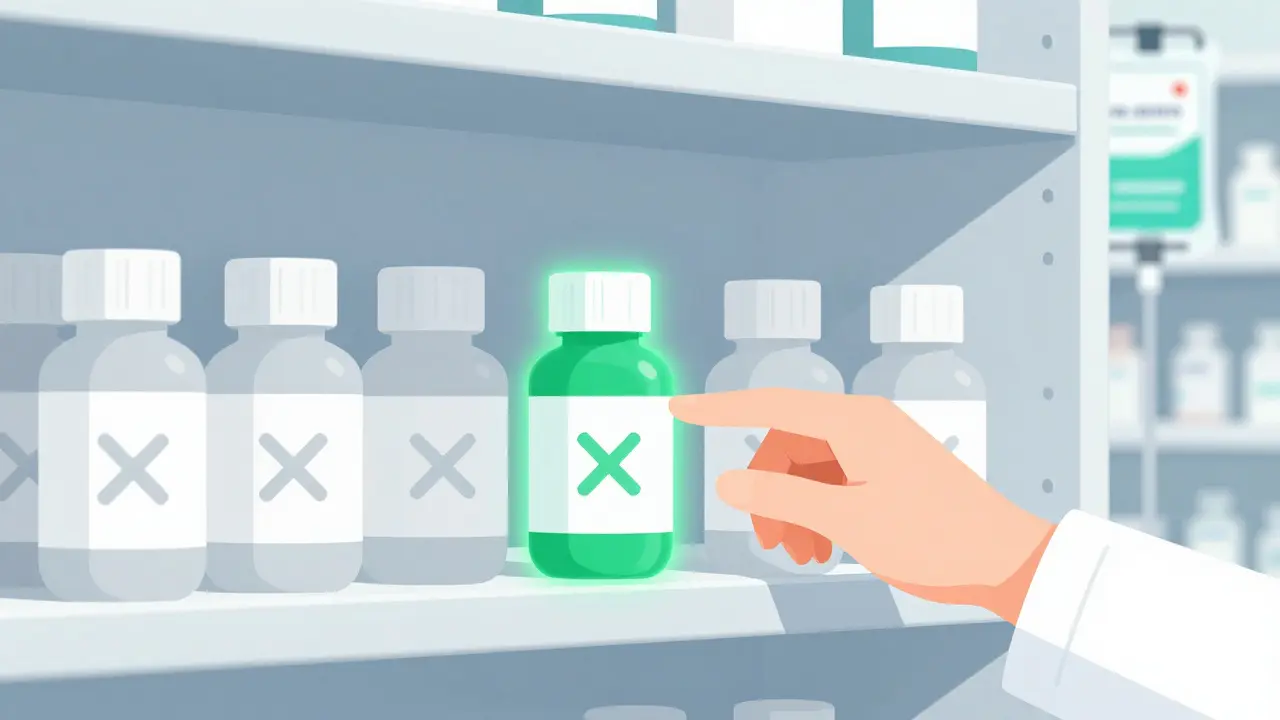
Imagine walking into a hospital pharmacy to fill a prescription for a life-saving antibiotic, only to be told the shelf is empty. It’s a frustrating and frightening scenario that healthcare providers face all too often. But here is a twist you might not expect: the medicine isn’t actually gone. It’s sitting right there on the shelf, but its printed expiration date has passed. Normally, throwing it away would be the rule. However, during critical drug shortages, the U.S. Food and Drug Administration (FDA) allows hospitals to use these medications anyway. This practice, known as extending expiration dates, is one of the agency's most powerful tools for keeping patients safe when supply chains break down.
If you work in healthcare or manage a pharmacy, understanding how this system works is crucial. You need to know which drugs qualify, how to verify the specific lot numbers, and what your responsibilities are regarding patient safety. This guide breaks down the mechanics of FDA expiration date extensions so you can navigate shortages with confidence.
Why Does the FDA Extend Expiration Dates?
The core problem is simple: demand exceeds supply. When a drug is in "shortage," it means the amount needed by patients in the United States is greater than what manufacturers can produce. The FDA defines a shortage specifically when demand or projected demand for the drug within the United States exceeds the supply of the drug.
Shortages happen for various reasons. Manufacturing issues, quality control failures, raw material delays, or even a manufacturer deciding to discontinue a product can trigger a crisis. For critical medications-those used in emergency rooms, intensive care units, or for treating life-threatening conditions-running out is not an option. There are often no suitable alternatives for certain patient populations.
To bridge the gap between current supply and new production coming online, the FDA uses regulatory flexibility. By allowing the use of existing inventory past its labeled expiration date, they effectively increase the available supply immediately. This isn't about cutting corners on safety; it's about using data to prove that the drug remains potent and pure for longer than originally stated. The goal is strictly temporary relief until normal production resumes.
The Legal Framework Behind the Policy
This authority didn't appear overnight. It was built through specific legislation designed to improve drug availability and public health preparedness. Two key laws drive this process today:
- The Food and Drug Administration Safety and Innovation Act (FDASIA) of 2012: This law changed the game for early warning. Before FDASIA, manufacturers only had to report if they were permanently discontinuing a drug. FDASIA expanded this requirement, mandating that manufacturers notify the FDA of both permanent discontinuations AND temporary interruptions in manufacturing that could lead to a shortage. This earlier notification gives the FDA more time to intervene.
- The Project BioShield Reauthorization Act (PAHPRA) of 2013: This act provided explicit authority for the FDA to extend expiration dating for Medical Countermeasures (MCMs). These are drugs stockpiled for emergencies like chemical, biological, radiological, or nuclear (CBRN) events. While primarily focused on national security threats, the principles established here reinforce the FDA's ability to manage expiration dates based on stability data rather than just labels.
These laws empower the FDA to act proactively. Instead of waiting for shelves to go bare, the agency can engage with manufacturers sooner, review stability data, and authorize extensions before a crisis fully hits.
How Manufacturers Get Approval for Extensions
Not every drug on the shortage list gets an extension. The FDA applies a risk-based approach, focusing on "critical" drugs where alternatives are limited. The approval process relies heavily on science, specifically stability data.
Manufacturers must submit rigorous evidence to the FDA demonstrating that their product maintains its identity, strength, quality, and purity beyond the original expiration date. Here are the primary pathways for these extensions:
- Manufacturer-Initiated Extensions: This is the most common route for standard drugs in shortage. The manufacturer conducts long-term stability studies under controlled conditions. They provide this data to the FDA, which reviews it to determine if an extension is supportable. If approved, the FDA publishes the new use dates for specific lots.
- Shelf-Life Extension Program (SLEP): Originally designed for military stockpiles, SLEP involves testing samples from aged inventory to determine if they remain usable. This is less common for commercial pharmaceuticals but relevant for certain countermeasures.
- Emergency Use Authorities (EUA): In urgent public health situations, the FDA can invoke EUA to allow the use of unapproved medical products or unapproved uses of approved products. This can include extending expiration dates for stockpiled antivirals or antibiotics during a pandemic or outbreak.
- Enforcement Discretion: In rare cases, the FDA may exercise enforcement discretion, meaning they choose not to take action against the use of slightly expired products if the benefit outweighs the risk and no other options exist. However, formal extensions based on data are preferred.
Typically, these extensions add about one year to the labeled expiration date, though some cases see shorter or longer periods depending on the data. For example, recent analyses show that while one year is standard, specific IV solutions have received extensions allowing use up to 24 months after manufacture.

Real-World Examples of Extended Dates
To understand how this looks in practice, let’s look at recent data from the FDA’s publicly accessible database. The agency updates this list daily, providing transparency for healthcare providers. Here are a few concrete examples from late 2024 and early 2025:
| Drug Name | Manufacturer | Original Expiration | Extended Expiration | Extension Period |
|---|---|---|---|---|
| Meperidine hydrochloride injection | Hospira | September 30, 2025 | January 30, 2026 | 4 Months |
| Ethiodized oil injection | Guerbet | December 31, 2025 | March 31, 2026 | 3 Months |
| Dantrolene sodium for injectable suspension | Eagle Pharmaceuticals | Varies by Lot | Varies by Lot | 6-9 Months |
| Baxter IV Solutions | Baxter | Varies | Up to 24 months post-manufacture | Up to 2 Years |
Note that Propofol injection and Epinephrine injection consistently represent some of the largest categories for these extensions due to their critical nature in anesthesia and emergency care. The FDA does not require manufacturers to relabel the bottles. Instead, they publish a searchable table containing the National Drug Code (NDC), the specific SKU, and the exact lot numbers eligible for extension.
What This Means for Pharmacists and Hospitals
For those managing inventory, this policy introduces specific operational challenges. You cannot simply assume any expired drug is usable. The extension applies only to designated lots with supporting data. Using a non-listed lot past its expiration date remains illegal and unsafe.
Here is what you need to do to stay compliant and keep patients safe:
- Verify Lot Numbers Daily: Check the FDA’s drug shortage website regularly. Match the lot number on your physical bottle against the official list. If it’s not on the list, discard it according to standard protocols.
- Update Pharmacy Systems: Ensure your dispensing software recognizes these extended dates. If your system flags a valid, extended-date lot as "expired," it will block dispensing and cause unnecessary waste or delays.
- Train Staff Thoroughly: Nurses and pharmacists must understand that "expired" on the label doesn't always mean "unsafe." Clear communication prevents confusion at the point of care.
- Prioritize Replacement: The FDA expects that if replacement product becomes available during the extension period, the extended-date lots should be replaced and properly disposed of as soon as possible. Don't hoard extended-date stock indefinitely.
The American Medical Association (AMA) and American Hospital Association (AHA) frequently issue bulletins to remind members of these changes. For instance, the AHA sent out special alerts in October 2024 regarding Baxter IV solutions to ensure hospitals knew which lots were authorized for extended use.

Limitations and Patient Safety Considerations
While this tool is vital, it has limits. The FDA emphasizes that not all drugs on the shortage list qualify for extensions. The decision depends on two main factors: the clinical criticality of the drug and the quality of the stability data provided by the manufacturer.
If a drug lacks sufficient stability data, or if it is not deemed critical enough to warrant the regulatory effort, it will not receive an extension. In these cases, clinicians must find alternative treatments. The FDA explicitly states that it does not regulate the practice of medicine, so decisions about switching to alternative therapies depend on each patient’s specific needs. Always consult with healthcare providers to discuss possible options when a preferred drug is unavailable.
Furthermore, this is a reactive measure. It addresses the symptom (lack of supply) but not the root cause (manufacturing issues, single-source dependencies, or global supply chain fragility). Structural problems in pharmaceutical manufacturing mean that expiration date extensions will likely remain a necessary part of the FDA’s toolkit for the foreseeable future.
Looking Ahead: Future of Drug Shortage Management
As we move through 2026, the landscape continues to evolve. The gradual winding down of pandemic-related supply chain disruptions has helped resolve some shortages, but new challenges emerge. Recent additions to the shortage list, such as empty IV bags, highlight that device shortages also impact drug administration.
The FDA continues to refine its strategies, working closely with sponsors to resolve manufacturing issues, expedite inspections, and identify alternative manufacturers. The focus remains on prevention through early notification, but expiration date extensions serve as the essential safety net. For healthcare professionals, staying informed via the FDA’s daily updated database is the best way to navigate these complexities and ensure uninterrupted patient care.
Does the FDA require relabeling of drugs with extended expiration dates?
No, the FDA does not require or recommend that identified lot numbers be relabeled with their new use dates. Instead, the agency publishes a searchable table listing the NDC, SKU, and specific lot numbers that have been approved for extension. Healthcare providers must cross-reference their inventory with this official list.
Can I use any expired drug if it is on the shortage list?
Absolutely not. Only specific lots with supporting stability data reviewed and approved by the FDA are eligible for extension. Just because a drug is on the shortage list does not mean all its inventory is safe to use past the printed expiration date. You must verify the exact lot number against the FDA’s extended use date table.
How long do expiration date extensions typically last?
Most commonly, extensions add approximately one year to the labeled expiration date. However, this varies based on the stability data provided by the manufacturer. Some extensions may be shorter (e.g., 3-6 months), while others, particularly for stable IV solutions, may allow use up to 24 months after the manufacture date.
What happens when new supply becomes available?
The FDA expects that if replacement product becomes available during the extension period, the extended-date lots should be replaced and properly disposed of as soon as possible. These extensions are intended as temporary measures to bridge gaps until normal production resumes.
Which drugs are most likely to receive expiration date extensions?
Critical drugs with limited alternatives are prioritized. Historically, propofol injection and epinephrine injection represent some of the largest categories for extensions due to their essential role in anesthesia and emergency care. The FDA focuses on medications where running out would pose an immediate threat to patient safety.