
When you start a GLP-1 medication like Wegovy or Ozempic for weight loss, the first thing most people notice isn’t the scale moving - it’s the nausea. It hits hard, often within days of starting, and it’s enough to make people quit before they ever see results. But here’s the truth: nausea doesn’t mean the drug isn’t working. In fact, it’s often a sign it is.
Why GLP-1 Medications Cause Nausea
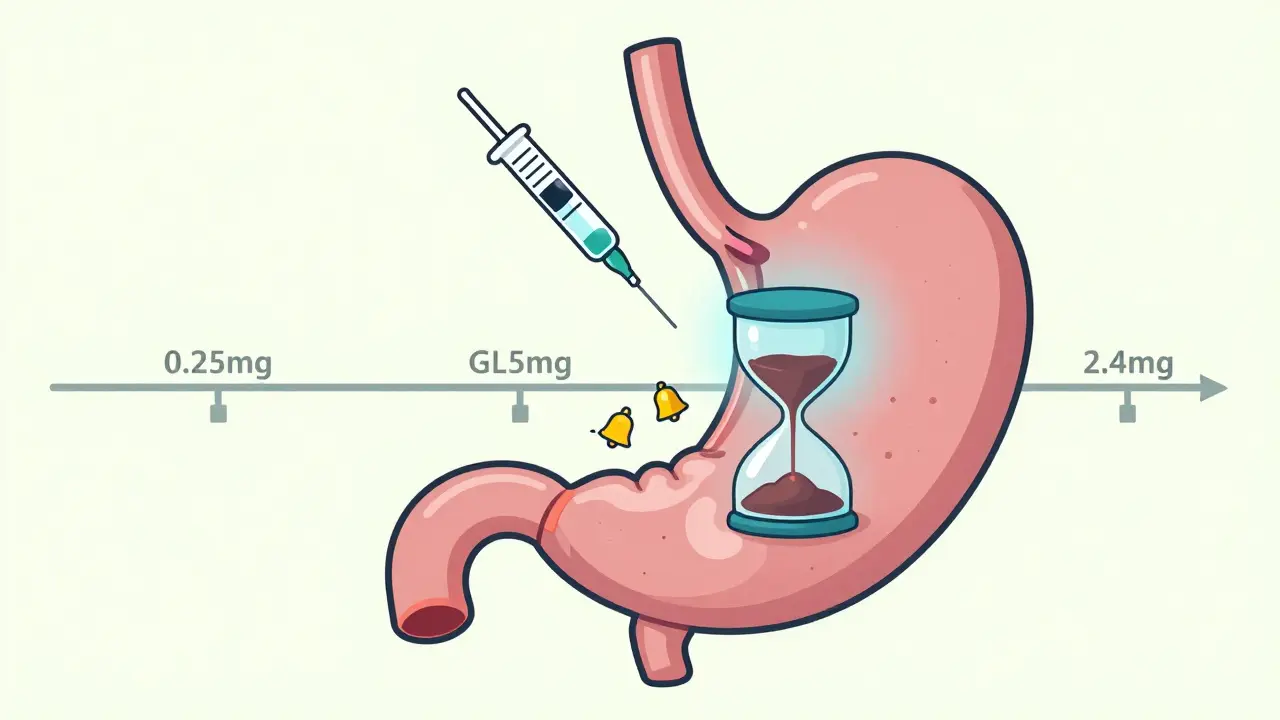
GLP-1 medications work by slowing down how fast your stomach empties. That’s not a bug - it’s the whole point. Slower digestion means you feel full longer, eat less, and your blood sugar stays steadier. But that same mechanism is why you feel queasy. Your stomach is holding food longer than it’s used to, and your brain interprets that as a problem. It’s like your body’s alarm system going off: Something’s wrong here. The nausea isn’t random. It’s directly tied to the dose. At the lowest starting dose - 0.25 mg for Wegovy or 0.25 mg for Ozempic - about 15% of people feel nauseous. By the time you hit the full dose of 2.4 mg for Wegovy or 1 mg for Ozempic, that number jumps to 30-45%. The same pattern holds for Mounjaro and Victoza. It’s not a sign you’re doing something wrong. It’s biology.Dosing Schedules That Actually Work
The reason these drugs are prescribed with slow, step-by-step increases isn’t just to be cautious - it’s to give your body time to adapt. Rushing the dose is the #1 reason people quit. Here’s what the real dosing looks like:- Wegovy (weight loss): Start at 0.25 mg weekly for 4 weeks. Then bump to 0.5 mg for 4 weeks, then 1 mg for 4 weeks, then 1.7 mg for 4 weeks, and finally 2.4 mg weekly. That’s 17 weeks just to get to the full dose.
- Ozempic (diabetes, sometimes used off-label for weight): Starts at 0.25 mg weekly for 4 weeks, then 0.5 mg for 4 weeks, then 1 mg or 2 mg weekly. The max is 2 mg.
- Mounjaro (tirzepatide): Begins at 2.5 mg weekly, then increases by 2.5 mg every 4 weeks until you hit 5 mg, 10 mg, or 15 mg. Max dose is 15 mg.
- Victoza (liraglutide): Starts at 0.6 mg daily for at least a week, then increases to 1.2 mg daily. Some go up to 1.8 mg.
How to Beat the Nausea (Without Quitting)
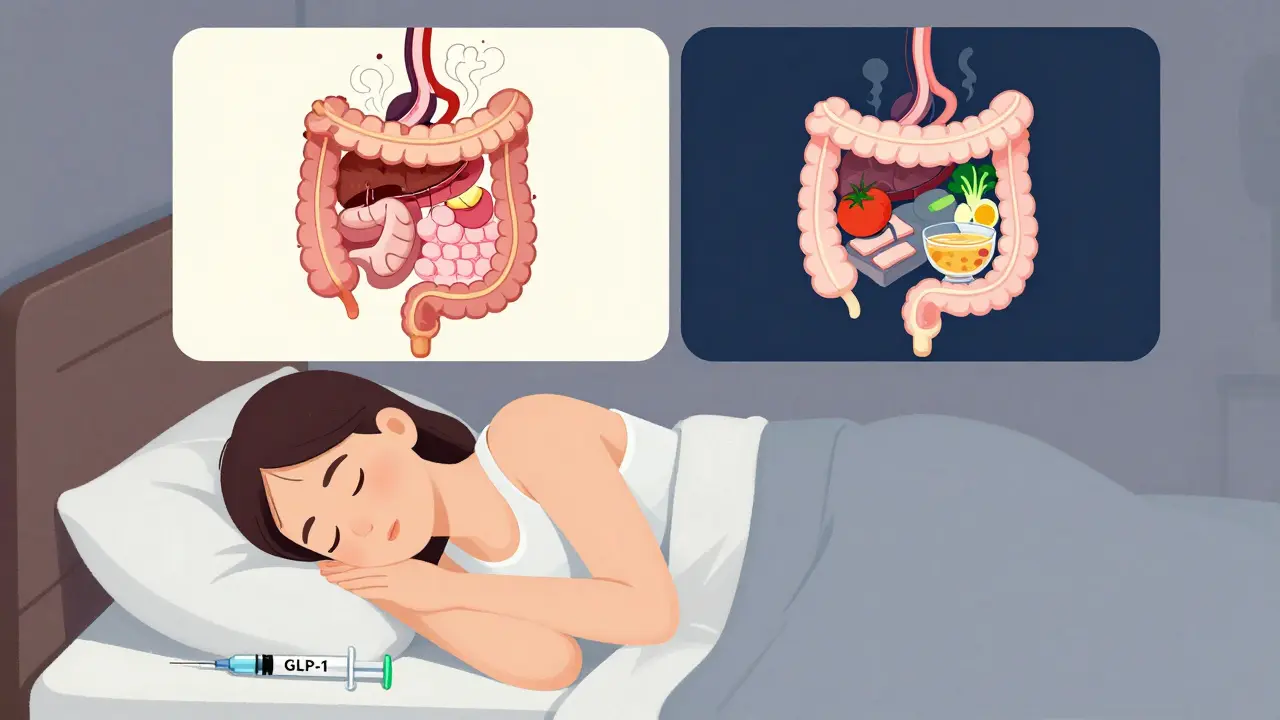
You don’t have to suffer through nausea. There are proven, practical ways to reduce it - and most of them cost nothing.- Take it at night. Over 60% of users in patient surveys report less nausea when they inject right before bed. While you sleep, your stomach is quiet. No meals, no stress, no distractions. The nausea still happens, but you’re not awake to feel it.
- Eat smaller, simpler meals. Skip greasy burgers, heavy pasta, or fried chicken. Stick to lean protein (chicken, fish, tofu), vegetables, and whole grains. High-fat meals slow digestion even more - and make nausea worse.
- Hydrate, but don’t chug. Sip water throughout the day. Avoid drinking large amounts with meals - it fills your stomach faster and triggers nausea. Try herbal teas like ginger or peppermint. Ginger, in particular, is backed by studies and recommended by 78% of obesity specialists.
- Don’t skip meals, but don’t overeat. Going too long without food can make nausea worse. Eat small snacks if you need to - a boiled egg, a handful of almonds, or yogurt. But don’t force yourself to eat if you’re not hungry. Your body is adjusting.
- Give it time. The Mayo Clinic and multiple patient forums confirm: nausea usually peaks between weeks 2 and 4 at each new dose - then fades. On Reddit’s r/semaglutide, 72% of users said nausea improved within 2-4 weeks at each new level. If you hang on, it gets better.
When to Call Your Doctor
Nausea is normal. Vomiting, dizziness, or severe pain? That’s not. You should reach out to your provider if:- You’re vomiting more than once a day for 2+ days
- You can’t keep any food or fluids down
- You feel lightheaded or faint
- You notice dark urine or signs of dehydration
What Happens If You Stop?
About 1 in 5 people quit GLP-1 meds because of nausea. But here’s what the data shows: those who stick with it for at least 6 months lose 10-15% of their body weight on average. Those who quit before week 12? Most regain nearly all the weight they lost - if not more. A 2023 survey by the Obesity Action Coalition found that 89% of people who made it past the first 8 weeks (the worst part) lost at least 5% of their body weight. Only 47% of those who quit early did. The difference isn’t willpower. It’s timing.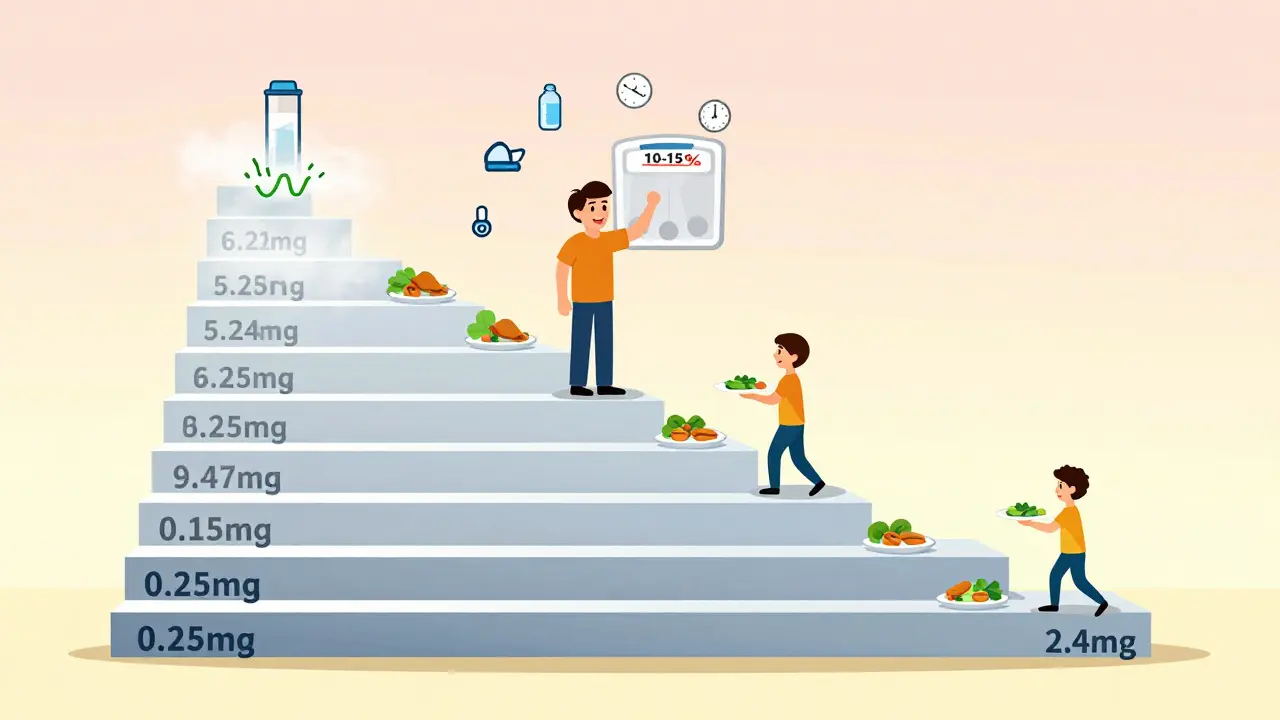
What’s New in 2025
The GLP-1 landscape is changing fast. In late 2023, the FDA approved Zepbound - the weight loss version of tirzepatide - making it the second major GLP-1 drug approved specifically for obesity. Meanwhile, Novo Nordisk is preparing to launch an oral semaglutide pill in 2025. Early trials suggest it may cause less nausea than injections, though it’s not yet available. Supply shortages are still an issue. Wegovy and Ozempic were on the FDA’s drug shortage list for over a year through October 2023. While availability has improved, insurance coverage remains spotty. Annual costs range from $9,000 to $13,000 without insurance. But more employers - 32% of Fortune 500 companies now - are covering these drugs for weight management, up from just 9% in 2021.Final Reality Check
GLP-1 medications aren’t magic. They’re powerful tools - and like any tool, they come with rules. You can’t skip the slow start. You can’t ignore the nausea. You can’t expect results in the first month. But if you follow the schedule, adjust your meals, and give your body time, nausea fades. And what’s left? A real, lasting change in how your body holds weight. It’s not easy. But it’s doable. And for thousands of people, it’s working.How long does nausea last on GLP-1 medications?
Nausea usually peaks during the first 2-4 weeks after each dose increase and improves within another 2-4 weeks. Most people find it significantly better by the time they reach their maintenance dose. For many, it disappears entirely after 3-6 months.
Can I take GLP-1 medications if I have a history of stomach problems?
If you have gastroparesis, severe GERD, or a history of bowel obstructions, GLP-1 medications may not be safe. Slowing gastric emptying can make these conditions worse. Always talk to your doctor before starting - especially if you’ve had stomach surgery or chronic digestive issues.
Is it okay to drink alcohol while on GLP-1 medications?
Alcohol can worsen nausea and increase the risk of low blood sugar, especially if you’re also taking diabetes meds. It’s best to limit alcohol, especially early on. If you do drink, keep it to one serving and always eat something with it. Avoid sugary mixers.
Why do some people lose weight faster than others on GLP-1?
Weight loss varies based on starting weight, dose, diet, activity level, and genetics. People who combine GLP-1 meds with consistent protein intake and strength training tend to lose more fat and keep more muscle. Those who rely only on the drug without changing habits often plateau sooner.
Do GLP-1 medications cause long-term damage to the stomach?
There’s no evidence that GLP-1 medications cause permanent damage to the stomach. The slowed emptying is temporary and reverses after stopping the drug. Long-term studies up to 5 years show no signs of stomach atrophy or nerve damage. The side effects are manageable and typically resolve after discontinuation.




9 Comments