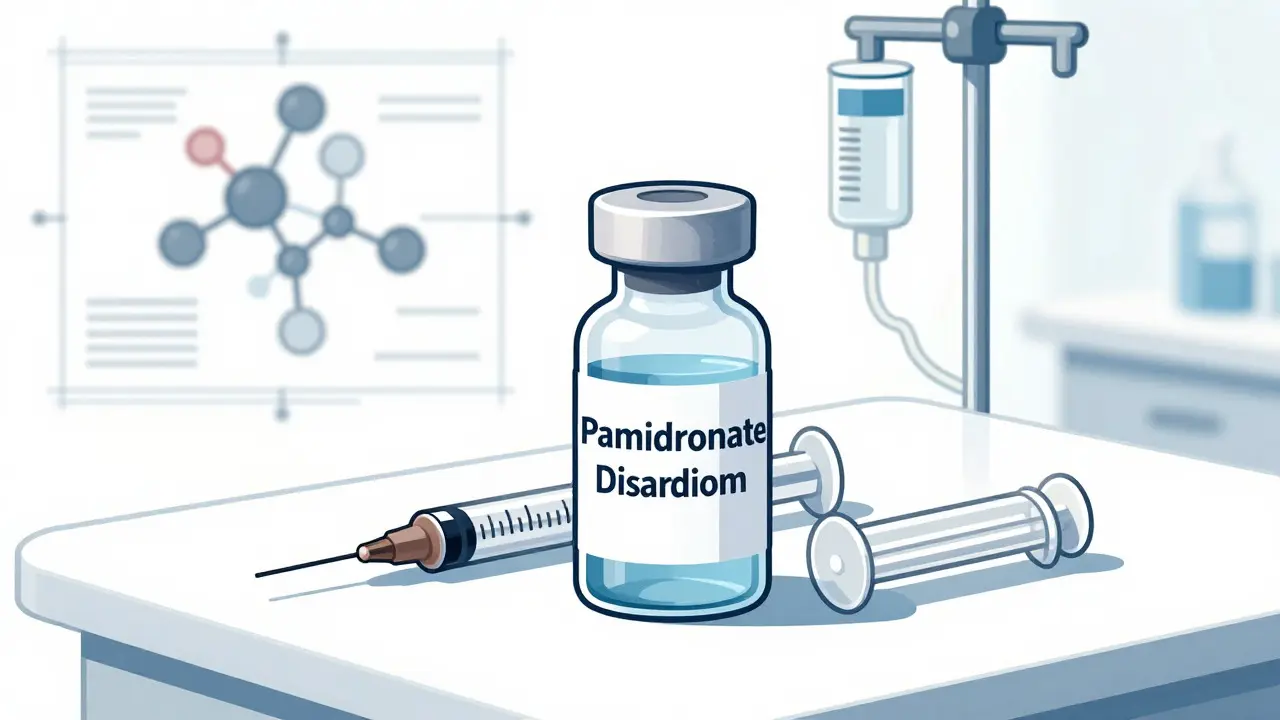
Dental Procedure Safety Checker for Blood Thinners
Your Details
Safety Assessment & Guidance
You are sitting in the dentist’s chair, the light is bright, and you realize you forgot to mention something crucial: you take blood thinners. Your heart might race a little. You worry about bleeding that won’t stop. You wonder if you should have skipped your morning pill. This fear is common, but here is the good news: for most dental work, you do not need to stop your medication. In fact, stopping it can be far more dangerous than the procedure itself.
Managing dental procedures while taking anticoagulant medications commonly known as blood thinners requires a balance. We must weigh the risk of bleeding against the risk of a blood clot forming in your brain or lungs. Current medical guidelines from major health organizations have shifted dramatically. The old practice of routinely stopping these drugs before a tooth extraction is now considered outdated and potentially harmful. Let’s break down exactly what this means for you, how dentists classify risks, and what steps you can take to stay safe.
Why Stopping Blood Thinners Is Often Dangerous
For decades, the standard advice was to pause your anticoagulation therapy before any dental work. Doctors feared excessive bleeding would complicate healing. However, research has shown that this approach creates a bigger problem. When you stop taking anticoagulants medications that prevent blood clots, including warfarin and direct oral anticoagulants (DOACs), your blood becomes prone to clotting too easily. This increases the risk of thromboembolic events, such as strokes or pulmonary embolisms.
The American Dental Association (ADA) updated its position in 2022 to reflect this reality. They state clearly that for most patients, it is not necessary to alter anticoagulation or antiplatelet therapy prior to dental intervention. Dr. Jane Doe, Chair of the ADA Council on Scientific Affairs, explains that holding single antithrombotic agents perioperatively increases the risk of acute thrombotic events without significantly decreasing bleeding risk in minor dental procedures. Essentially, the danger of having a stroke outweighs the inconvenience of managing a bit of gum bleeding.
This shift is vital because the patient demographic is changing. It is no longer just elderly patients with atrial fibrillation who need these drugs. Younger adults are increasingly prescribed them due to conditions like Factor V Leiden, deep vein thrombosis after long flights, or postpartum complications. A 25-year-old athlete or a new mother needs the same careful consideration as an older adult. The goal is always to keep you safe from life-threatening clots while handling local bleeding effectively.
How Dentists Classify Dental Procedure Risks
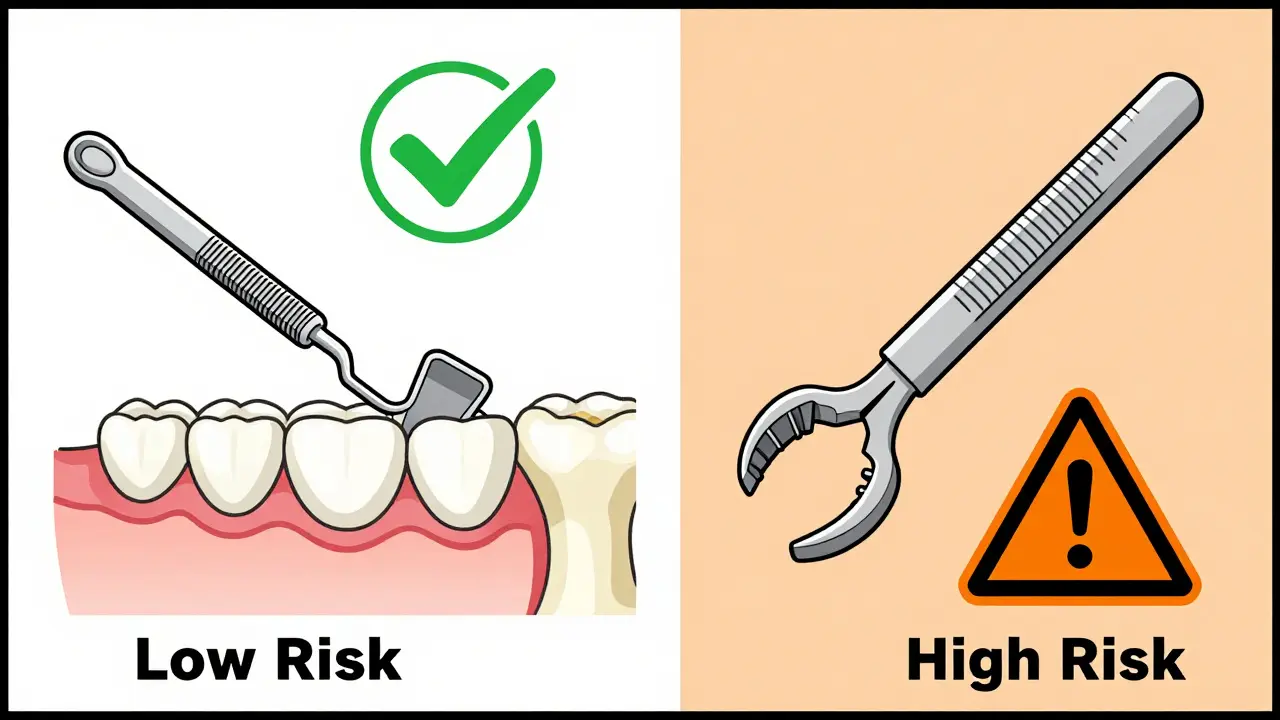
Not all dental visits carry the same level of risk. To make smart decisions, clinicians categorize procedures based on how much they disturb the gums and bone. Understanding these categories helps you know when to expect a simple check-up versus when to prepare for more intensive care.
| Risk Level | Typical Procedures | General Guidance |
|---|---|---|
| Low Risk | Examinations, X-rays, study models, supragingival prophylaxis (surface cleaning) | Proceed as normal. No changes to medication needed. |
| Low-Moderate Risk | Simple fillings, scaling and root planing (deep cleaning), endodontics (root canals) | Usually proceed without stopping meds. Local hemostasis may be used. |
| Moderate Risk | Simple extraction of up to 3 teeth, crown prep, gingivoplasty, removal of single bony impaction | Requires careful planning. May need specific timing or local measures. |
| High Risk | Multiple molar extractions, complex oral surgery, implant placement | Consultation with physician required. Possible temporary adjustment. |
Stanford Health Care and the Scottish Dental Clinical Effectiveness Programme (SDCEP) use similar tiered systems. If you are getting a routine cleaning or a filling, you fall into the low-risk category. These procedures involve minimal tissue trauma. On the other hand, pulling multiple molars involves cutting through gum tissue and bone, which opens larger blood vessels. This falls into the moderate-to-high risk category and demands a more personalized plan.
Warfarin vs. DOACs: Managing Different Medications
The type of blood thinner you take plays a huge role in how your dental visit is managed. There are two main classes: Vitamin K Antagonists (VKAs) like Warfarin an older anticoagulant that requires regular INR monitoring, and Direct Oral Anticoagulants (DOACs) like apixaban, rivaroxaban, or dabigatran.
Warfarin Management: If you take Warfarin, your dentist will likely ask for your recent INR (International Normalized Ratio) result. The INR measures how long it takes your blood to clot. For low-risk procedures, an INR between 1.5 and 3.5 is generally considered safe to proceed. If your INR is above 3.5, your dentist may delay non-urgent work until your doctor adjusts your dose. For moderate-risk procedures like a single extraction, an INR under 3.5 is acceptable, provided the dentist uses local hemostatic measures. Some guidelines suggest holding Warfarin for 0-3 days before a single uncomplicated extraction, but only after consulting your physician. For major oral surgery, a hold of 3-5 days might be recommended.
DOAC Management: DOACs are newer and easier to manage in some ways because they don’t require daily blood tests. However, they have a shorter half-life, meaning they wear off faster. The CHEST 2022 guidelines recommend that for high-bleeding-risk procedures, missing one dose on the morning of the intervention may be advisable. Specifically, you should schedule your extraction at least 4 hours after your last DOAC intake. This timing minimizes bleeding risk while keeping your protection against clots relatively high. Unlike Warfarin, there is no INR test to guide us, so timing becomes the critical factor.
Local Hemostatic Measures: Stopping the Bleeding
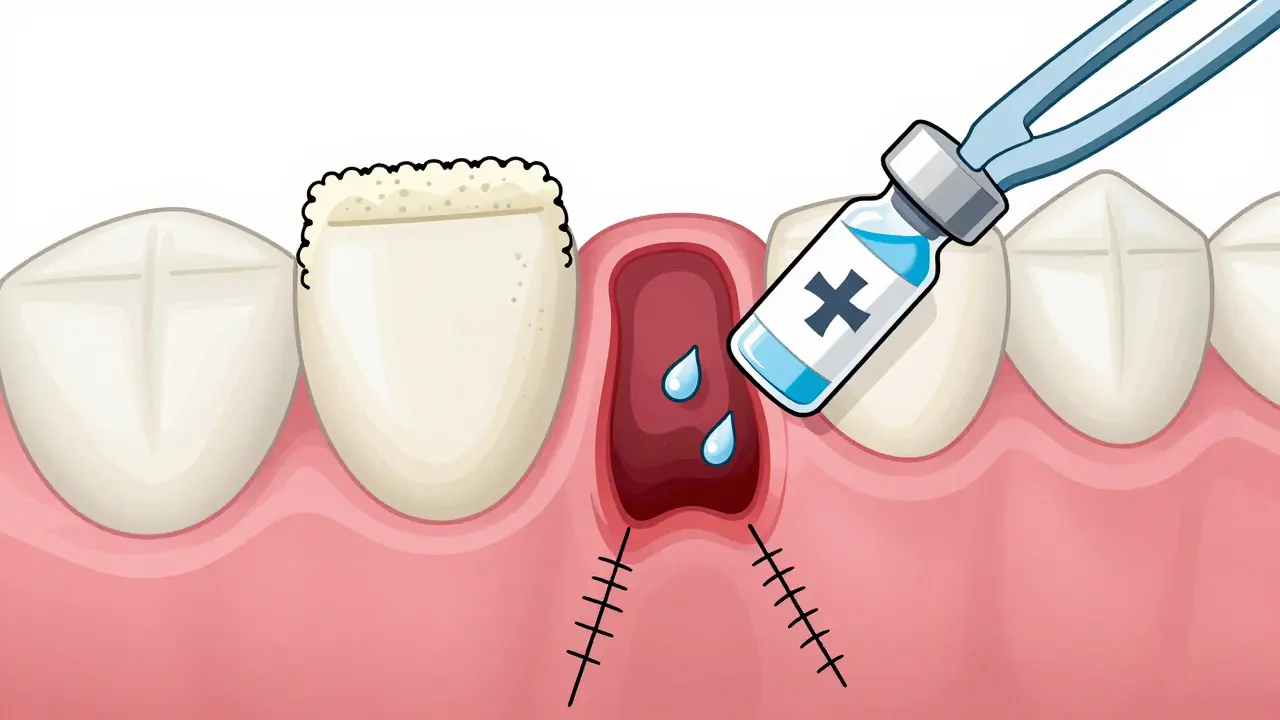
Even if you continue your medication, bleeding can occur. The key is controlling it locally. Dentists have several tools in their kit to help your blood clot properly at the site of the procedure. You don’t need to fear a flood of blood; modern techniques are very effective.
- Sutures (Stitches): Closing the wound tightly reduces the space where blood can pool and encourages clot formation.
- Hemostatic Agents: Materials like gelatin sponges or oxidized cellulose can be placed directly into the socket. They act as a scaffold for your body’s natural clotting process.
- Tranexamic Acid Mouthwash: This is a game-changer for many patients. UCSD Health Care recommends a compounded tranexamic acid 5% solution. After the procedure, you hold 10mL of this liquid in your mouth for 1-2 minutes and then spit it out. You repeat this every 2 hours as needed. This medication works by stabilizing the clot and preventing it from breaking down. It remains effective for 5 days after compounding if refrigerated.
- Pressure: Biting down on gauze for 30-60 minutes immediately after the procedure is still the first line of defense.
Dentists also avoid extracting 2-3 contiguous premolars and molars in one session for anticoagulated patients. Instead, they split the work into multiple sessions. This reduces the total volume of tissue trauma and makes bleeding much easier to manage.
Drug Interactions and What to Avoid
Your medication list matters just as much as your blood thinner. Certain drugs commonly used in dentistry can interact dangerously with anticoagulants. You must tell your dentist everything you take, including over-the-counter pain relievers.
Avoid NSAIDs: Non-steroidal anti-inflammatory drugs (NSAIDs) like ibuprofen (Advil, Motrin) and naproxen (Aleve) inhibit platelet function. When combined with blood thinners, they significantly increase bleeding risk. Acetaminophen (Tylenol) is usually the safer choice for pain relief, though you should stick to recommended doses to protect your liver, especially if you take Warfarin, as high doses can affect your INR.
Antibiotics and Antifungals: Some antibiotics, such as metronidazole or ciprofloxacin, and certain antifungals can interfere with how your body processes Warfarin, leading to elevated INR levels and increased bleeding risk. If your dentist prescribes these, your doctor may need to monitor your INR more closely during the course of treatment.
Herbal Supplements: Be wary of supplements like garlic, ginkgo biloba, ginger, and vitamin E. These have mild blood-thinning effects on their own. Combining them with prescription anticoagulants can amplify the bleeding risk. Always disclose supplement use to both your dentist and your physician.
Preparation Checklist for Your Appointment
To ensure a smooth experience, follow this checklist before your next dental visit. Preparation reduces anxiety and ensures your care team has all the information they need.
- Inform Your Dentist Early: Do not wait until you are in the chair. Mention your blood thinner when you book the appointment and again when you check in.
- Get Recent Lab Results: If you take Warfarin, get your INR tested within 24-48 hours before the procedure. Bring the result to your appointment.
- Consult Your Physician: For moderate-to-high risk procedures, call your cardiologist or primary care provider. Ask specifically: "Should I hold my medication, and if so, for how long?" Get this instruction in writing if possible.
- Review Pain Medication Options: Ask your dentist or doctor which pain relievers are safe for you to use post-procedure. Avoid self-medicating with NSAIDs.
- Plan for Recovery: Arrange for someone to drive you if you are anxious or if the procedure is extensive. Have soft foods ready for the next few days.
- Prepare Hemostatic Supplies: If prescribed, pick up your tranexamic acid mouthwash beforehand so it is ready to use.
Post-Procedure Care and Red Flags
After your procedure, some oozing is normal. It might look scary, but it is often just saliva mixing with a small amount of blood. Follow your dentist’s instructions carefully. Here is what to do if you notice bleeding:
- Bite firmly on a clean piece of gauze or a moistened tea bag (the tannins in tea help constrict blood vessels) for 30 minutes.
- Use your tranexamic acid mouthwash as directed if you were prescribed it.
- Avoid rinsing vigorously, spitting forcefully, or using straws for at least 24 hours. These actions create suction that can dislodge the clot.
- Keep your head elevated when sleeping for the first night.
When should you seek emergency care? Contact your dentist or go to the ER if:
- Bleeding does not slow down after 2-3 hours of applying pressure.
- You feel dizzy, lightheaded, or short of breath.
- You notice signs of a blood clot elsewhere, such as sudden leg swelling, chest pain, or difficulty speaking.
Remember, the goal is not zero bleeding-it is controlled bleeding. With proper local measures and communication between your healthcare providers, you can maintain your oral health without compromising your systemic health.
Do I need to stop taking Warfarin before a tooth extraction?
For most single tooth extractions, current guidelines suggest you do not need to stop Warfarin if your INR is therapeutic (typically below 3.5). Stopping the medication increases the risk of stroke or blood clots. Your dentist will use local measures like stitches and hemostatic agents to control bleeding. Always consult your physician for personalized advice, especially for multiple extractions.
What is the safest painkiller to take with blood thinners?
Acetaminophen (Tylenol) is generally considered the safest option for pain relief when taking blood thinners. NSAIDs like ibuprofen, aspirin, and naproxen can increase bleeding risk by interfering with platelet function. However, high doses of acetaminophen can affect liver function and INR levels in Warfarin users, so stick to the recommended dosage and inform your doctor.
How long before a dental procedure should I miss a dose of my DOAC?
For direct oral anticoagulants (DOACs) like apixaban or rivaroxaban, guidelines often recommend missing the morning dose on the day of the procedure for high-bleeding-risk interventions. Ideally, the procedure should be scheduled at least 4 hours after your last dose. This timing balances the need to reduce bleeding risk while maintaining protection against clots. Always confirm this plan with your prescribing physician.
Can I get dental implants while on blood thinners?
Yes, dental implants can be performed safely on patients taking blood thinners. Implant placement is considered a higher-risk procedure due to the extent of bone surgery involved. It requires careful coordination between your dentist and physician. Local hemostatic measures, sutures, and possibly a brief interruption of medication (for Warfarin) may be used. DOAC users typically time their doses around the surgery rather than stopping completely.
What is tranexamic acid mouthwash and how do I use it?
Tranexamic acid mouthwash is a topical medication that helps stabilize blood clots and prevent them from breaking down. It is often prescribed for patients on anticoagulants undergoing dental surgery. Typical usage involves holding 10mL of the 5% solution in your mouth for 1-2 minutes and then spitting it out. This is repeated every 2 hours as needed for the first 24-48 hours. It must be refrigerated and used within 5 days of compounding.