
When you’re pregnant or breastfeeding, even a mild headache can feel terrifying. You’re not just thinking about yourself anymore-you’re thinking about your baby. And when that headache turns into a full-blown migraine, the fear only grows. What can you take? What’s safe? What could hurt your child? The truth is, migraine doesn’t disappear during pregnancy or lactation. In fact, for many women, it gets worse after birth. But here’s the thing: you don’t have to suffer. There are real, science-backed ways to manage it without putting your baby at risk.
Why Migraines Change During Pregnancy and After
Migraines aren’t random. They’re tied to hormones. During pregnancy, estrogen rises steadily-especially in the first and second trimesters. For about 60-70% of women, that means fewer attacks. Some even stop having migraines altogether. But then comes the drop. Right after delivery, estrogen crashes. That’s when 70-80% of women experience their worst migraines of the entire cycle. It’s not just bad luck-it’s biology. And if you’re not managing it, the consequences go beyond pain. Untreated migraines are linked to higher risks of preterm birth, preeclampsia, and low birth weight. That’s not speculation. It’s from the Norwegian Mother and Child Cohort Study, tracking over 114,500 pregnancies.First Line: Non-Drug Approaches That Actually Work
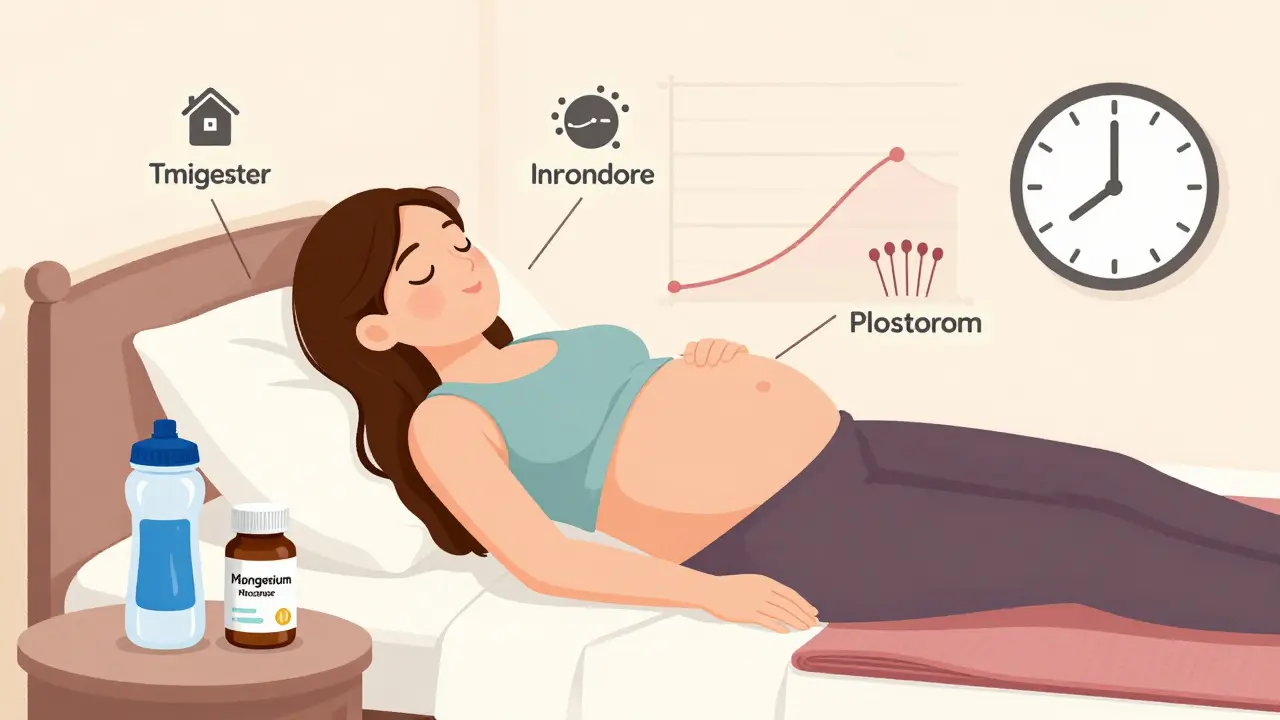
Before you even think about pills, try the basics. They’re free, safe, and backed by solid research.- Get 7-9 hours of sleep every night. Not 6. Not 7.9. Nine. Sleep deprivation is one of the biggest migraine triggers-and it’s common in new parents.
- Movement matters. Thirty minutes of moderate exercise, five days a week. Walks, swimming, prenatal yoga. No need to push hard. Just move.
- Hydrate. Drink 2-3 liters of water daily. Dehydration is a silent migraine trigger most women overlook.
- Eat small meals every 3-4 hours. Skipping meals drops blood sugar and sets off attacks.
- Try acupuncture. A 2021 study of 120 pregnant women found 50% fewer migraines after weekly sessions with certified practitioners.
- Massage therapy twice a week cut migraine frequency by 35% in the second and third trimesters.
- Biofeedback. Practice 3-5 times a week. Studies show 40-60% reduction in attacks. It teaches your body to calm its own nervous system.
- Magnesium. 400-600mg daily. A Cochrane Review of 8 trials with 550 women found it cut migraine frequency by 35%. No side effects. No risk.
What You Can Take for Acute Pain During Pregnancy
If non-drug methods aren’t enough, here’s what’s safe.Acetaminophen (Tylenol) is the gold standard. Maximum 3,000mg per day. No link to birth defects. No increase in miscarriage. No fetal harm. Data from over 1,200 pregnancies in the Sumatriptan Pregnancy Registry confirms this. It’s your first go-to.
Sumatriptan (Imitrex) is also considered safe. Three large studies and two systematic reviews show no increased risk of major birth defects above the normal 3% baseline. But here’s the catch: in the second and third trimesters, it’s linked to a slightly higher risk of prolonged labor and heavy bleeding. So use it only when needed, and only if acetaminophen doesn’t work.
Stay away from these at all costs:
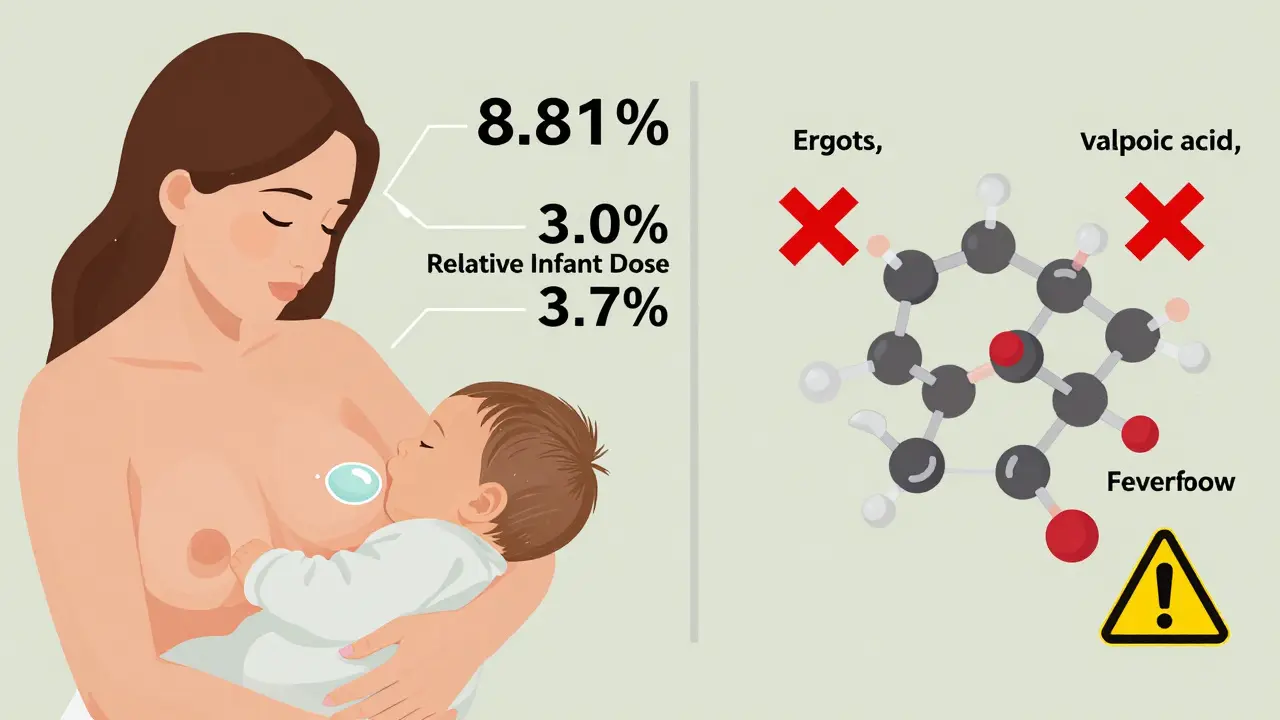
- Ergots (like DHE or Cafergot): Can trigger dangerous uterine contractions.
- Valproic acid: 11% risk of neural tube defects. A 100-fold increase over baseline.
- Feverfew: A herbal remedy some swear by. But it raises the risk of miscarriage by 38%.
What’s Safe While Breastfeeding?
Once your baby is born, your options open up. Why? Because medications pass into breast milk-but not always in harmful amounts. The key is the Relative Infant Dose (RID). Anything under 10% is considered safe. Most common migraine meds fall well below that.Acetaminophen: RID of 8.81%. Safe. No need to time feeds.
Ibuprofen: RID of just 0.65%. One of the safest NSAIDs for breastfeeding. Reduces inflammation and pain without affecting milk supply.
Sumatriptan: RID of 3.0%. Classified as L1 (safest) by Hale’s Lactation Risk Criteria. No reports of side effects in infants. But here’s the tip: take it right after nursing. Wait 3-4 hours before the next feed. That’s when levels in milk are lowest.
Rizatriptan: RID of 1.2%. Limited data, but looks safe. Same timing rule applies.
Diphenhydramine (Benadryl): RID 3.5%. Can help with nausea and sleep. But may cause drowsiness in infants. Use sparingly.
Metoclopramide and ondansetron: Both have RID under 1%. Great for nausea with migraines. Safe for long-term use.
Propranolol (for prevention): RID 0.3-0.5%. Safe, but watch your baby for unusual sleepiness or slow heart rate. Rare, but possible.
Amitriptyline: RID 1.9-2.8%. One of the best antidepressants for migraine prevention during breastfeeding. Also helps with postpartum mood.
Verapamil: RID 0.15-0.2%. Lowest among calcium channel blockers. Great for prevention if beta-blockers aren’t right for you.
Magnesium sulfate and riboflavin (B2): Both L1. No risk. Riboflavin at 400mg daily may help prevent attacks. Magnesium keeps working too.
What About Newer Treatments Like CGRP Medications?
Drugs like rimegepant (Nurtec ODT) got FDA approval in 2023 for both acute and preventive use. For breastfeeding mothers, it’s classified as L2-meaning minimal transfer to milk. But here’s the reality: there’s no long-term data on babies exposed to CGRP blockers during pregnancy. So unless you’ve tried everything else and your migraines are disabling, it’s not a first choice yet. Watch for updated guidelines in 2024.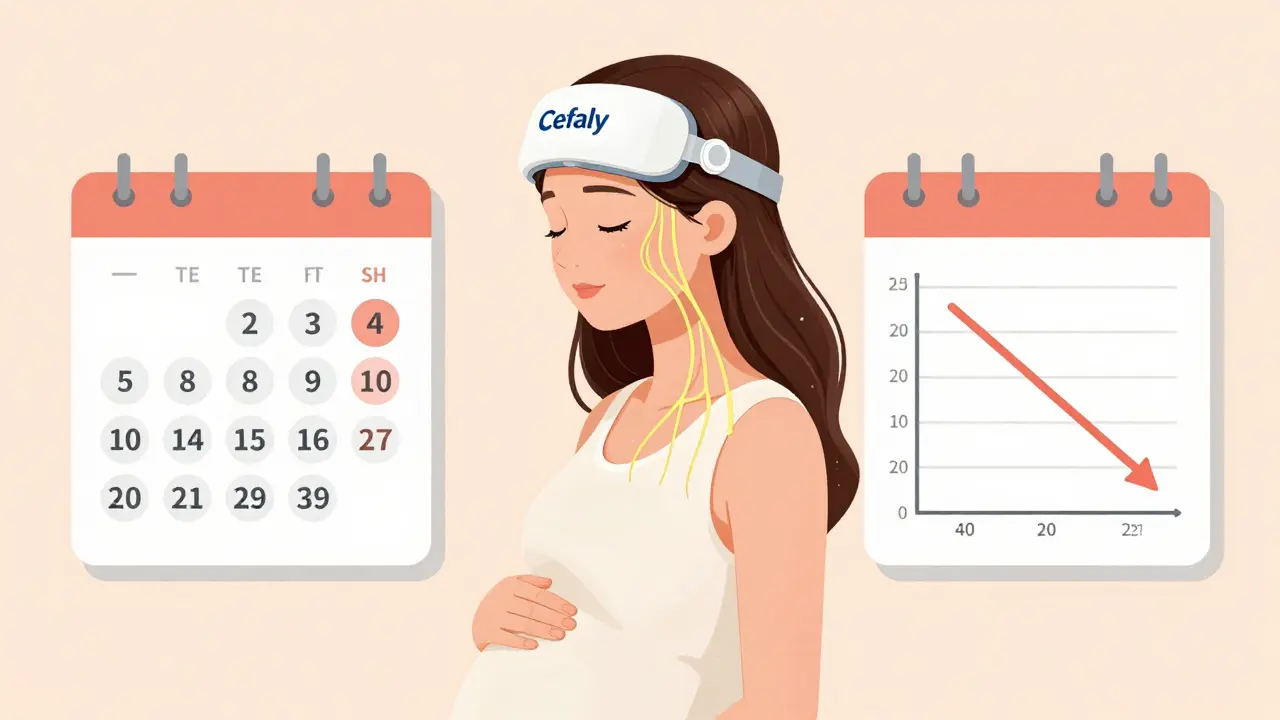
What About Devices? Cefaly, gammaCore, and More
You don’t need a pill to stop a migraine. Devices are gaining serious traction.Cefaly: A headband that sends gentle pulses to the trigeminal nerve. Used for 20 minutes daily. A 2022 study found 50% fewer migraines in 68% of users. Classified as L2 for breastfeeding. No drugs. No side effects. Just a tingling sensation.
gammaCore: A handheld device that stimulates the vagus nerve. 52% of pregnant women in a 2021 trial had at least 50% fewer migraine days. Insurance coverage is still spotty, but it’s a game-changer for those who can’t take meds.
These aren’t gimmicks. They’re FDA-cleared, non-drug options that work. And they’re growing in popularity because they’re safe, repeatable, and don’t require prescriptions.
What You Should Never Do
Don’t wait. Don’t assume it’ll get better on its own. Don’t feel guilty for needing help.Untreated migraines raise cortisol levels by 45-60%. They cut REM sleep by 30-40%. They triple the risk of postpartum depression. All of this affects your baby’s development, your bonding, your ability to care for them. Managing your migraine isn’t selfish-it’s essential.
And don’t rely on advice from random forums. Reddit, Facebook groups, and Pinterest threads can be helpful-but they’re not science. Always talk to your OB-GYN or a neurologist who specializes in headache disorders. If your doctor says, “Just wait it out,” ask for a referral to a headache specialist. Only 42% of obstetricians and 68% of neurologists feel trained to handle this. That’s a gap. Don’t let it be yours.
Practical Tips for Daily Life
- Keep a migraine diary. Note triggers: sleep, stress, weather, food, hormones.
- Use acetaminophen as your go-to. Only move to triptans if it fails.
- Time your meds. Take them right after feeding. Wait 3-4 hours before the next one.
- Ask your lactation consultant about RID values. They’re trained to help with this.
- Don’t quit breastfeeding because of migraines. 94% of women who work with a certified IBCLC continue nursing successfully.
- Get support. Talk to other moms. Join a group. You’re not alone.
Migraine doesn’t have to rule your life during pregnancy or while breastfeeding. With the right tools, you can take back control-without putting your baby at risk. The science is clear. The options are real. You just need the right information.
Is acetaminophen really safe for migraines during pregnancy?
Yes. Acetaminophen (Tylenol) is the first-line pain reliever recommended during pregnancy. Data from over 1,200 pregnancies in the Sumatriptan Pregnancy Registry shows no increased risk of birth defects, miscarriage, or developmental issues at doses up to 3,000mg per day. It’s considered the safest option for acute migraine relief during all three trimesters.
Can I take sumatriptan while breastfeeding?
Yes. Sumatriptan transfers minimally into breast milk, with a Relative Infant Dose (RID) of only 3.0%. It’s classified as L1 (safest) by Hale’s Lactation Risk Criteria. No adverse effects have been reported in infants. To be extra cautious, take it right after nursing and wait 3-4 hours before the next feed to let levels drop.
Are triptans dangerous during pregnancy?
Triptans like sumatriptan do not increase the risk of major birth defects above the normal 3% baseline. However, in the second and third trimesters, they’re associated with a slightly higher chance of prolonged labor and blood loss over 500mL during delivery. That’s why they’re not first-choice unless acetaminophen fails. Use them sparingly and only under medical guidance.
What migraine medications should I avoid during pregnancy?
Avoid ergots (like DHE or Cafergot), valproic acid, and feverfew. Ergots can trigger dangerous uterine contractions. Valproic acid carries an 11% risk of neural tube defects. Feverfew increases miscarriage risk by 38%. These are not just theoretical risks-they’re backed by large cohort studies.
Can magnesium help prevent migraines during pregnancy?
Yes. A 2021 Cochrane Review of 8 randomized trials involving 550 pregnant women found that taking 400-600mg of magnesium daily reduced migraine frequency by 35%. It has no known risks to the fetus and can be taken alongside other treatments. It’s one of the most effective non-drug options available.
Is it safe to use Cefaly while pregnant or breastfeeding?
Yes. Cefaly is a non-drug, FDA-cleared device that stimulates the trigeminal nerve through the forehead. It’s classified as L2 for breastfeeding and has no known risks during pregnancy. In a 2022 study, 68% of users reported a 50% reduction in migraine frequency. No drugs, no side effects, no transfer to baby.
What if my migraine is so bad I can’t care for my baby?
That’s a medical emergency. Untreated migraines raise cortisol, reduce sleep, and increase depression risk by 2.7-fold-all of which directly impact your ability to care for your child. If you’re struggling, talk to your doctor immediately. There are safe, effective treatments. You don’t have to suffer. And you don’t have to choose between your health and your baby’s well-being.






11 Comments