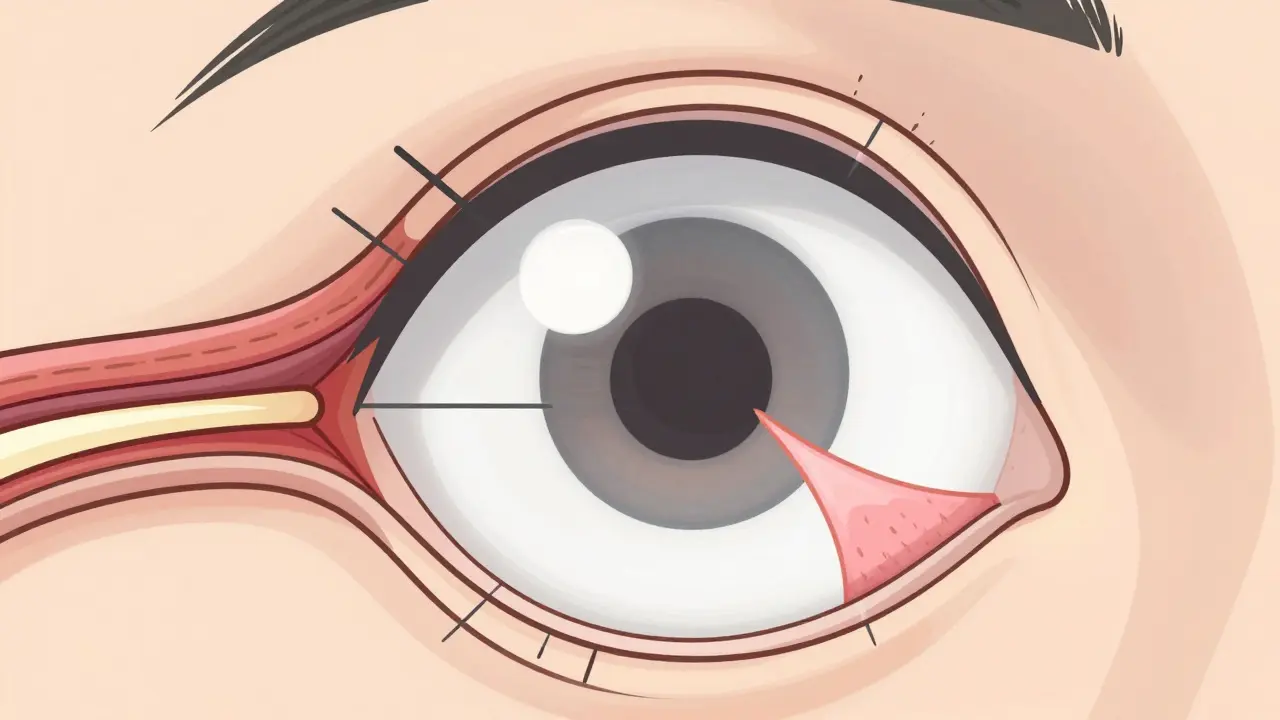
You look in the mirror and notice a pinkish, triangular patch of tissue creeping from the corner of your eye onto the clear part. It’s not just redness; it’s a physical growth. This is Pterygium, also known as Surfer's Eye. It is a noncancerous growth of the conjunctiva that extends from the sclera onto the cornea. While it might look alarming, it is a common condition driven largely by environmental factors. If you spend time outdoors, especially near water or in sunny climates, understanding how this growth develops and when to consider surgery is crucial for protecting your vision.
What Is Pterygium and Why Does It Grow?
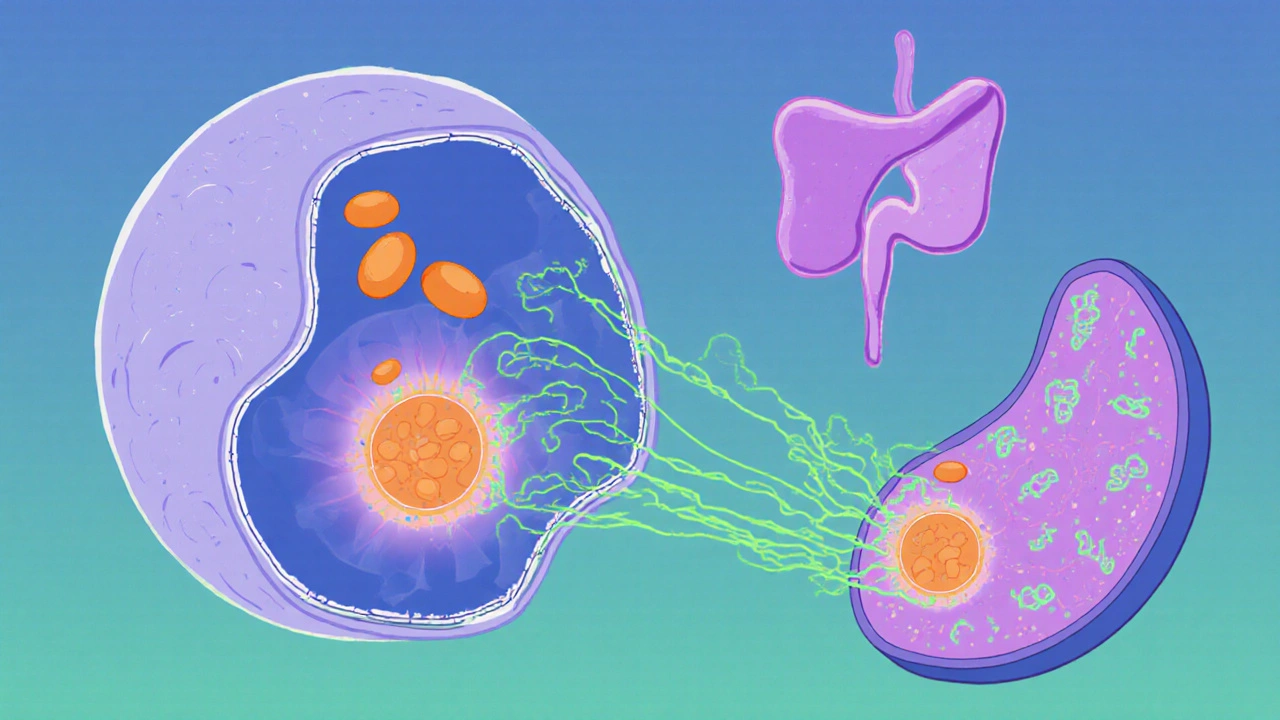
To understand why pterygium forms, we need to look at the anatomy of the eye. The conjunctiva is the clear, thin membrane covering the white part of the eye (sclera) and the inner surface of the eyelids. Normally, this tissue stays put. However, under stress from ultraviolet (UV) radiation, wind, and dust, the cells can mutate and grow abnormally. This growth starts on the sclera and pushes onto the cornea, which is the transparent front part of the eye that covers the iris, pupil, and anterior chamber. When it crosses that boundary, it becomes a pterygium.
The primary driver is ultraviolet radiation. Research confirms that cumulative UV exposure is the strongest risk factor. Dr. Robert A. Laing’s findings indicate that exceeding 15,000 joules per square meter of UV exposure correlates with a 78% increased risk. This explains why the condition is nicknamed "Surfer's Eye"-surfers, sailors, farmers, and outdoor workers are hit hardest. In Australia, for instance, approximately 12% of men over 60 have this condition. If you live within 30 degrees of the equator, your relative risk jumps by 2.3 times compared to those at higher latitudes.
It is important to distinguish pterygium from pinguecula. A pinguecula is a yellowish bump on the conjunctiva that does not cross onto the cornea. Think of pinguecula as the warning stage. About 70% of outdoor workers in tropical regions develop pinguecula, but only about 30% progress to full pterygium. Catching it early means you might prevent the more invasive growth.
Symptoms and Impact on Vision
In the early stages, you might not feel much at all. Many people discover they have a small pterygium during a routine eye exam. As it grows, however, symptoms become harder to ignore. You may experience:
- A sensation of something stuck in your eye (foreign body sensation)
- Chronic redness and irritation
- Dryness and itching
- Blurred or distorted vision
The vision issues arise because the growth physically distorts the shape of the cornea. This leads to astigmatism, an irregular curvature of the cornea or lens that causes blurred or distorted vision. When the pterygium reaches the pupil, it can block light directly, causing significant visual impairment. Additionally, the irregular surface makes wearing contact lenses nearly impossible, leading to intolerance and discomfort for those who rely on them.
Growth rates vary wildly. Some pterygia expand by 0.5 to 2 millimeters per year under continued UV exposure, while others remain stable for decades. There is no way to predict exactly how fast yours will grow, which is why regular monitoring by an ophthalmologist is essential.
Prevention: Stopping the Growth Before It Starts
If you already have a small pterygium or even just a pinguecula, prevention is your best tool to stop progression. You cannot shrink an existing growth with sunglasses, but you can halt its advance. The American Academy of Ophthalmology emphasizes that UV protection is non-negotiable.
Here is what works:
- Wear UV-blocking sunglasses: Look for lenses that block 99-100% of UVA and UVB rays. Wraparound styles are better because they prevent light from entering from the sides.
- Use a wide-brimmed hat: This reduces direct overhead sunlight hitting your eyes.
- Lubricate your eyes: Artificial tears help reduce the friction and inflammation caused by dryness and wind.
User feedback supports this approach. On Reddit’s r/EyeHealth forum, users reported that consistent use of UV-blocking sunglasses stopped the progression of their early-stage pterygium over two years. One user noted, "Wearing UV-blocking sunglasses daily has stopped the progression... according to my last two annual check-ups." It is a simple habit change that yields massive long-term benefits.

When Surgery Becomes Necessary
Not every pterygium needs surgery. In fact, the American Optometric Association notes that surgery is usually reserved for serious cases. Doctors typically recommend intervention if:
- The growth is encroaching on the pupil and affecting vision.
- You have severe astigmatism caused by the distortion.
- You experience chronic pain or irritation that drops don’t resolve.
- You cannot tolerate contact lenses due to the rough surface.
- Cosmetic concerns are significant enough to impact quality of life.
If you meet these criteria, you’ll likely be referred to an ophthalmologist for surgical evaluation. The goal isn’t just removal; it’s preventing recurrence, which is historically high.
Surgical Options and Recurrence Rates
Simply cutting out the pterygium used to result in a 30-40% recurrence rate. That was unacceptable. Today, surgeons use advanced techniques to lower that number significantly. Here are the main approaches:
| Technique | Description | Recurrence Rate | Best For |
|---|---|---|---|
| Simple Excision | Removing the growth without grafting | 30-40% | Rarely used now due to high recurrence |
| Excision with Mitomycin C | Removal + application of anti-scarring medication | 5-10% | Primary surgeries where cost is a factor |
| Conjunctival Autograft | Removal + transplanting healthy tissue from your own eye | 8.7% | Standard of care for most patients |
| Amniotic Membrane Transplant | Removal + using donated amniotic tissue | ~8% success in preventing regrowth | Recurrent cases or large defects |
Conjunctival Autograft is currently the gold standard. The surgeon removes the pterygium and then takes a small piece of healthy conjunctiva from under your upper eyelid to cover the bare spot on the sclera. This heals faster and looks better than leaving the area raw. According to a 2022 meta-analysis in the British Journal of Ophthalmology, this method boasts a recurrence rate of just 8.7%.
Mitomycin C is a chemotherapy agent applied briefly during surgery to inhibit cell proliferation. It reduces recurrence to 5-10% but carries risks like corneal melting if not dosed correctly. It’s often used in combination with excision.
For recurrent cases, the European Society of Cataract & Refractive Surgeons recommends amniotic membrane transplantation. This uses donated human amniotic tissue to promote healing and reduce inflammation. Multicenter trials show a 92% success rate in preventing regrowth for these difficult cases.
Recovery and Post-Operative Care
Surgery itself is quick, often taking around 35 minutes. But the recovery requires patience. Most patients report significant relief from irritation immediately after the procedure. However, post-operative discomfort can last 2-3 weeks. You will need to use steroid and antibiotic eye drops frequently for several weeks to prevent infection and control inflammation.
New products like OcuGel Plus, approved by the FDA in March 2023, offer preservative-free lubrication specifically for post-surgery patients, showing 32% greater symptom relief than standard artificial tears. Following the drop regimen strictly is critical. Skipping doses increases the risk of scarring and recurrence.
Patients should avoid swimming, heavy lifting, and dusty environments for at least two weeks. Redness may persist for months, but this fades gradually. Regular follow-up appointments ensure the graft is integrating properly and no signs of regrowth appear.
Frequently Asked Questions
Is pterygium cancerous?
No, pterygium is a benign (noncancerous) growth. It does not spread to other parts of the body. However, it can grow large enough to interfere with vision and cause discomfort, which is why medical attention is sometimes needed.
Can pterygium go away on its own?
No, once a pterygium has formed, it will not disappear without treatment. Eye drops and sunglasses can manage symptoms and slow growth, but they cannot remove the existing tissue. Surgery is the only way to eliminate it.
Why do I get pterygium in both eyes?
Pterygium is caused by environmental factors like UV exposure, which affects both eyes equally. Approximately 60% of cases in high-risk populations are bilateral. If you have one, you are at higher risk for developing the other, making consistent sun protection vital for both eyes.
How much does pterygium surgery cost?
Costs vary widely by location and insurance coverage. In the US, out-of-pocket costs can range from $1,000 to $5,000 per eye if not covered by insurance. Since it is often considered medically necessary if vision is affected, many insurance plans cover a portion of the procedure. Check with your provider for specific details.
Does pterygium surgery restore perfect vision?
Surgery removes the obstruction and can improve vision, but it may not completely reverse astigmatism caused by long-term corneal distortion. Some patients still need glasses or contact lenses after healing. The primary goals are to stop progression, relieve symptoms, and prevent further vision loss.