
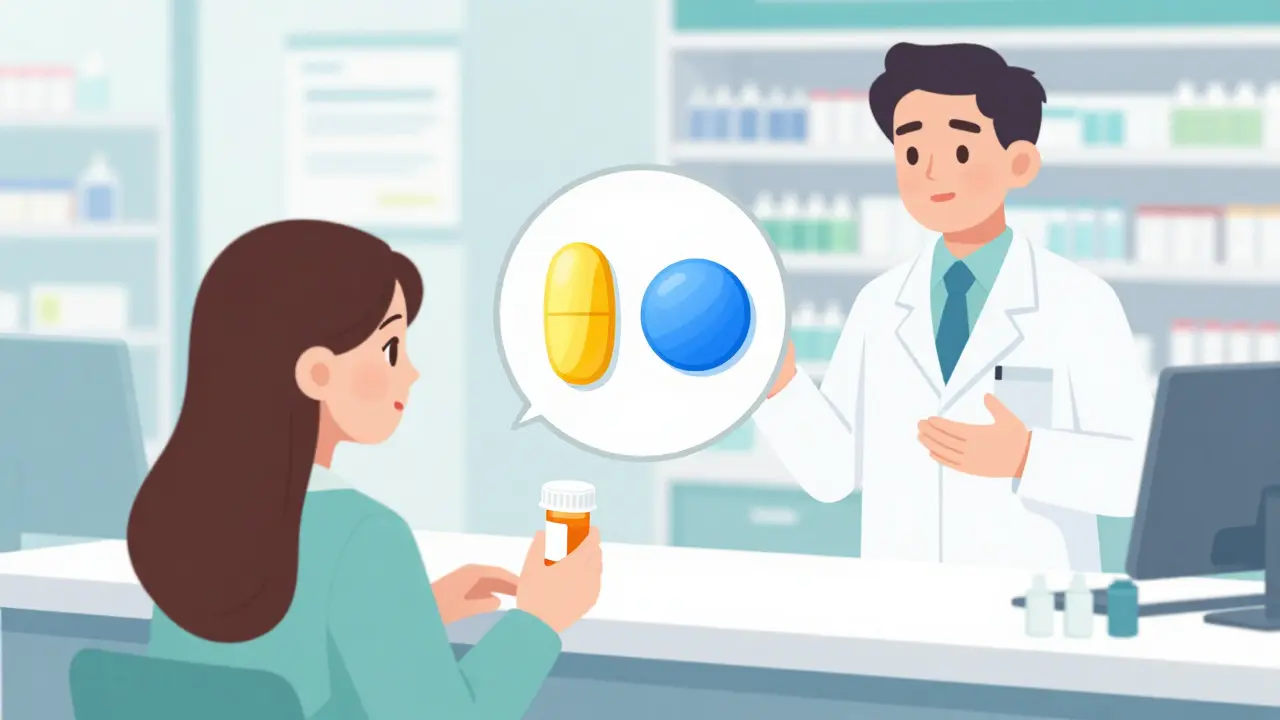
Imagine a patient walking up to the pharmacy counter, prescription in hand, only to freeze when they see a pill that is blue and round instead of the yellow oval they've taken for a decade. To the patient, it looks like a different drug. To the pharmacist, it's a bioequivalent generic that saves the patient money. This gap in perception is where the daily struggle of generic substitution lives.
Substitution isn't just about swapping labels; it's a complex interaction between law, science, and human psychology. While the goal is to lower healthcare costs-often reducing patient spending by about 21%-the actual process of getting a patient to trust a generic can be a professional minefield for the person behind the counter.
The Friction of Implementation
Most pharmacists are on board with generics. In fact, research shows about 91% of healthcare professionals see the right to substitute as a benefit. However, there is a massive difference between agreeing with a policy and actually executing it during a rush hour at the pharmacy. About 70% of pharmacists report that substitution is actually difficult to implement in a real-world setting.
The friction usually comes from a lack of coordination with the prescribing doctor. When a physician doesn't mention the possibility of a generic, the pharmacist becomes the primary educator. According to data from the U.S. Pharmacist, over 64% of patients don't receive any info about substitution options from their doctors. This means the pharmacist has to explain the science of bioequivalence while simultaneously trying to fill fifty other prescriptions.
This burden is even heavier for those dealing with Polypharmacy is the simultaneous use of multiple medications by a single patient, often increasing the risk of drug interactions . When a patient is taking ten different pills, a change in the color or shape of just one can lead to total confusion, potentially causing medication errors or patients skipping doses because they don't recognize their medicine.
The Psychology of "Cheap" vs. "Effective"
One of the biggest hurdles pharmacists face is the "lower price equals lower quality" myth. Patients often assume that if a drug is significantly cheaper, it must be less potent or made with inferior ingredients. This isn't just a guess; it's a deep-seated mistrust in the pharmaceutical industry, particularly when the generic is manufactured overseas.
Physical attributes play a huge role here. When the shape, size, or color of a pill changes, patients often experience "substitution anxiety." This is particularly common in patients with dementia or mental illness, where consistency is key to adherence. In Australia, pharmacists have noted that instructing these "resistant customers" takes up a disproportionate amount of their time, often requiring long, repetitive explanations to build trust.
| Condition Type | Acceptance Rate | Primary Barrier |
|---|---|---|
| Acute Conditions | 82% | Minor skepticism about efficacy |
| Chronic Diseases | 72% | Fear of instability or loss of control |
Clinical Red Lines: When Substitution is Risky
While most drugs are safe to swap, pharmacists have very real concerns about specific classes of medication. The biggest worry centers on Narrow Therapeutic Index (NTI) drugs are medications where small differences in dose or blood concentration may lead to serious therapeutic failures or adverse drug reactions . For these drugs, the standard "bioequivalent" window might not be enough. Switching a stable patient on an NTI drug to a generic can potentially cause a relapse or toxicity, which far outweighs any cost savings.
Anti-epileptic drugs (AEDs) are another area of concern. In neurology, a patient might be perfectly stable on a specific brand. Introducing a generic-even one that meets FDA standards-can occasionally trigger a breakthrough seizure in highly sensitive patients. This is why many pharmacists push for "dispense as written" in these specific cases, despite the pressure to save money.
Then there are Biosimilars are biologic medications that are highly similar to another approved biologic product, but not identical copies like small-molecule generics . Unlike traditional generics, biosimilars are made from living cells. Because their structure is more complex, they aren't always interchangeable. Pharmacists have to navigate a much steeper learning curve here, as they can't simply rely on the same rules used for a generic aspirin or blood pressure pill.
Bridging the Information Gap
To make substitution work, the educational burden needs to be shared. Currently, it's too heavily weighted toward the pharmacy counter. A huge amount of patient resistance vanishes after a short, informed discussion, but the window for that discussion is tiny.
The FDA is the United States Food and Drug Administration, which regulates the safety and efficacy of generic drugs through the ANDA process has found that the average difference in absorption between a brand and its generic counterpart is only about 3.5%. This is a powerful statistic that pharmacists use to reassure skeptical patients. When a patient understands that the difference is negligible, their willingness to switch increases.
However, we see a gap in what patients are actually told. While nearly 80% of patients know substitution is possible, only about 38% are told they actually have the right to decline it. This lack of transparency can actually create more mistrust. When patients feel they are being forced into a cheaper option for the pharmacy's benefit rather than their own, they become more resistant.
Practical Strategies for Better Outcomes
How do pharmacists actually handle this in the wild? The most successful ones move from a "transactional" approach to a "consultative" one. Instead of saying "we're switching you to the generic," they might say, "the manufacturer has changed the pill's color to blue, but the active ingredient is identical and it will work exactly the same way."
Key strategies include:
- Pre-empting the change: Alerting patients about manufacturer changes before they see the pill.
- Targeted education: Focusing on the 3.5% absorption stat for those who doubt efficacy.
- Physician collaboration: Guiding doctors on which NTI medications should absolutely not be substituted.
- Patient-centered timing: Identifying polypharmacy patients early to spend more time explaining the changes in their medication tray.
Ultimately, generic substitution is a tool for accessibility. By removing the financial barrier to medication, more people stay adherent to their treatment. But that success depends on the pharmacist's ability to manage the human element of the switch.
Is a generic drug always the same as a brand-name drug?
In terms of the active ingredient, strength, and dosage form, yes. The FDA requires generics to be bioequivalent, meaning they must deliver the same amount of active ingredient into the bloodstream at a similar rate. However, inactive ingredients (fillers, dyes) can differ, which is why the pill's appearance changes.
Why are some medications not substituted for generics?
Certain medications, known as Narrow Therapeutic Index (NTI) drugs or specific anti-epileptics, have a very small window between an effective dose and a toxic dose. In these cases, even a tiny difference in how a generic is absorbed can be dangerous, so pharmacists or doctors may insist on the brand name.
Can I refuse a generic substitution?
Yes, patients generally have the right to request the brand-name version. However, you should check with your insurance provider, as many insurance plans will only cover the cost of the generic version unless the doctor provides a specific medical reason for the brand.
What is the difference between a generic and a biosimilar?
Generics are exact chemical copies of small-molecule drugs. Biosimilars are versions of complex biologic drugs (made from living cells). Because biologics are so large and complex, biosimilars are "highly similar" but not identical, meaning they require more rigorous clinical testing to prove they work the same way.
Why does my pharmacist spend so much time explaining generics to me?
Because a change in a pill's appearance can lead to confusion or the belief that the drug is inferior. Pharmacists want to ensure you feel confident in the medication's efficacy so that you don't stop taking it, which would negatively impact your health.
Next Steps and Troubleshooting
For Patients: If you are nervous about a generic switch, ask your pharmacist for the "equivalence rating" of the drug. If you have a history of sensitivity to a specific medication, mention this to both your doctor and pharmacist before the prescription is filled.
For Pharmacists: When dealing with high-resistance patients, try to shift the conversation from "cost savings" to "therapeutic equivalence." Using data-backed points about absorption rates often works better than focusing on the price tag.
For Prescribers: Mentioning the generic option during the initial consultation can reduce the pharmacy's workload by up to 50% and significantly increase the patient's trust in the substitution process.






14 Comments