
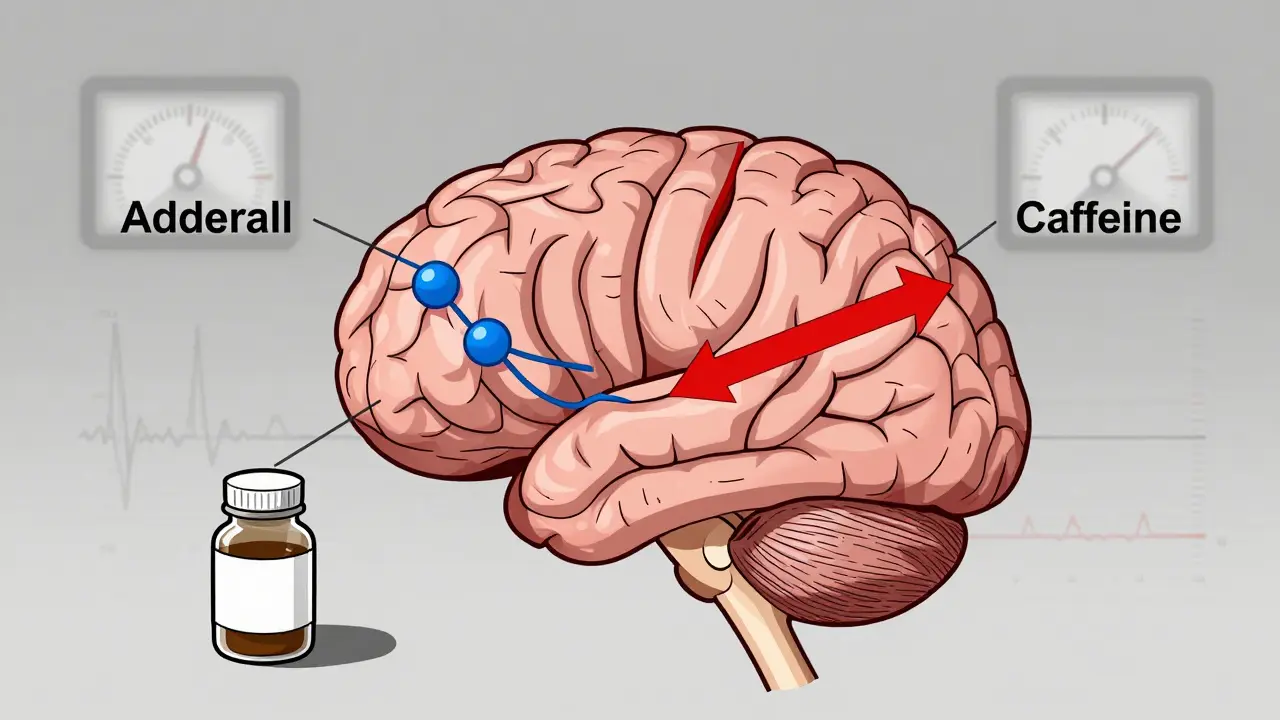
Millions of people with ADHD rely on medications like Adderall to stay focused, manage impulsivity, and get through the day. But many of them also drink coffee - sometimes multiple cups. It’s not just habit. Some swear it helps. Others end up in panic mode, heart racing, jittery, and overwhelmed. The truth? Caffeine and ADHD medications don’t just mix - they amplify. And that can be good or dangerous, depending on how you do it.
Why People Combine Caffeine with ADHD Meds
Caffeine is a stimulant. So is Adderall. Both boost dopamine in the brain, which is exactly what people with ADHD need. Dopamine helps with attention, motivation, and task completion. When someone with ADHD takes Adderall, it fills a chemical gap. When they drink coffee, they’re adding another nudge in the same direction. That’s why so many report better focus - especially in the morning. But here’s the catch: caffeine doesn’t come with a prescription. You can’t control the dose. One cup of coffee might have 95 mg. Another might have 200 mg. Energy drinks? Some pack 300 mg or more. And then there’s tea, chocolate, pre-workout powders, even some headache meds. Hidden caffeine is everywhere. A 2023 Reddit thread with over 1,200 comments from ADHD users showed that 62% regularly combine caffeine with their medication. Of those, 41% said it helped them focus. But 59% admitted it made their anxiety worse. That’s not a small risk. It’s a common one.The Science Behind the Interaction
Adderall works by blocking the reuptake of dopamine and norepinephrine. That means more of these chemicals stay active in the brain. Caffeine blocks adenosine receptors - the brain’s natural “slow down” signal. This makes you feel alert. But it also causes your body to release more adrenaline. When you combine the two, you’re essentially stepping on both the gas and the brake at the same time. Studies show caffeine alone is 60-70% less effective than prescription stimulants for treating core ADHD symptoms. But when paired with Adderall, it can push the effects further - sometimes beyond helpful, into harmful. A 2020 study on five boys with ADHD found that caffeine alone made impulse control worse. But when paired with L-theanine (a calming amino acid found in tea), it actually improved focus and reaction time. That’s important: it’s not caffeine itself that’s the problem. It’s caffeine without balance. The real danger lies in the cardiovascular system. Both substances raise heart rate and blood pressure. A 2022 study from Johns Hopkins found that combining them without medical oversight increases the risk of tachycardia by 37% and hypertension by 29%. That’s not theoretical. Emergency room visits linked to stimulant-caffeine combos jumped from 12,400 in 2019 to 15,750 in 2023, according to the FDA.Who’s at Highest Risk?
Not everyone reacts the same. Genetics play a big role. About 40% of people are “slow metabolizers” of caffeine because of a variation in the CYP1A2 gene. Their bodies take longer to break it down. For them, even one cup of coffee can linger for 8-10 hours. If they take Adderall at 8 a.m., and coffee at noon, they’re stacking two stimulants during peak overlap - a recipe for palpitations, insomnia, or worse. Children and teens are another high-risk group. The American Academy of Pediatrics specifically warns against combining caffeine with stimulants in this age group. Their bodies are still developing. Their hearts are more sensitive. And they’re more likely to consume energy drinks or sugary sodas with hidden caffeine. Adults with pre-existing heart conditions are also at greater risk. A 2023 JAMA Internal Medicine study found that 23% of adults with ADHD also have cardiovascular issues. For them, adding caffeine is like pouring gasoline on a smoldering fire.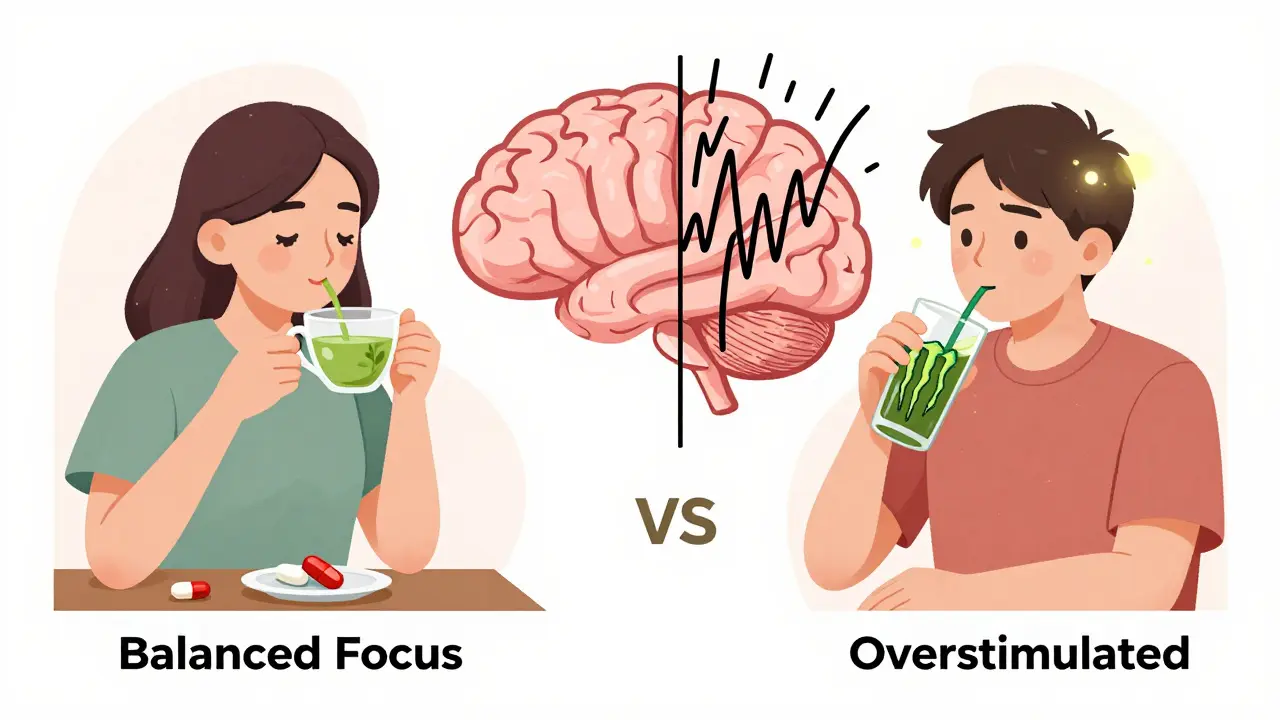
What Does Safe Use Look Like?
There’s no official guideline that says “safe combo = X mg caffeine + Y mg Adderall.” But real-world clinical experience gives us practical rules.- Start low. If you’re new to combining them, try no more than 100 mg of caffeine - about one small coffee. That’s less than half the daily limit the FDA says is safe for healthy adults.
- Time it right. Wait at least 4-5 hours between taking your ADHD medication and drinking caffeine. Adderall lasts 10-13 hours. Caffeine’s half-life is about 5 hours. If you take both too close together, you’re doubling the peak effect.
- Track your body. Use a simple log: time of medication, time and amount of caffeine, heart rate (if you have a wearable), mood, anxiety level. After a few weeks, patterns emerge. Maybe you feel great with half-caf at 10 a.m., but crash after 2 p.m. That’s data you can use.
- Avoid energy drinks. They’re not just caffeine. They’re sugar, taurine, guarana, and sometimes other stimulants. That’s a triple threat.
- Take with food. Caffeine on an empty stomach hits harder and faster. Food slows absorption, which can smooth out the spike.
The L-Theanine Factor
If you’ve ever felt calm after drinking green tea, you’ve felt the effect of L-theanine. It’s not a drug. It’s a natural amino acid that promotes relaxation without drowsiness. Research shows it can counteract the jitteriness caffeine causes. A 2023 NIH-funded pilot study with 127 participants found that a 3:1 ratio of L-theanine to caffeine (like 300 mg L-theanine with 100 mg caffeine) improved focus and reduced anxiety in adults with ADHD. The combination lowered activity in the brain’s default mode network - the area responsible for mind-wandering and distraction. You can get L-theanine from green tea (about 20 mg per cup) or as a supplement (100-200 mg per capsule). It’s not a magic fix. But for people who get anxious on caffeine or stimulants, it’s one of the safest ways to balance the effects.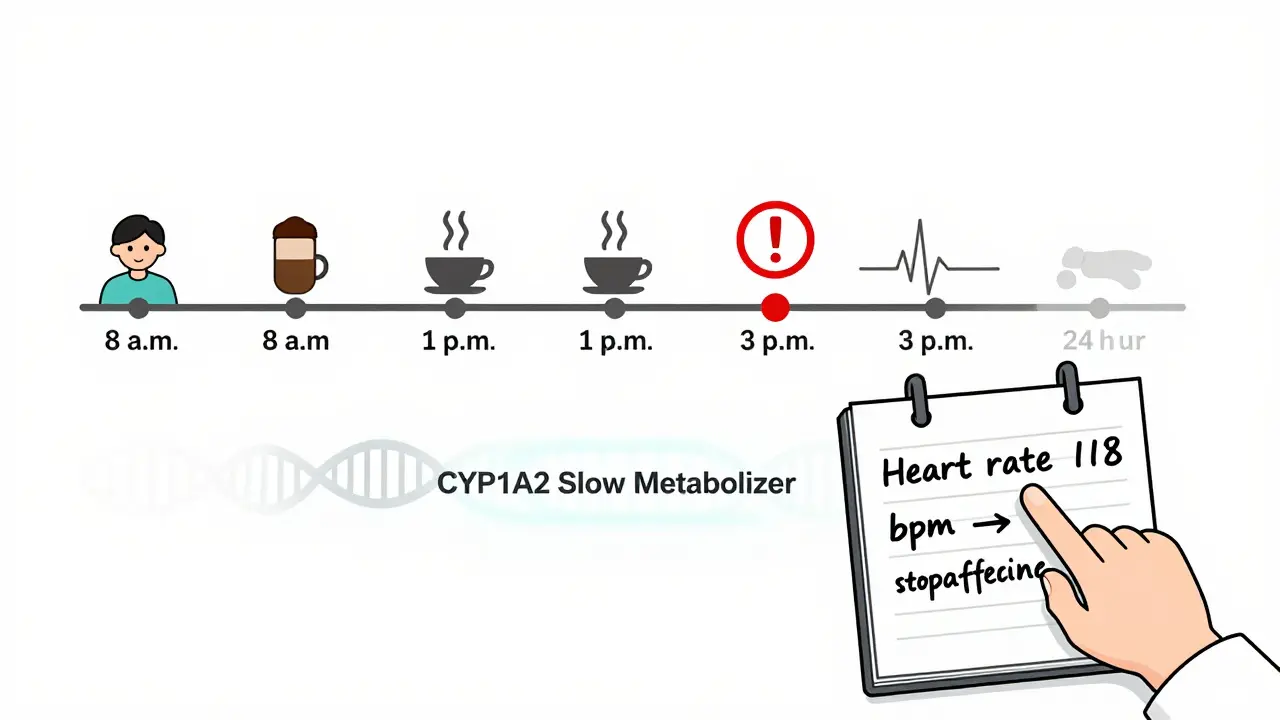
What to Do If Things Go Wrong
You took your Adderall. You had your coffee. Now your heart feels like it’s trying to escape your chest. Your hands are shaking. You can’t sit still. You’re dizzy. What now?- Stop all stimulants. No more coffee, no more energy drinks, no more pills.
- Hydrate. Drink water. Caffeine dehydrates. Dehydration makes side effects worse.
- Rest. Lie down. Close your eyes. Breathe slowly. Your nervous system needs to reset.
- Call your doctor. Don’t wait. If your heart rate stays above 120 bpm, or you feel chest pain, dizziness, or trouble breathing - go to urgent care. This isn’t normal jitteriness. It’s a medical red flag.
What Experts Say
Dr. Charles Parker, author of 20 Instant Lessons for ADHD, says: “The combination can create a synergistic effect that amplifies both therapeutic benefits and side effects, requiring careful titration.” Dr. David Goodman at Johns Hopkins warns: “Combining two CNS stimulants without medical supervision increases the risk of tachycardia by 37% and hypertension by 29%.” And the FDA? They haven’t approved caffeine as an ADHD treatment. Their 2024 draft guidance says: “Routine caffeine use with ADHD medications without physician supervision is not recommended.” The message is clear: don’t self-experiment. Don’t assume it’s harmless because it’s “natural.”The Bigger Picture
Caffeine is the world’s most widely used psychoactive substance. ADHD medications are one of the fastest-growing drug categories. They’re both here to stay. But that doesn’t mean they should be mixed without care. The future of ADHD management isn’t about choosing between coffee and Adderall. It’s about using both wisely - with knowledge, monitoring, and professional support. Personalized medicine is coming. Soon, genetic tests may tell you if you’re a fast or slow caffeine metabolizer. That could change everything. Until then, treat caffeine like a drug - because it is. Know your dose. Know your timing. Know your limits. And if you’re unsure? Talk to your doctor. Not your Reddit thread. Not your friend who “swears by it.” Your doctor.Can I drink coffee while taking Adderall?
Yes, but with caution. Many people combine them, but it can increase anxiety, heart rate, and blood pressure. Start with a small amount - no more than 100 mg of caffeine (about one small coffee) - and wait at least 4-5 hours after taking your Adderall. Monitor your body closely for signs of overstimulation.
Does caffeine make ADHD medication work better?
Caffeine can enhance focus for some people, but it’s not as reliable or powerful as prescription stimulants. Studies show caffeine alone is 60-70% less effective than Adderall for core ADHD symptoms. When combined, it may boost effects slightly, but it also raises the risk of side effects like jitteriness, insomnia, and heart palpitations.
Is caffeine safe for kids with ADHD?
No. The American Academy of Pediatrics advises against combining caffeine with ADHD medications in children and teens. Their bodies are more sensitive to stimulants, and caffeine often comes from sugary drinks or energy drinks that can worsen behavior and sleep. Stick to prescribed treatments and avoid caffeine unless a doctor specifically approves it.
What are the signs I’m taking too much caffeine with my ADHD meds?
Watch for: heart palpitations, chest tightness, dizziness, shaking hands, extreme anxiety, trouble sleeping, or nausea. If your heart rate stays above 120 bpm at rest, or you feel faint, stop all stimulants and seek medical help immediately. These aren’t normal side effects - they’re warning signs.
Should I take L-theanine with caffeine and Adderall?
L-theanine, found in green tea or as a supplement, may help reduce the jitteriness caused by caffeine without dulling focus. Early research suggests a 3:1 ratio of L-theanine to caffeine (like 300 mg L-theanine with 100 mg caffeine) improves calm focus in adults with ADHD. It’s low-risk and worth trying under a doctor’s guidance - especially if you get anxious on stimulants.
How long does caffeine stay in my system if I’m on Adderall?
Caffeine’s half-life is about 5 hours on average - meaning half of it is gone in 5 hours. But for slow metabolizers (about 40% of people), it can last 8-10 hours. Adderall lasts 10-13 hours. So if you take both too close together, you’re overlapping peak effects. Wait 4-5 hours between doses to reduce risk.
Can caffeine interfere with ADHD medication long-term?
There’s no evidence caffeine reduces the long-term effectiveness of ADHD meds. But chronic use can lead to tolerance - meaning you need more caffeine to feel the same effect. That increases your risk of side effects. Long-term, the bigger danger is cardiovascular strain. Regularly combining stimulants raises blood pressure and heart rate, which can damage your heart over time.
What should I tell my doctor about my caffeine use?
Be honest. Tell them how much caffeine you drink daily, when you drink it, and what symptoms you notice - anxiety, sleep issues, heart racing, etc. Bring your log if you have one. Your doctor needs this info to adjust your medication, check for risks, and help you find safer ways to manage focus without overstimulating your system.



11 Comments