Breastfeeding Medication Timing Calculator
Select Medication Type
Timing Analysis
Select a medication to see timing recommendations
Choose from the list to analyze drug transfer patterns and safe nursing windowsCustom Calculation Tool
Nurse immediately before taking medication to ensure baby gets milk with lowest drug concentration.
Avoid nursing during this period. Drug levels are highest in your blood and breast milk.
You can typically resume normal nursing after this time as drug levels decrease significantly.
Imagine you just had surgery or are managing a chronic condition, and your doctor prescribes a strong painkiller or antibiotic. You’re breastfeeding. Do you stop nursing? Do you pump and dump? Or is there a smarter way to keep feeding your baby while staying healthy yourself?
The answer isn’t always black and white. For decades, the default advice was often to pause breastfeeding entirely when taking medication. But modern pharmacology has shifted that narrative. Today, we know that breastfeeding medication timing can significantly reduce the amount of drug your baby receives-sometimes by up to 75%-without compromising your own health. This approach relies on understanding how drugs move through your body and into your milk, allowing you to schedule doses strategically.
This guide breaks down the science behind drug transfer, identifies which medications require careful scheduling, and provides actionable steps to protect your baby while maintaining your milk supply. We’ll look at specific data from authoritative sources like the Academy of Breastfeeding Medicine (ABM) and the American Academy of Pediatrics (AAP) to help you make informed decisions.
Understanding How Drugs Enter Breast Milk
To time your medication correctly, you first need to understand the mechanics of drug transfer. It’s not random. Medications pass from your bloodstream into your breast milk based on concentration gradients. Simply put, the higher the level of drug in your blood, the more likely it is to appear in your milk.
Two key concepts drive this process:
- Peak Plasma Concentration: This is the moment after you take a dose when the drug level in your blood is highest. For most oral medications, this happens between 1 to 2 hours after ingestion.
- Half-Life: The time it takes for half of the drug to leave your system. Short half-life drugs clear quickly; long half-life drugs linger.
The goal of timing strategies is simple: avoid breastfeeding during the peak plasma window. If you nurse right before taking your medication, then wait until the drug levels drop before the next feed, you minimize what your baby ingests.
However, this strategy only works well for drugs with short half-lives. For medications that stay in your system for days (like some antidepressants or benzodiazepines), timing matters less because the drug level remains relatively constant. In those cases, other factors like the drug’s molecular weight and protein binding become more important.
The Relative Infant Dose (RID): Your Safety Metric
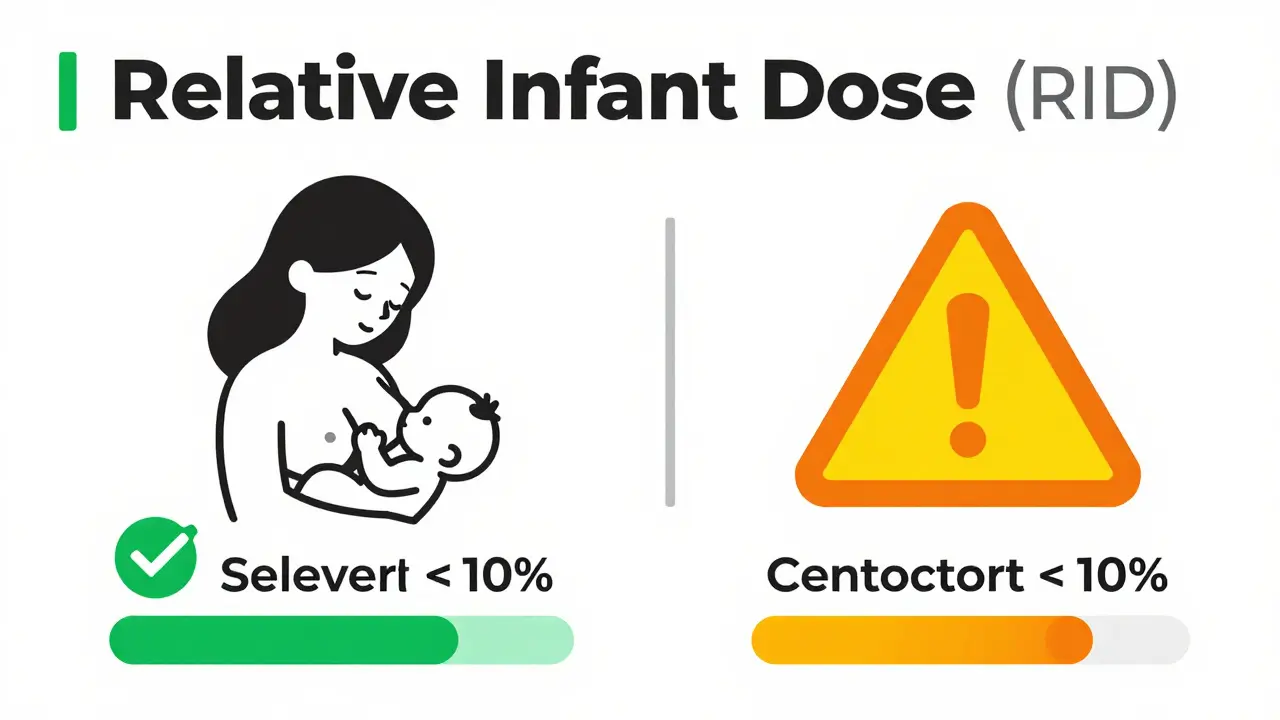
How do experts decide if a medication is safe? They use a metric called the Relative Infant Dose (RID). This percentage represents the amount of drug the infant receives through breast milk compared to the maternal dose, adjusted for weight.
Here’s the general rule of thumb used by clinicians and referenced in resources like Hale’s Medications and Mothers’ Milk:
- RID < 10%: Generally considered safe for most infants.
- RID 10-30%: Requires caution and monitoring for side effects.
- RID > 30%: Often contraindicated or requires strict avoidance of breastfeeding.
For example, codeine has an RID ranging from 0.6% to 8.1%, which sounds safe. But here’s the catch: metabolism varies wildly between individuals. Some mothers are "ultra-rapid metabolizers," converting codeine into morphine much faster than others. This can spike the effective dose to dangerous levels for the baby, regardless of timing. That’s why the FDA issued boxed warnings against using codeine and tramadol in breastfeeding women, overriding any timing benefits.
Timing Strategies by Medication Class
Not all drugs behave the same way. Let’s look at how timing applies to common categories prescribed to new mothers.
| Drug Class | Peak Time | Half-Life | Recommended Strategy |
|---|---|---|---|
| Ibuprofen/Acetaminophen | 1-2 hours | Short (2-4 hrs) | Nurse immediately before dose. Safe profile. |
| Opioids (e.g., Oxycodone) | 0.5-2 hours | Short (3-4 hrs) | Nurse before dose. Wait 2-3 hours post-dose before next feed. |
| Benzodiazepines (Diazepam) | Variable | Long (44-48 hrs) | Timing ineffective. Use lowest dose; monitor baby for sedation. |
| Antihistamines (Diphenhydramine) | 1-2 hours | Medium (4-8 hrs) | Avoid if possible due to milk supply suppression risk. |
Analgesics (Pain Relievers): Ibuprofen and acetaminophen are the gold standards. They have low RIDs and short half-lives. The American Academy of Family Physicians (AAFP) recommends these as first-line agents. Timing them involves nursing right before you take the pill, ensuring the peak concentration hits your blood while your baby is asleep or fed from stored milk.
Opioids: These require extreme caution. Morphine and hydrocodone are generally preferred over oxycodone, which the FDA warns can cause central nervous system depression in up to 20% of exposed infants. The ABM Protocol #21 advises mothers to breastfeed their infants before taking opioids. If you must take an opioid, try to space out feeds so that at least 2-3 hours pass after dosing before the next nursing session. Watch your baby closely for excessive sleepiness, poor feeding, or weak cry.
Benzodiazepines: Drugs like diazepam (Valium) have very long half-lives. Because they accumulate in fat tissue and release slowly, timing doesn’t help much. Instead, clinicians recommend using shorter-acting alternatives like alprazolam (Xanax) if necessary, and still keeping doses low. Always discuss psychiatric meds with a specialist familiar with lactation.
Practical Steps to Implement Timing Safely
Knowing the theory is one thing; doing it with a newborn who eats every two hours is another. Here’s how to make it work in real life.
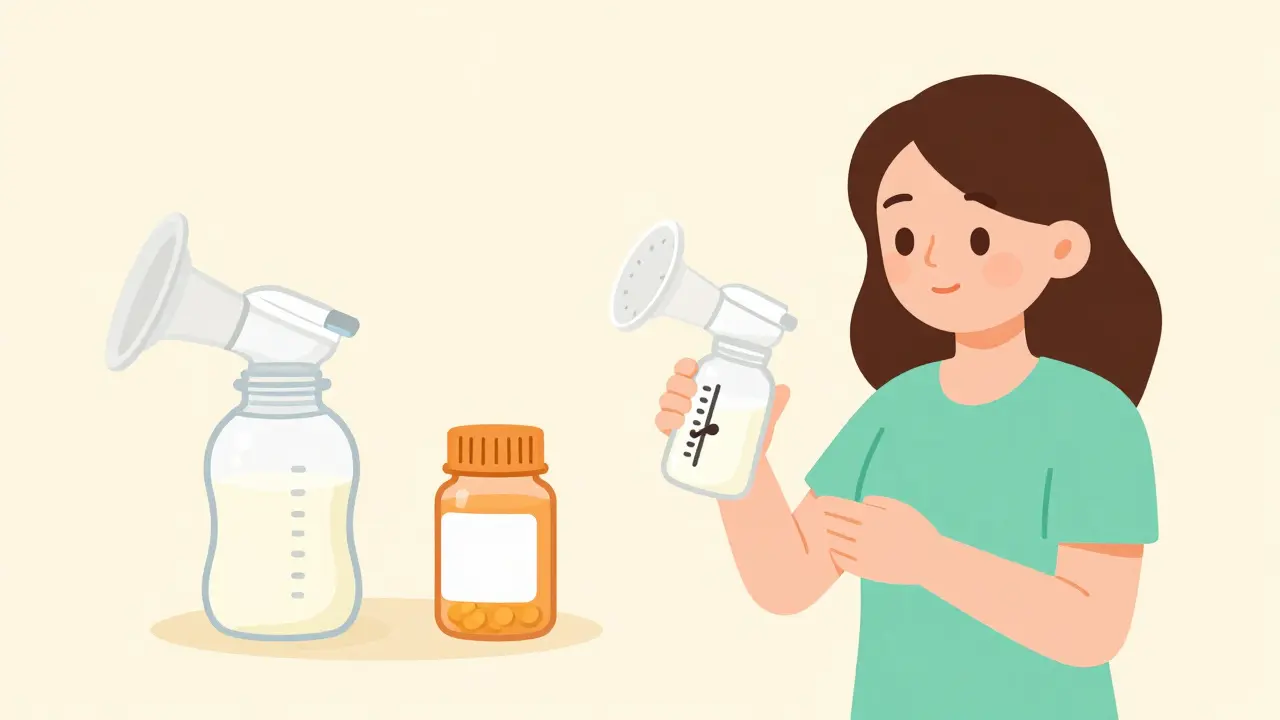
- Plan Ahead with Stored Milk: Before you take your medication, pump or hand-express milk to store for the upcoming feeds. This gives you a buffer. If your drug peaks in 90 minutes, you have roughly 1.5 hours of "safe" milk ready.
- Sync with Sleep Cycles: If your baby sleeps longer stretches at night, consider taking long-acting medications right before bed. This maximizes the gap between dose and the next morning feed.
- Use Immediate-Release Formulations: Whenever possible, ask your doctor for immediate-release pills rather than extended-release ones. Extended-release drugs maintain steady high levels in your blood for longer, making timing strategies useless.
- Monitor Your Baby: Look for signs of drug exposure: unusual drowsiness, irritability, changes in stool pattern, or poor weight gain. If you see these, contact your pediatrician immediately.
- Consult Reliable Resources: Don’t guess. Use databases like LactMed, maintained by the U.S. National Library of Medicine, which provides detailed pharmacokinetic data for over 1,000 medications.
It usually takes 1-2 weeks to establish a routine that works for both you and your baby. Be patient. If your baby is unpredictable, having a stash of pre-pumped milk is your best insurance policy.
When Timing Isn't Enough: Alternatives and Warnings
Sometimes, no amount of timing makes a drug safe. Certain medications are strictly contraindicated during breastfeeding. These include:
- Chemotherapy agents: Highly toxic to rapidly dividing cells.
- Radioactive isotopes: Used in diagnostic scans.
- Illegal street drugs: Cocaine, heroin, and methamphetamine.
- Codeine and Tramadol: Due to the risk of ultra-rapid metabolism causing respiratory depression in infants.
If you’re prescribed one of these, you may need to temporarily pause breastfeeding. This doesn’t mean you have to give up entirely. Continue pumping regularly to maintain your supply. Once the drug clears your system (usually after several half-lives), you can resume nursing.
Also, remember that the first few days after birth are unique. Colostrum production is low, and drug transfer rates are minimal. The Mayo Clinic notes that medicines used in the first 3-4 days postpartum transfer at very low levels. This might allow for short-term use of certain medications without significant risk, but always confirm with your provider.
Frequently Asked Questions
How long should I wait after taking medication to breastfeed?
For most short-half-life medications (like ibuprofen or acetaminophen), waiting 2-3 hours after dosing is sufficient for plasma levels to drop significantly. However, this depends on the specific drug’s peak time. Always check the medication’s pharmacokinetics via LactMed or consult your pharmacist. For long-half-life drugs, waiting doesn’t help much because the drug stays in your system steadily.
Is it safer to pump and dump instead of timing my meds?
Pumping and dumping is unnecessary for most common medications if you use proper timing. Since drug concentrations in milk mirror blood levels, waiting for the peak to pass allows you to nurse safely. Pumping and dumping wastes valuable milk and increases the risk of engorgement or mastitis. Only pump and dump if advised specifically for high-risk drugs or radioactive treatments.
What does a Relative Infant Dose (RID) of 10% mean?
An RID of 10% means the baby receives 10% of the maternal dose, adjusted for weight. Clinicians generally consider RIDs under 10% to be safe for healthy, full-term infants. Higher percentages require closer monitoring for side effects like sedation or gastrointestinal issues. It’s a key metric used in tools like Hale’s LactRisk to assess safety.
Can I take antibiotics while breastfeeding?
Most antibiotics are compatible with breastfeeding. Penicillins, cephalosporins, and macrolides (like azithromycin) are commonly used and have low RIDs. Timing helps further reduce exposure. However, watch for changes in your baby’s stool (diarrhea) or signs of thrush (yeast infection), as antibiotics can alter gut flora. Always inform your doctor you are breastfeeding so they can choose the safest option.
Why are codeine and tramadol banned for breastfeeding mothers?
The FDA issued boxed warnings for codeine and tramadol because some people are "ultra-rapid metabolizers." Their bodies convert these drugs into morphine much faster than average, leading to dangerously high levels in breast milk. This can cause severe respiratory depression, coma, or death in infants. Timing cannot mitigate this genetic variability, so these drugs are avoided entirely.