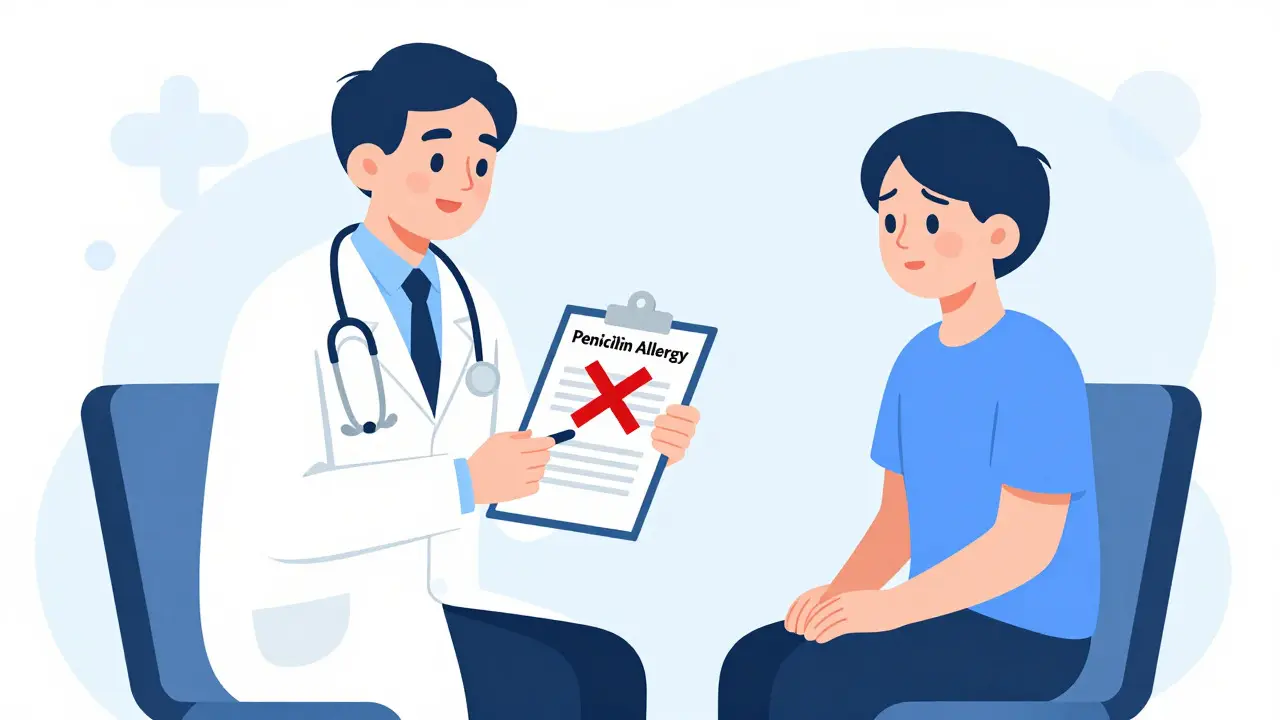
Imagine being told you can't take the most common, effective antibiotic because of an allergic reaction you had twenty years ago. You might have heard this story before-either it happened to you, or a doctor put "penicillin allergy" on your chart as a safety precaution. The problem? That label sticks with you for life, forcing you into weaker or more expensive medications that carry higher risks.
This is where drug allergy skin testing is a diagnostic procedure used to identify specific substances that cause allergic reactions in patients by observing localized skin responses. It acts as a bridge between fear and fact, helping doctors determine if you are truly allergic to a medication or if the reaction was something else entirely. For many patients, this simple test removes a dangerous medical label and opens up safer treatment options.
Why Doctors Use Skin Tests Instead of Blood Tests
You might wonder why a blood draw isn't enough. While blood tests exist, they often miss the mark when it comes to drug allergies. Most drug allergies involve immune cells called IgE antibodies, which live right under your skin. When these cells meet their trigger, they release histamine, causing that familiar red, itchy bump known as a wheal.
Skin testing allows doctors to watch this reaction happen in real-time. According to guidelines from the European Network for Drug Allergy (ENDA), skin tests are considered the gold standard for investigating immediate drug hypersensitivity reactions. They offer a speed and accuracy that blood work simply cannot match for many common antibiotics. If the skin stays calm after exposure to tiny amounts of the drug, it is a strong sign that your body will tolerate the full dose safely.
The Three Main Types of Skin Tests
Not all skin tests are created equal. Depending on the type of reaction you experienced in the past, your allergist will choose one or a combination of three methods: the prick test, the intradermal test, and the patch test.
| Test Type | How It Works | Best For | Time to Result |
|---|---|---|---|
| Skin Prick Test (SPT) | A drop of diluted drug is placed on the skin, then lightly pricked to let it enter the top layer. | Immediate reactions like hives or breathing trouble within one hour. | 15-20 minutes |
| Intradermal Test (IDT) | A tiny amount of solution is injected just under the skin surface using a fine needle. | More sensitive detection; used if the prick test is negative but suspicion remains high. | 20 minutes |
| Patch Test | Patches containing the drug are taped to the back for 48 hours. | Delayed reactions like rashes or eczema appearing days after taking medication. | 48-96 hours |
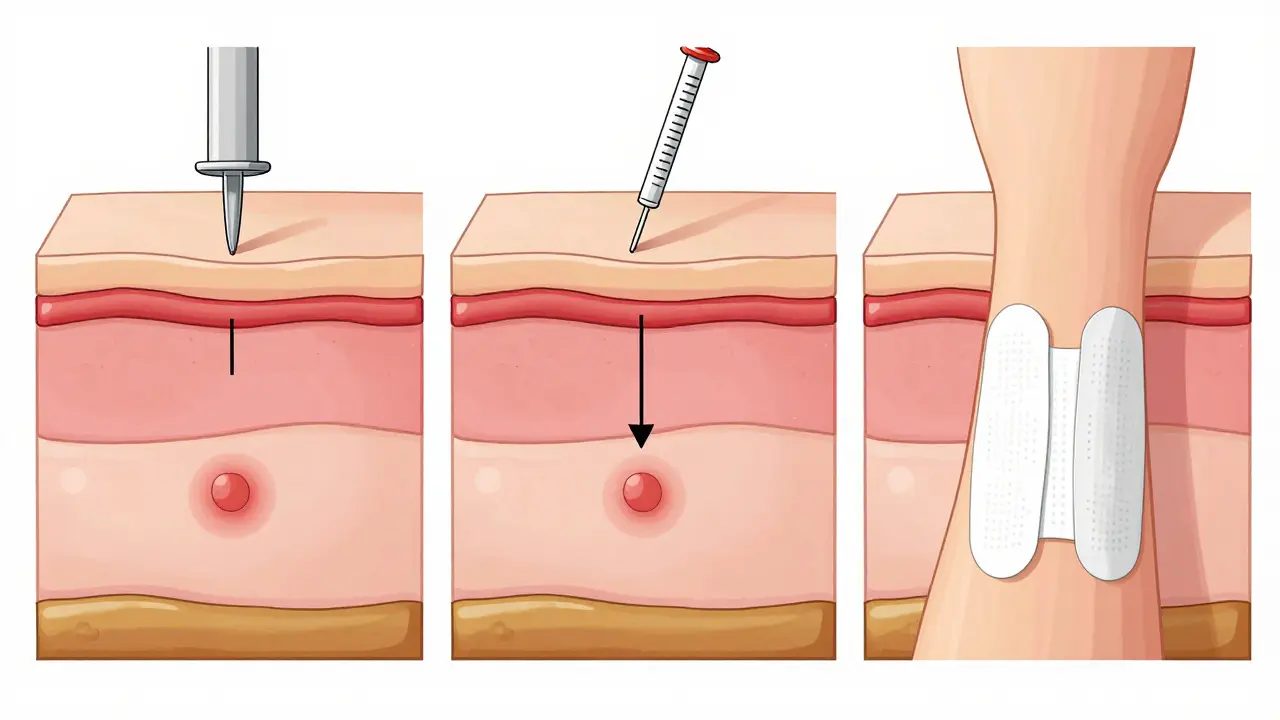
The skin prick test is usually the first step. It is quick, painless, and very safe. The doctor places drops of the suspected drug on your forearm or back and uses a small lancet to make a tiny scratch. Think of it like a mosquito bite. If nothing happens, they might move to the intradermal test, which involves a small injection. This creates a little bleb under the skin. It feels like a pinch and stings slightly, but it is much more sensitive than the prick test.
If your original reaction was a rash that appeared three days later, neither of those tests will help. In that case, a patch test is required. These patches stay on your back for two days, allowing slower-moving immune cells to react. This distinction is crucial because treating an immediate allergy is different from managing a delayed one.
Preparing for Your Appointment
Preparation is the most critical part of getting accurate results. Many patients show up only to be turned away because they took the wrong medication recently. To get a true reading, your immune system needs to be able to react freely.
- Stop Antihistamines: Drugs like Benadryl, Zyrtec, or Claritin block the very reaction the test is looking for. You typically need to stop these seven days before your appointment. Some newer antihistamines may require even longer washout periods, so ask your doctor specifically.
- Manage Asthma: If you have severe, uncontrolled asthma, testing might be postponed. An allergic reaction during the test could complicate your breathing issues.
- Clear Skin: Avoid heavy creams or lotions on your arms and back the day of the test. The skin needs to be clean and dry for the reagents to work properly.
Don't forget to bring a list of all medications you currently take. Even over-the-counter supplements can sometimes interfere with how your skin reacts. Being honest about your recent health history helps the clinician decide if it is safe to proceed.
What Happens During the Procedure?
When you arrive, the technician will mark spots on your skin at least 2.5 centimeters apart. This spacing prevents the reactions from merging and confusing the results. They will apply a positive control, usually histamine, which should always cause a small bump. This proves your skin is capable of reacting. They also apply a negative control, like saline, which should do nothing. This ensures the skin isn't just irritated by the friction of the test itself.
For the actual drug testing, they use injectable forms of the medication diluted in salt water. Non-soluble drugs might need special solvents like dimethyl sulfoxide. The process is methodical. After the prick test, you wait fifteen minutes. If there is no reaction, they may perform the intradermal test. You wait another twenty minutes. Throughout this time, you sit quietly. Moving around too much can spread the fluid and skew the measurements.
It is normal to feel anxious. Patients often worry about having a massive allergic reaction right there in the chair. However, the amount of drug used is microscopic. It stays in the top layers of the skin and rarely enters the bloodstream in significant amounts. Clinics are fully equipped with epinephrine and other emergency supplies just in case, but systemic reactions during testing are extremely rare.
Understanding Your Results
Interpreting the results requires expertise. A positive result means the skin formed a wheal larger than the negative control, usually by at least 3 millimeters. This suggests you likely have an allergy to that specific drug. A negative result is generally good news, but it isn't always a guarantee.
For penicillin, a negative skin test has a very high negative predictive value-around 90 to 95 percent. This means if the test is negative, you are almost certainly not allergic. For other drugs, like cephalosporins or non-steroidal anti-inflammatory drugs (NSAIDs), the sensitivity is lower. A negative test might not completely rule out an allergy.
In cases where the skin test is negative but the doctor still wants to be sure, they might recommend a drug challenge. This involves giving you small, increasing doses of the medication under close supervision. If you tolerate the full therapeutic dose without issue, the allergy label is officially removed. This process, known as delabeling, is a game-changer for patient care.

Who Should Get Tested?
Not everyone needs a skin test. If you had a mild stomach upset from an antibiotic decades ago, it probably wasn't an allergy. True drug allergies involve the immune system and present with symptoms like hives, swelling, difficulty breathing, or widespread rash.
Testing is particularly valuable for people labeled with penicillin allergy. Studies show that up to 90 percent of people who think they are allergic to penicillin can actually take it safely. Removing this false label allows doctors to prescribe first-line treatments for infections like strep throat, pneumonia, and syphilis. It also reduces the use of broader-spectrum antibiotics, which helps combat antibiotic resistance-a major global health threat.
Patients with complex medical histories, such as those needing long-term antibiotic therapy for conditions like cystic fibrosis or HIV, benefit greatly from knowing exactly which drugs are safe for them. It simplifies their care and reduces hospital visits caused by adverse reactions.
Limitations and Risks
While safe, skin testing does have limits. It works best for immediate reactions. If your reaction was a liver injury or kidney damage caused by the drug, skin tests won't detect that. Those types of toxicities require different diagnostic approaches.
There is also the risk of false negatives. Sometimes the immune response changes over time, or the specific component of the drug that triggers the allergy isn't included in the test kit. This is why standardized reagent kits are important. Recently, the European Medicines Agency approved standardized penicillin reagent kits to address variability in test preparations. Until universal standards exist for all drugs, clinical judgment remains essential.
Rarely, a patient might experience a systemic reaction during the test. Symptoms could include dizziness, rapid heartbeat, or throat tightness. Because trained professionals administer these tests in controlled environments, any reaction is managed immediately. The risk is far lower than the risk of accidentally prescribing a drug you are truly allergic to.
Next Steps After Testing
If your test is negative, ask your primary care provider to update your medical records. Remove the allergy flag. This ensures that in an emergency, paramedics and ER doctors know you can safely receive penicillin or other beta-lactam antibiotics. Keep a copy of the test results in your personal health file.
If the test is positive, you will receive a list of drugs to avoid. In some cases, cross-reactivity is a concern. For example, if you are allergic to penicillin, you might also react to amoxicillin or certain cephalosporins. Your allergist will explain which alternatives are safe. They might suggest carrying an epinephrine auto-injector if you are at high risk for severe reactions.
Remember, knowledge is power. Understanding your body's true reactions empowers you to take charge of your healthcare. Don't let an old, unverified label limit your treatment options. Talk to an allergist today about whether skin testing is right for you.
Does drug allergy skin testing hurt?
Most patients describe the skin prick test as feeling like tiny mosquito bites. The intradermal test involves a small needle injection, which causes a brief stinging sensation similar to a flu shot. The discomfort is minimal and lasts only a few seconds per site.
How long do I have to wait for results?
For prick and intradermal tests, results are visible within 15 to 20 minutes. You will know the outcome before you leave the clinic. Patch tests take longer, requiring you to return to the clinic 48 to 96 hours after application for evaluation.
Can I drive home after the test?
Yes, in most cases. Since the amount of drug used is tiny and stays in the skin, it rarely affects your alertness. However, if you have a reaction or receive medication for itching, your doctor might advise waiting briefly. Always follow the specific discharge instructions given by your healthcare provider.
Is the test safe for children?
Yes, drug allergy skin testing is safe for children of all ages. Pediatric allergists adjust the techniques and volumes appropriately. It is especially useful for kids with recurrent infections who need reliable antibiotic options.
What if my skin test is negative but I still worry?
If anxiety persists despite a negative test, your doctor may suggest a supervised drug challenge. This involves taking gradually increasing doses of the medication in the clinic. If you tolerate the full dose, you can be confident the allergy label was incorrect.